Home Bar Audit - Slivovitz, Raki, Ouzo, Ginjinha
If you're planning a trip to distant lands and wondering what to bring back home - something for the heart and soul, to let the family taste the flavour of that place - I'd be happy to share our experience from travels to various countries. So then, let's get to the home bar audit!
If you're planning a trip to distant lands and wondering what to bring back home - something for the heart and soul, to let the family taste the flavour of that place - I'd be happy to share our experience from travels to various countries. So then, let's get to the home bar audit!
Slivovitz (Croatian: Šljivovica) was first encountered in 2006 on a trip through Croatia, though it is known throughout the Balkan countries - Serbia, Bulgaria, Montenegro - as well as in the Czech Republic and Slovakia. Slivovitz is a plum brandy produced both commercially and, in great quantities, at home. The latter came as a surprise - that alcohol could be purchased so freely without any government approvals and the taxes that come with them. The minibus stopped in a village where the attentive drink vendors right by the roadside offered tastings on the spot - as much as one could drink and hold in a single go. Buyers, as you can imagine, were plentiful thereafter. Solidly poured into interesting bottles of various shapes with colourful labels prominently displaying dark plums - the spirit's main ingredient.
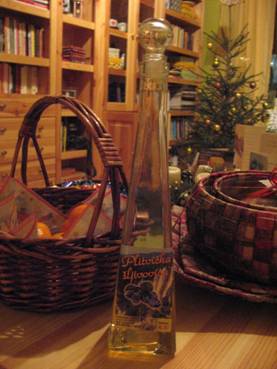
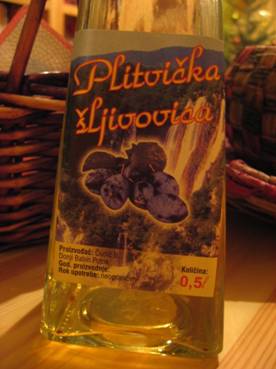
On the label: proizvodač: Čudič B., Donji Babin Potok; God. poizvodnje: (which, whoever knows, is not stated); the main thing being Rok upotrebe: neograničen; Količina: 0.5l ("best before: unlimited; quantity: 0.5 l"). Anyone who knows even one of the Slavic languages will understand everything.
A potent drink at 45–52%, but drinkable. My rating - 
Raki (Turkish: Rakı) was purchased this summer at Atatürk International Airport on the way back from Istanbul (Turkey) to Riga. A proper 1-litre bottle at 45%. Raki is a grape spirit (40–60%) which, unlike Russian vodka well known in Latvia, is enriched with aniseed and aged for up to 6 months in oak barrels, much like brandy or cognac.
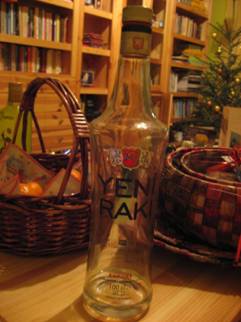
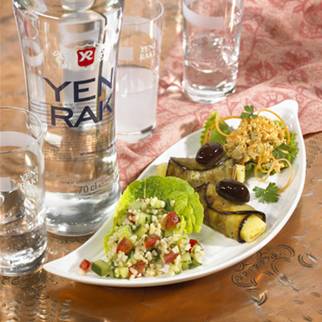
The anise gives the drink a very distinctive flavour that is not to everyone's liking, myself included. Rating - 
Ouzo (Greek: Ούζο) is popular specifically in Greece, from where my friend Dana brought it. A 500 ml bottle bearing numerous coats of arms, quality certificates, and the story of the Katsaros family's 150-year production tradition, 40% alcohol.
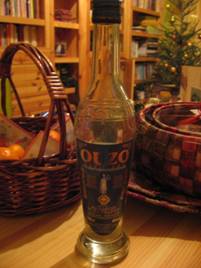
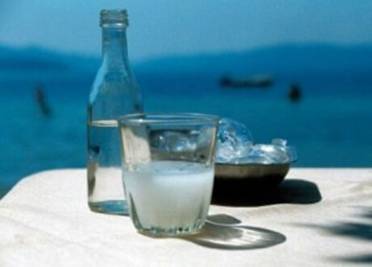
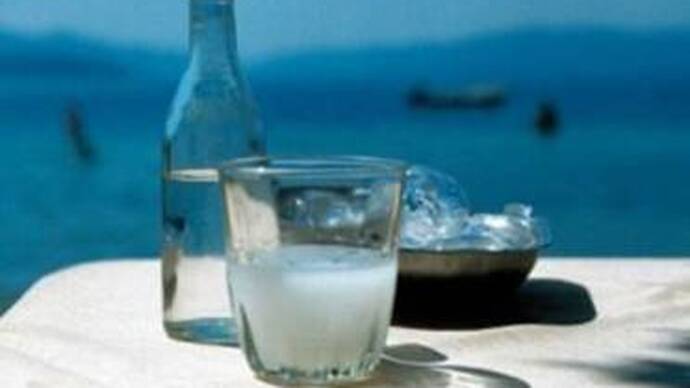
Ouzo is an anise spirit (40–60%). It is produced by distilling multiple times in special copper stills. Ouzo is usually served with cold water or ice cubes. When mixed with water it turns a milky white.
I tried getting it down both with water and with apple and pineapple juice, but the anise flavour was overpowering. Rating, same as for raki - 
Ginjinha (Portuguese: Ginja) was first tasted in the small and beautiful Portuguese town of Óbidos in the autumn of 2008. Ginjinha is a cherry liqueur - a cherry extract made on a grape spirit or brandy base with added sugar. Ginjinha bottles usually have whole pitted cherries floating at the bottom.
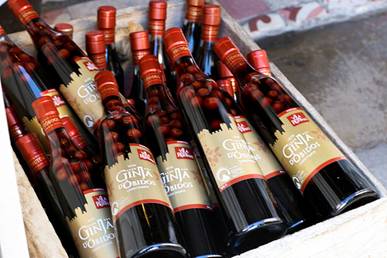
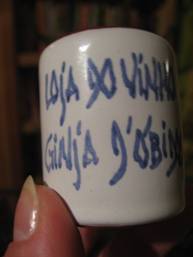
It is drunk from traditional small clay or chocolate cups. The latter also serve as a good, sweet snack after a sip of the liqueur. We bought one such clay cup together with a bottle of the drink. On the cup is written: "Drink Ginjinha and you'll live to 90." Why not 100 - nobody could explain to me. The vendor did say, however, that ginjinha used to be 40% alcohol, but is now produced in large quantities specifically for European tourists at only around a dozen or so percent.
Well, delicious it is - that ginjinha - both in sunny, warm Portugal and brought home to a subdued, sun-deprived Latvia. My rating -  .
.
comments