Riesling - the King of German Wines, and Others
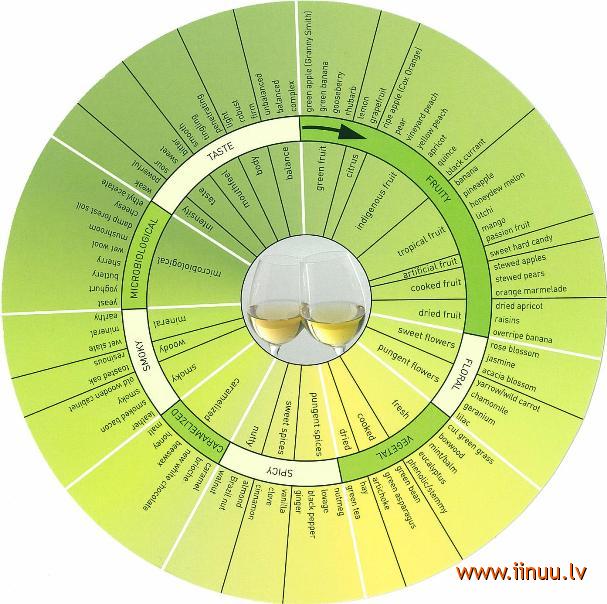
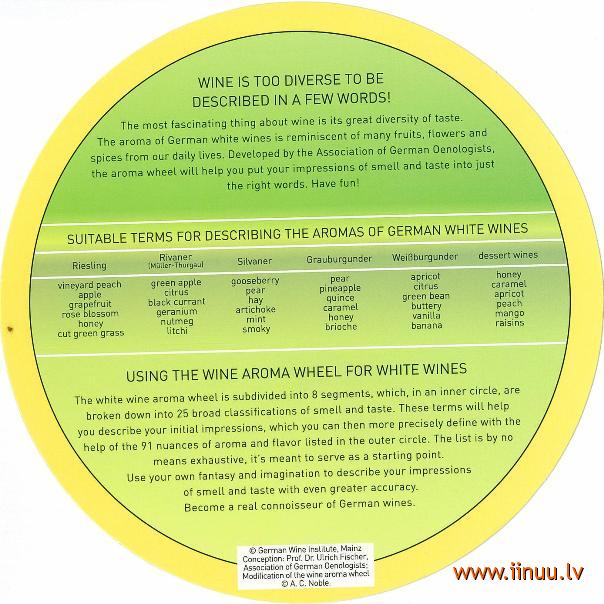
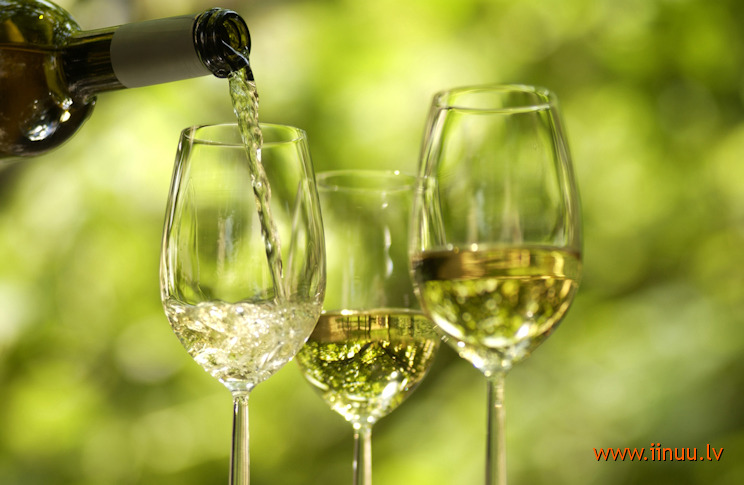
Another meeting of the wine tasters' club. Sounds good, doesn't it? But about how it tasted and how much valuable information we gathered about German wines from Larisa's presentation - a little more detail. For example, the flavour and aroma bouquet of Riesling: peach + apple + grapefruit + rose petals + honey + freshly cut green grass.
Another meeting of the wine tasters' club. Sounds good, doesn't it? But about how it tasted and how much valuable information we gathered about German wines from Larisa's presentation - a little more detail.
A bit of history.
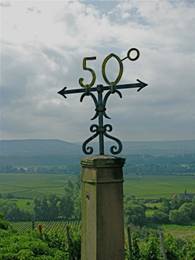
The south-west of Germany is the northernmost point of all the world's wine-growing regions. The 50th parallel, beyond which to the north grapes no longer receive enough sunlight to produce good wine.
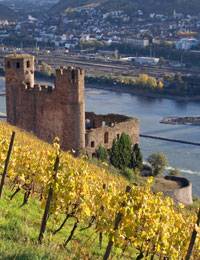
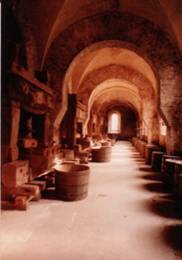
The wine-growing tradition in Germany was introduced by the Romans, but the first period of flourishing German wine production was the early Middle Ages. Vineyards were then under the care of monastery monks. Later, during the Thirty Years' War (1618–1648), wine production was almost completely destroyed. Only in the 18th century, thanks to the monasteries sharing their long-accumulated knowledge with winemakers, did wine production gradually recover. The year 1803 was significant, as vineyard cultivation was transferred into the hands of private winemakers. Although German lands are widely known for their beer-making and beer-drinking traditions, winemaking traditions are no less cultivated and developed. Germany is currently the fourth country in the world after France, Italy, and America by wine consumption per capita per year.
Wine-growing regions in Germany.
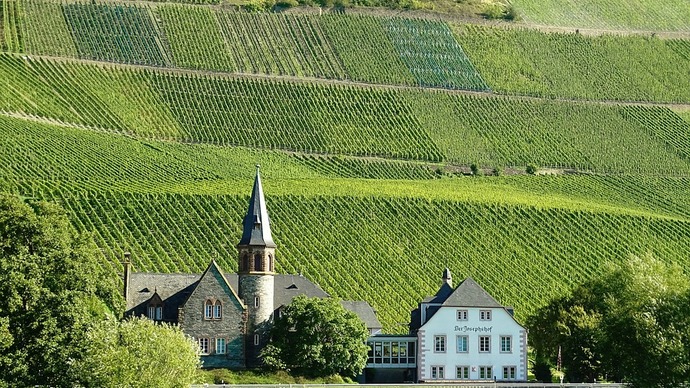
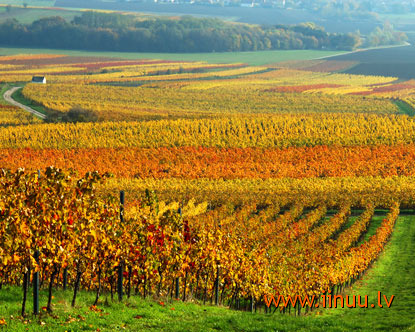
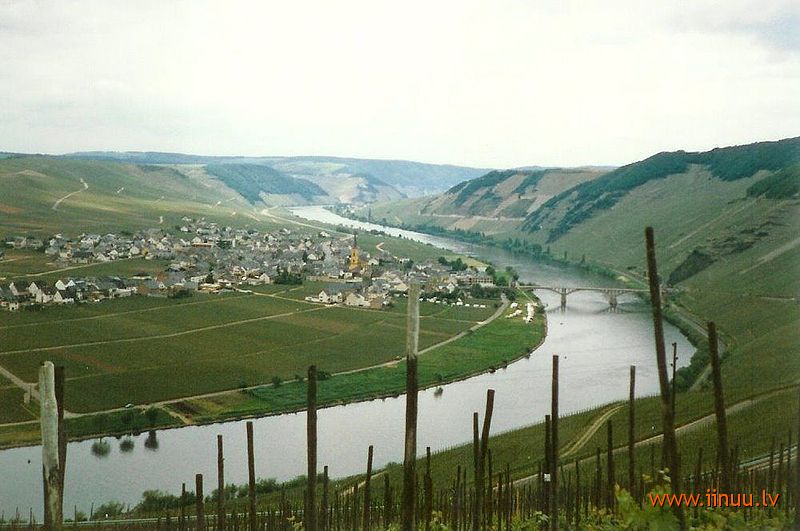
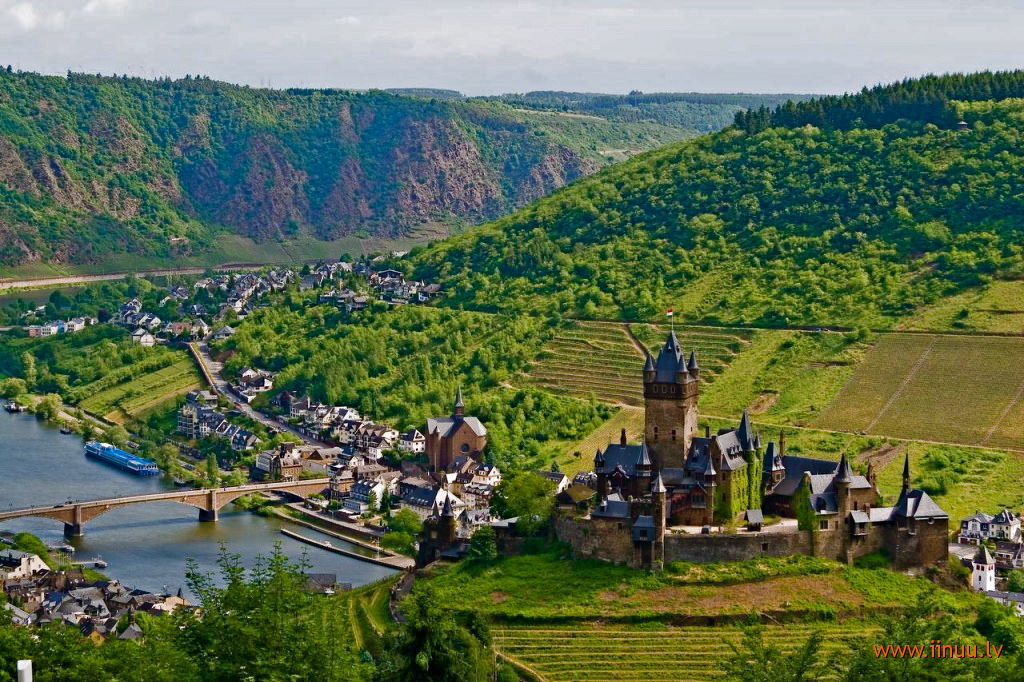
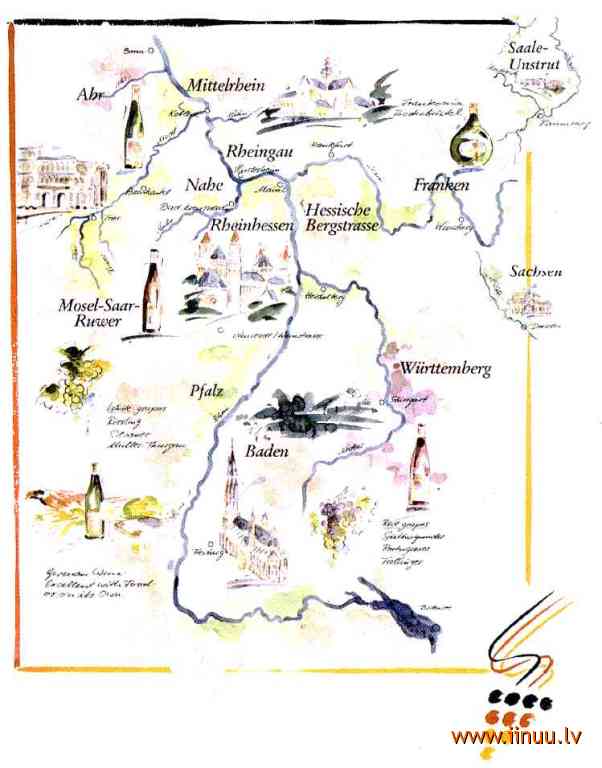
As already mentioned, all the wine-growing and wine-producing regions are concentrated in south-west Germany, where a favourable environment is created by the proximity of two rivers - the Rhine and the Moselle - and their fertile and fairly steep banks. In some places the steepness of the slopes on which the vines grow reaches 60–70 degrees. The rivers' waters act as a heat and cold reflector, providing the necessary air temperature.
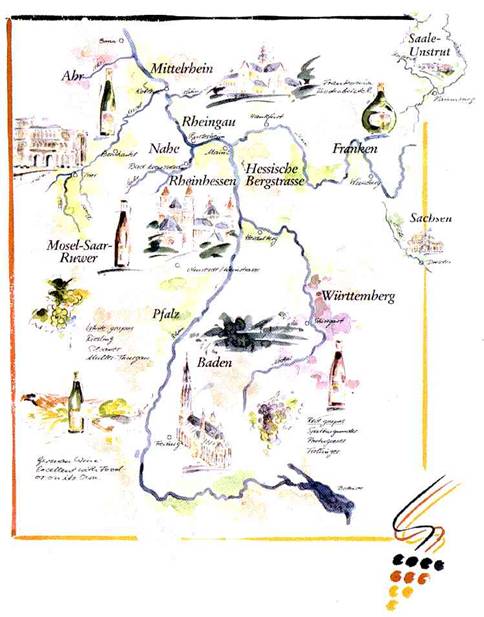
In total there are 13 regions (see the map illustration below), of which the most popular are Mosel (wine villages: Erden, Piesport, Bernkastel, Graach, Urzig, Brauneberg, Wehlen), Pfalz (Deidesheim, Forst, Ruppertsberg, Dürkheimer), Rheinhessen (Oppenheim, Nackenheim, Nierstein), Rheingau (Eltville, Erbach, Rüdesheim, Rauenthal, Hochheim, Johannisberg), Baden, and Franken. In total around 100,000 winemakers operate. For Germany that is not so few, is it?
Grape varieties.
In Germany approximately 70% white grapes are grown (Riesling, Müller-Thurgau also called Rivaner, Silvaner, Weißer Burgunder (Pinot blanc), Elbling, Grauer Burgunder (Pinot gris)) and approximately 30% red (Blauer Spätburgunder, Dornfelder, Schwarzriesling (Pinot Meunier), Lemberger, Portugieser).
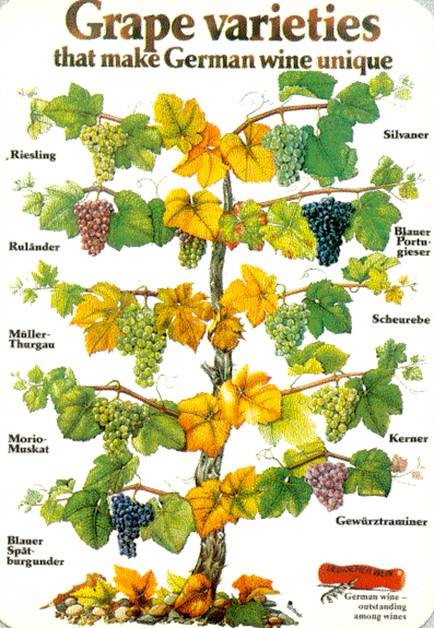
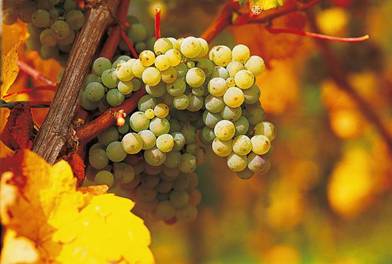
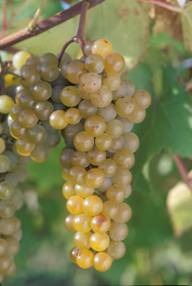
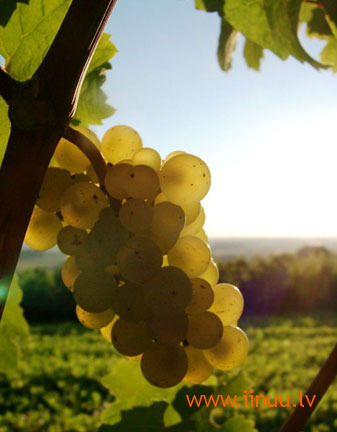
Riesling grapes and hence also the wine are the most popular, and can safely be called the king of German wines. I first paid attention to Riesling at a Wine Festival at the Convent Courtyard at the Hansa Wine Gallery stand, but when we visited Trier, the small ancient town on the banks of the Moselle, I simply fell in love with this wine. Only up until this tasting did I not know that Riesling has so many varieties and flavour nuances.
What characterises German wines?
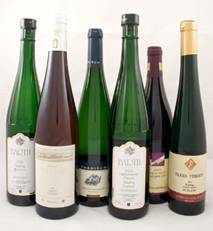
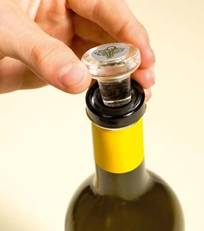
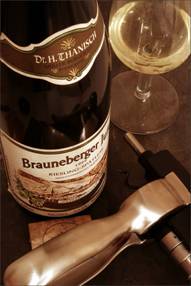
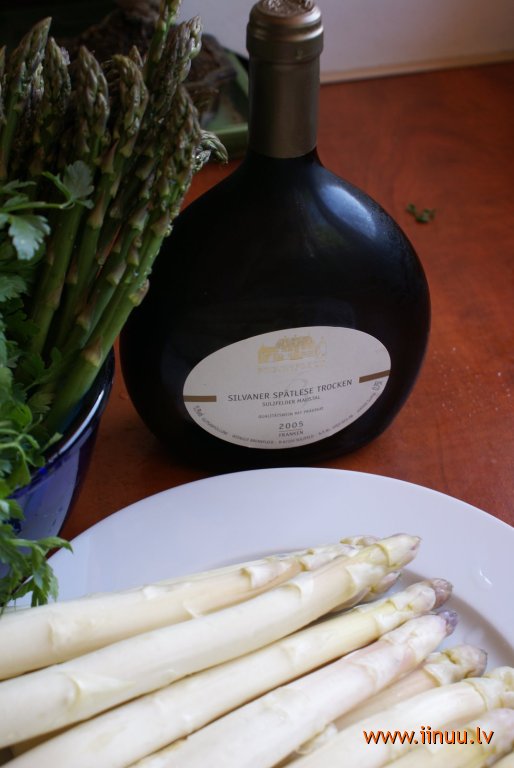
All have a high acidity content. Less sun means less sweetness and less alcohol. They are distinguished by diverse bottle shapes and colours, which are each winemaker's calling card. For example, Rieslings: tall, slender, dark blue, green, smooth and ribbed, with a cork or glass stopper; but for wines from the Franken region: short, rounded, flask-like.
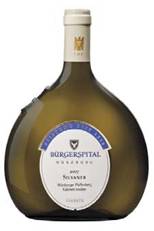
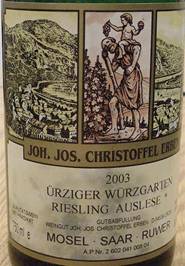
The good news is that everything about the particular wine is written on the label, which allows the buyer to accurately determine the producer, grape variety, year, and quality. An example of how to read the label:
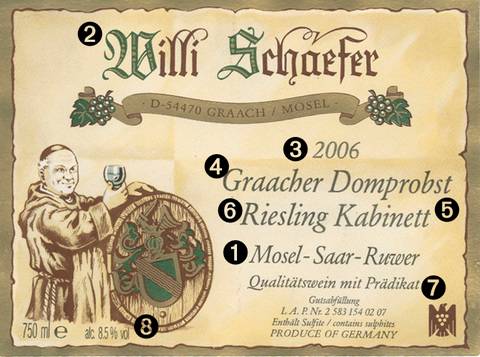
1. Wine-producing region. 2. Producer. 3. Year of bottling. 4. Vineyard. 5. Wine classification by harvest time and production method, indicating premium quality. 6. Grape variety. 7. Symbol indicating membership in the German Winemakers' Association that promotes German wines and guarantees the labelled quality (VDP). 8. Alcohol content.
German wine classification.
• Deutscher Tafelwein - lowest-class table wine, made exclusively from grape varieties grown in Germany.
• Tafelwein - table wine. This term applies to the cheapest German wines.
• Landwein - country wine. Wines bearing this designation come from 18 locations in Germany. After the designation follows the name of the specific location. These are usually simply good wines, a notch above table wines (Tafelwein) but below the wines mentioned further.
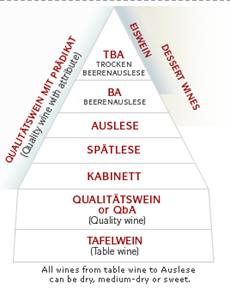
• Qualitätswein bestimmter Anbaugebiete, abbreviated QbA - this designation on the bottle label indicates that the wine has passed a local-level quality inspection. These wines are somewhat simpler and cheaper than wines that have received the national-level quality certification QmP. These wines may have sweeteners and alcohol added. However, it is worth knowing that these wines are also of good quality.
• Qualitätswein mit Prädikat - abbreviated QmP (distinguished quality wines). This designation on the wine bottle label indicates the highest-quality German wines. The wines are produced using grapes from a single vineyard. The wines have a higher alcohol content, because in a favourable year the grapes have concentrated more sugar, which has consequently been converted into alcohol. National-level legislation guarantees that in an unfavourable harvest year the QmP status will not be granted. These wines are 100% natural. No sugar is added to them. The wines are matured in bottles for 5–10 years, though a refined bouquet appears in the wines after 15–20 years. Since the wine quality is directly dependent on the degree of grape maturation, QmP wines are further subdivided according to the time of grape harvest. The later the grapes are harvested, the more beneficial compounds and sugar they will contain, which ultimately affects the wine's flavour and aroma - however, keeping the berries on the vine for a long time is very risky, as precipitation can cause the grapes to rot.
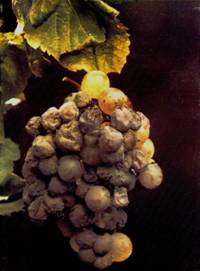
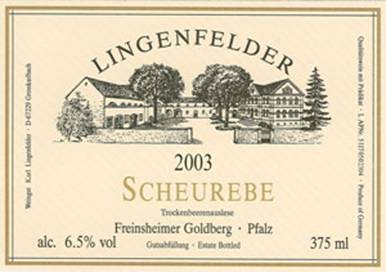
1. Trockenbeerenauslese (dried berry selection) - the highest-class wines in the QmP quality division. Wines made using particularly late-harvest berries. They are shrivelled, much like raisins. In a favourable harvest year, a beneficial mould fungus (noble rot) develops on the grapes, as a result of which the berry shrivels while the most aromatic substances become concentrated inside. The grapes are harvested at temperatures below 0°C. To produce a single bottle of wine, 15 kg of such shrivelled grapes are required. These are among the world's most expensive wines. From 1991 to 2004 wines of this type were not produced.
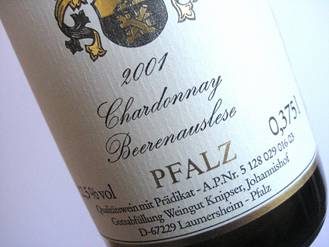
2. Beerenauslese (berry selection) - this quality criterion (within the QmP division) is less valuable compared to Trockenbeerenauslese, yet the wines are also made from a very late harvest and are of high quality and very expensive. The grapes are harvested at the end of November, when they have achieved noble rot. The wines have a relatively high alcohol content, sometimes even 15%.
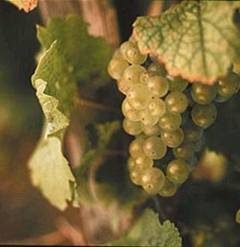
3. Auslese (selection) - this quality criterion (within the QmP division) is less valuable compared to Beerenauslese. The berries are harvested somewhat earlier, but in any case they are fully ripened. The sugar content of the grape is high, though slightly lower than in the quality categories mentioned above. The berries may also be affected by noble rot. The resulting wines are rich and concentrated.
4. Spätlese (late harvest) - this quality criterion (within the QmP division) is less valuable compared to Auslese. Wines made from the late harvest, in mid-October. Can be either dry or somewhat sweet. Compared to Kabinett quality wines, Spätlese wines are more aromatic.

5. Kabinett - the lowest quality criterion in the QmP division. However, it is worth remembering that QmP status can only be received by high-class wines made from grapes of a favourable harvest. Kabinett wines are made from grapes harvested at the end of September. The wines have a lower alcohol content than the wines mentioned above and tend to be very dry, but at the same time very light.
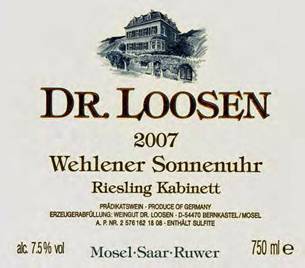
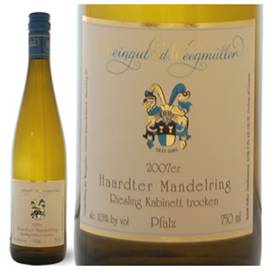
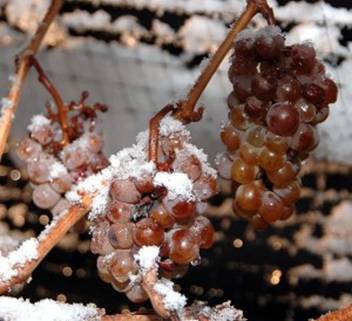
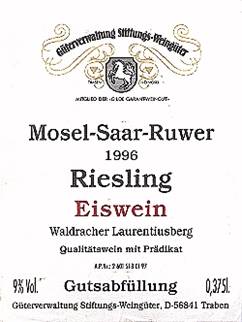
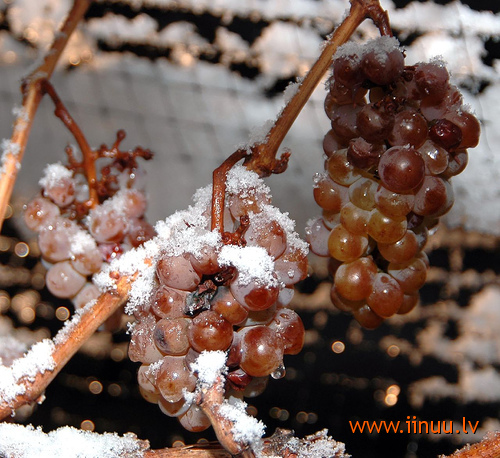
6. Eiswein - grapes are harvested at below -7°C, practically already frozen.
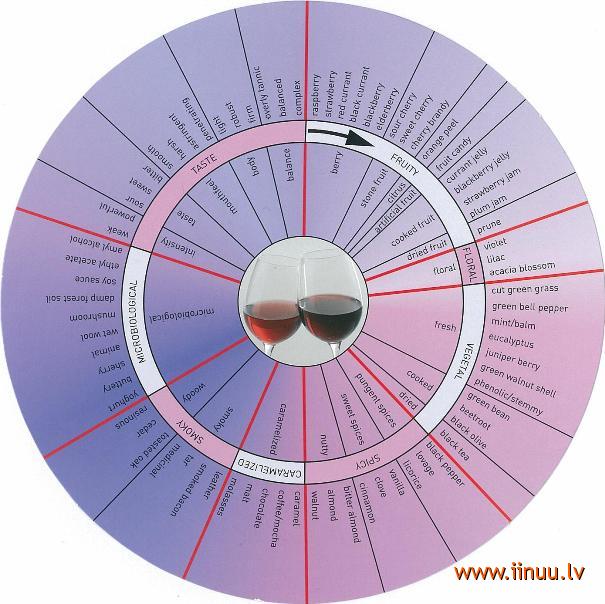
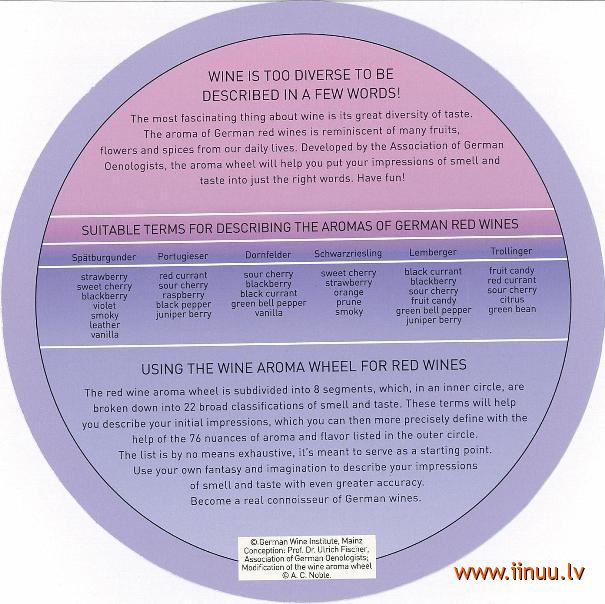
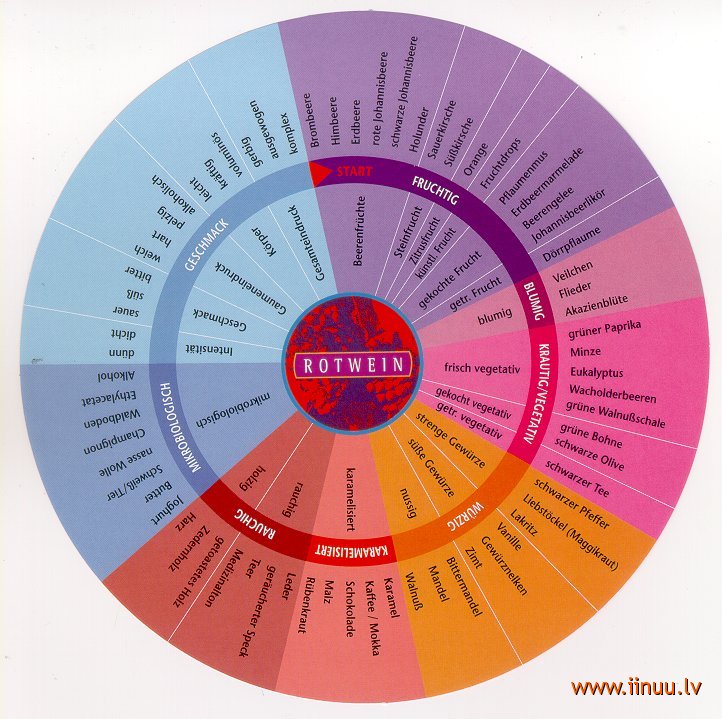
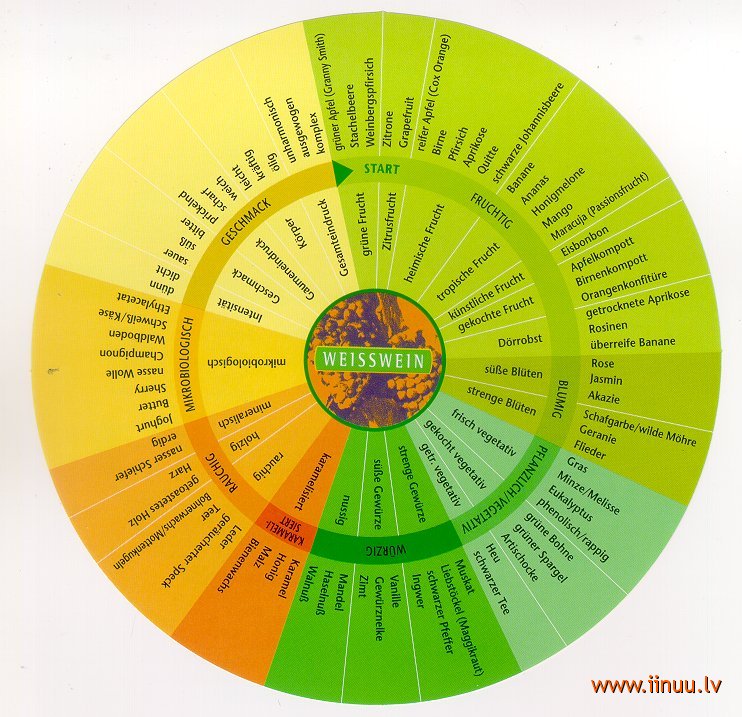
That turned out to be quite lengthy and detailed about wine types. But a little more about flavour bouquets. It turns out that Dr. Ulrich Fischer has developed red and white wine wheels in which he has characterised the flavour nuances of wines (see the image gallery below). For example, the flavour and aroma bouquet of Riesling: peach + apple + grapefruit + rose petals + honey + freshly cut green grass.
In the next article about the six wines tasted and their flavour and aroma bouquets. To be continued.
Sources used:
www.germanwinesociety.org
http://www.irlaiks.lv/drinks/regions/germany/article.php?id=11989
http://www.deutscheweine.de
comments