Business Self-Analysis
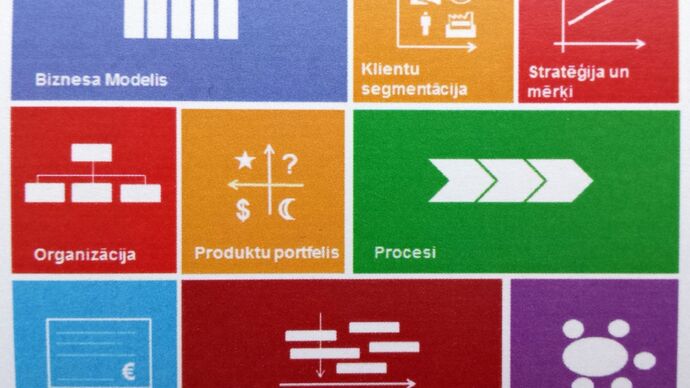
The actual title that the Organisation Development Club representatives gave this seminar topic at the Swedbank Business Network morning networking session was far more elevated - The 9 Elements of an Outstanding Business. But summing up what was heard and practically analysed together, I would call it a well-structured business self-analysis.
The actual title that the Organisation Development Club representatives gave this seminar topic at the Swedbank Business Network morning networking session was far more elevated - The 9 Elements of an Outstanding Business. But summing up what was heard and practically analysed together, I would call it a well-structured business self-analysis.
I cannot help but share this discovery. Even though this analysis tool is best suited to organisations and companies with a management team, rather than to individual entrepreneurs. Still, I filled in the cards distributed during the survey - which could be completed to identify the "wide" and "narrow" points in one's business - with great relish. As someone who approaches many things quite analytically and visually, the diagram or "butterfly" that emerged from the shaded areas of the answers gave me a fairly vivid picture of both the strengths and the weak points of my business activities.
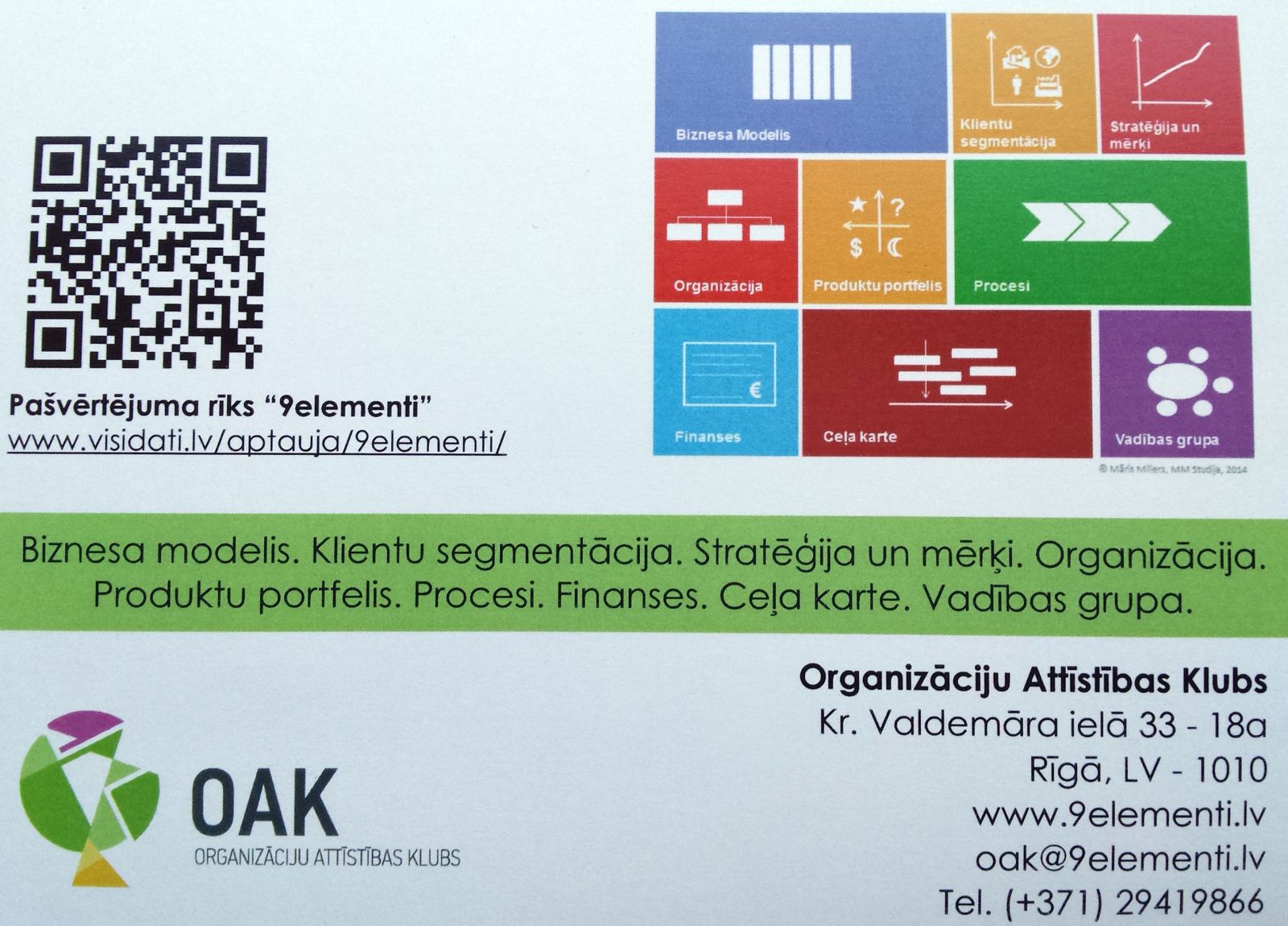
The image contains a link to a survey, which when completed allows you to analyse your company's performance
One of the key people and main presenter, Māris Millars, has a natural gift for speaking, so it was a pleasure to listen. The second speaker, Kārlis Urbāns, was considerably more down-to-earth - grounded in written, developed principles and their dry but necessary explanations. In tandem, they complemented each other.
But a listener needs a story with elements of performance and quotation - and Māris delivered that to the audience. I liked his comparison about whether the leader of a successfully growing company can go it alone - as the sole decision-maker, sole controller, sole strategy driver. A quote from Guntars Rācis's poetry: "If a man stands alone, / He is like milk. / And sooner or later it sours." Draw your own conclusions.
And similarly about the ideal company, as about the ideal man (five main characteristics): he doesn't drink, he doesn't smoke, he doesn't gamble, he doesn't mess around - and he doesn't exist.
Kārlis was blunter, but the truth of it is: a business is like a car - if you can drive it, sell it when needed, hand it to someone else to drive, and it all keeps running, then it is a business. If the driver gets out of the car and it falls apart, or there is no one else to drive or sell it, then what existed was simply one person's successful occupation - nothing more.
I liked the way the speakers worked with the audience and the opportunity to actually carry out the task on the spot - to work and to analyse. Seminars of this kind I consider the most productive of all. You walk out the door with a sense of work accomplished and simmering ideas in the background about what and how to do next.
To conclude, a few more insights from Māris:
- Listen to what others suggest and advise you, thank them for the advice, but make an individual decision - one that fits your company and yours alone.
- Look for people to collaborate with, for good partners. In a company it is important to have one person who thinks, another who does, a third who speaks, and someone who takes notes.
- Systems must be built; building a team is difficult, but building yourself is even harder.
- Don't sell your soul to Excel, or to any other tool.
comments