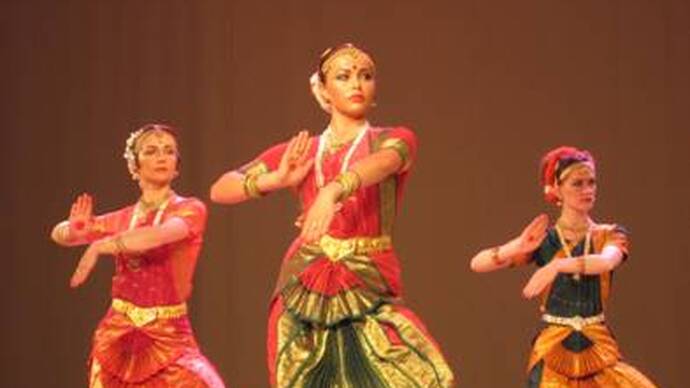
On Thursday evening, 10 August, I attended the open class at the exotic dance centre Alegria, held at 4 E. Birznieks-Upīša Street, in the hall of the Young Technicians' Centre. Centre director Ilze Zariņa introduced four dance styles that can be learned from Alegria's teachers - belly dancing, Indian dance, flamenco, and Gypsy dance. To illustrate each dance style, there were teachers' performances (see video).
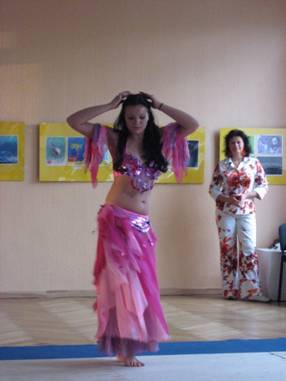
For the second year running, the exotic dance festival was held at the Madona Culture House. The concert consisted of modern belly dance performances with certain show elements, khaleeji, saidi, and oriental. Šarma had taken care to include the Hawaiian dance style in the programme. However, compared to last year, a certain uniformity was noticeable; Indian dances, tribal dance, and Andalusian dance rhythms were lacking.
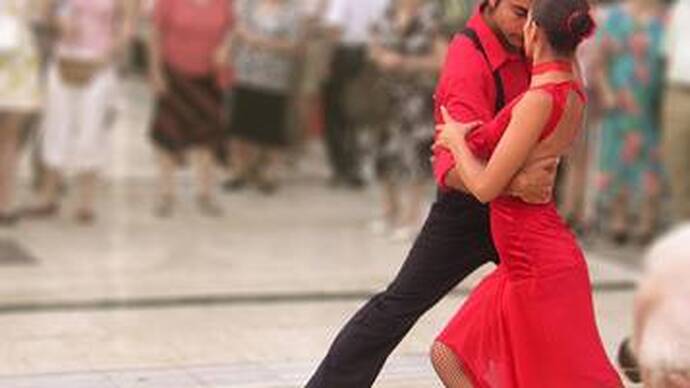
Tango, to me, is associated with quite an intimate interplay of bodies. Of bodies specifically, not of souls. A dance danced in the street, on cobblestones, beside a café, beside a drainage gutter, in the presence of curious eyes, in defiance of oneself, one's partner, or someone watching.
«Feria de Abril» - that is also the name of the spring festival celebrated every year in the southern Spanish province of Andalusia. This festival is especially popular in Seville, where flamenco parties go on for entire days and nights and everyone dances sevillanas. Traditional bullfights and trading also take place there. Spanish culture in its most recognisable expressions - hot-blooded music, flamenco dancing, open-hearted conversation.
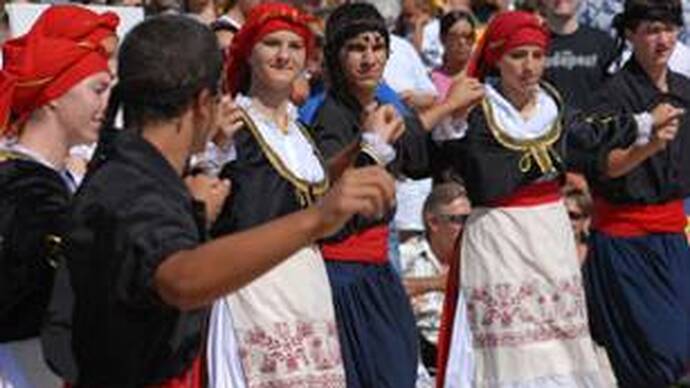
Sirtaki (συρτάκι) is widely regarded as an integral symbol of Greece and considered to be a Greek folk dance. Although this dance is gladly danced in Greece today, it turns out that the belief about its roots is mistaken. Whatever the case, sirtaki can be considered proof of what dance and dancing mean to the Greeks.
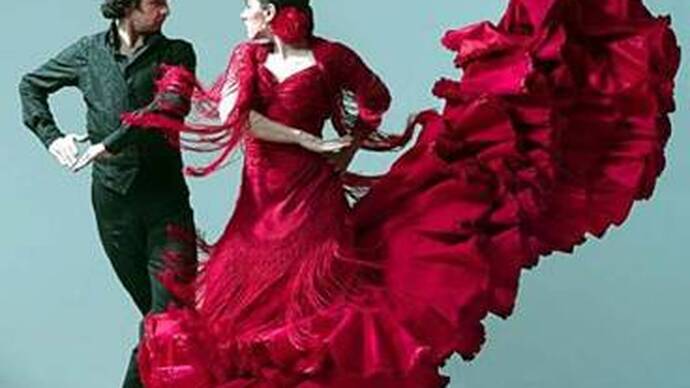
Flamenco music and dance contain a great many improvisational elements, which is why every performance is unique and flamenco is difficult to transcribe in musical or choreographic notation. The art of performing flamenco is usually passed from teacher to student through training and observation.
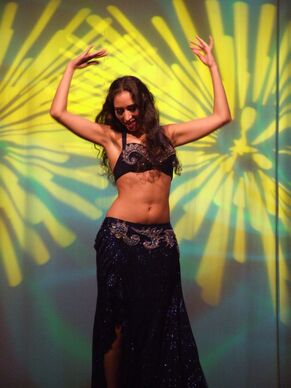
Dance as a physical activity, a developer of posture, balance and movement, and a creator of physical freedom, relaxation, and outer and inner peace. Dana (meaning "black pearl" in Lebanese Arabic) has been practising belly dancing for more than 5 years. She continuously expands her knowledge with dance teachers in Egypt, Greece and right here in Latvia, Riga. She also teaches and passes on to others her knowledge of Egyptian and Arabic dance choreographies and the skill of expressing her feminine allure through dance.
A thoroughly lovely event took place on 12 July at the Madona Culture House. Dance studio Mantigra, in cooperation with Madona City Council, organised the 1st Exotic Dance Festival.
.jpg?w=690&mode=16x9|crop)