Vasilyev Collection Exhibition in Riga: From War to Peace. 1940s–1950s Fashion
The previous decades and their fashion were far enough from the present for one to simply marvel at the exhibited garments, photograph them, and share countless pictures for others to marvel at in turn. But this time the view of the exhibition was far more critical.
For the fifth year running, and once again with a new era, fashion collector and historian Alexander Vasilyev is exhibiting his collection at the Museum of Decorative Arts and Design in Old Riga (adult admission: Ls 2.50). The previous decades and their fashion were far enough from the present for one to simply marvel at the exhibited garments, photograph them, and share countless pictures for others to marvel at in turn. But this time the view of the exhibition was far more critical, given that the 1950s represent the childhood and youth of our parents' generation, and certain resonances in the garments could be quite close to home.
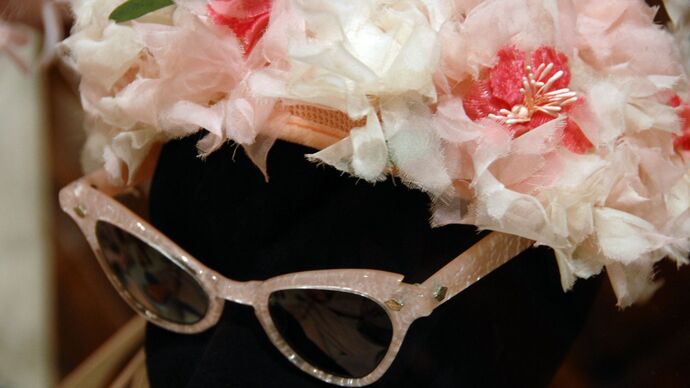
It must be understood straight away that the concept of "1940s–1950s fashion" in Vasilyev's perspective refers to Western European (primarily Parisian), American, British, and British colonial fashion - not what can be recalled from Riga Modes in the postwar Soviet years. The black-and-white film about Latvian fashion of that period was considerably at odds with the exhibition itself, which was dominated by magnificent cocktail dresses, evening gowns, actresses' dresses, hats excessively festooned with flowers, brightly gilded shoes, and handbags adorned with costume jewellery.
Interestingly, the concept of fashion of those years within this exhibition is confined solely to dresses for young women or ladies, and basic accessories - handbags, hats, gloves, spectacles, shoes. There is no opportunity to see how gentlemen, children, or older ladies dressed in those years. It would also be interesting to see what underwear, stockings or socks, nightgowns, and the like looked like at the time. Because that, in my view, very clearly reveals the dressing habits of a particular era.
But be that as it may, there was plenty to feast the eyes and camera on. Here are a few of the exhibits with their descriptions.


comments