The Transition from Lats to Euros
I attended a seminar organised by Dienas Bizness Conferences entitled "A Successful Transition to the Euro" and would like to share the insights and thoughts I gathered while sitting and listening to the speakers. What lies ahead and what it will look like...
This Wednesday, 28 August, I attended a seminar organised by Dienas Bizness Conferences entitled "A Successful Transition to the Euro", and would like to share the insights and thoughts I gathered while sitting and listening to the speakers. Let me begin with a lyrical and historical digression. When you think about it, I feel as old as the world itself - in my lifetime I have already lived through the fourth currency to enter circulation in Latvia. During my school years I spent Soviet rubles and kopecks; then came the years of National Awakening and the transitional currency (1992) - the Latvian rubles, popularly known as repšiks.
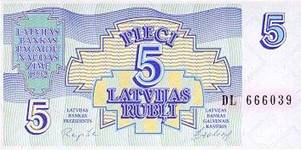
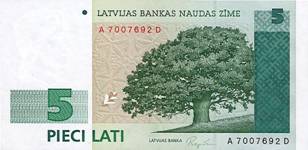
Pictures for nostalgia
Then came the fully-fledged national currency - lats and santims - with their beautifully crafted, thoughtfully designed artwork, security features, traditional oak leaves, and Lielvārde belt patterns, which I have been happy to spend up until now. And very soon, from 1 January 2014, Latvia will have only euros and euro cents. Another historic moment. One cannot help but think of the Eastern curse - may you live in times of change! It must be a very ancient saying, for judging by the dynamics of today's world, change is constant and inescapable.
The seminar was intended mainly for business owners and in particular for those operating in retail with cash transactions. It covered informing employees, as well as the purely psychological preparation (fear of the unknown - a speaker from Demarsch) for the transition to a new currency; cash and cashless (a speaker from Point Transaction System) payment procedures; the restructuring or adaptation of resource management systems (a speaker from FMS); and more.
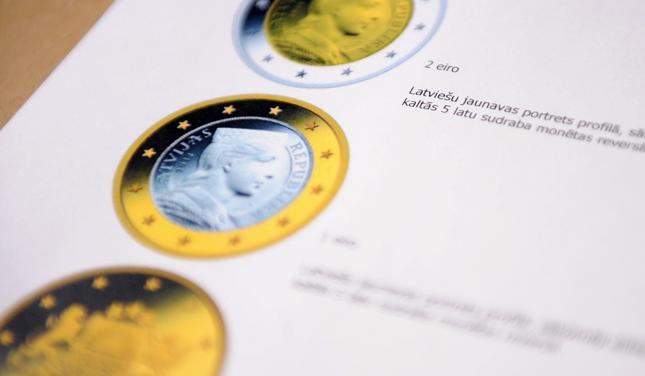
Latvian euro coins. Photo: Lita Krone, LETA
For me personally, two presentations stood out as particularly valuable - that of sworn attorney Māris Brizgo (LAWIN) and that of Dzintars Kalniņš (Swedbank), Head of Business Direction for the Euro Project. What follows are excerpts from both speakers' presentations:
• Fixed rate at which money in bank accounts will be converted on 1 January 2014: EUR 1.00 = LVL 0.702804
• In legal documents and contracts, the name of the single currency must be written as Euro (EUR) - not the colloquially popular form "Eiro".
• Any cooperation or employment contracts are not terminated as of 1 January 2014; they do not need to be renegotiated or amended. An addendum is advisable only for long-term contracts (5–10 years or more) - better safe than sorry.
• It is recommended to check public registers for any conversion errors - for example, checking the Land Register to ensure that the value of land and real estate has been correctly recalculated. If an error is found, submit a request to the relevant authority.
• When founding a commercial company, it is advisable to express the share capital in EUR immediately, to avoid a later visit to the Enterprise Register for re-registration. Moreover, current law requires that all new versions of shareholders' meeting minutes and articles of association must be signed before a notary!
• Example of wage recalculation:
Average gross salary in Riga - LVL 566.00
After conversion - EUR 805.35
To make it easier for accountants, the amount may be rounded:
- Up: EUR 806.00
- Down: EUR 805.00
In the case of rounding, the amendment must be documented in writing and signed off by all company employees. When rounding down, ensure the salary is not less than the minimum wage, which from 1 January 2014 will be EUR 320.00.
• From 1 January 2014, ATMs will dispense and accept euros, while payment cards will continue to work (no replacement needed) until the expiry date shown on the card.
• Clients and business partners should be notified in good time about any changes to price lists or other planned changes related to the transition to the euro.
• From 1 October 2013: parallel display of prices in lats and euros (everywhere - on receipts, price lists, invoices, etc.). During this period it is important for businesses to maintain a transparent pricing policy, as consumers will be particularly sensitive to any price changes.
• Businesses must ensure employee competence and the technical means for detecting counterfeit euro banknotes and coins.
• In the last month of this year, cash turnover at retail outlets will increase sharply; moreover, in the first months of next year, a certain period of quiet (adjustment, confusion) can be expected in retail.
• From 1 January to 14 January 2014: non-cash transactions in euros only, but cash payments accepted in both LVL and EUR - meaning you can still pay in lats, but change will be given in euros only.
• From 15 January 2014 - all transactions in EUR only.
• On 1 January 2014, money in accounts will be automatically converted from LVL to EUR (a Swedbank representative confirmed that internet banking users will be able to see how the conversion was carried out).
• The Bank of Latvia will cease to calculate the RIGIBOR index. It will be replaced by EURIBOR.
• Lats can be exchanged free of charge after 1 January at:
- 302 Latvijas Pasts branches (for 3 months);
- Credit institutions (for 6 months);
- The Bank of Latvia.
• Some interesting facts about cash currently in circulation in Latvia:
- there are currently 488 million coins in circulation;
- that amounts to 0.5 kg per resident;
- the 1-santims coins alone in circulation weigh as much as 6 electric train carriages;
- the coins in Latvia weigh 1,173 tonnes - equivalent to 250 elephants (one elephant ≈ 4.7 tonnes).
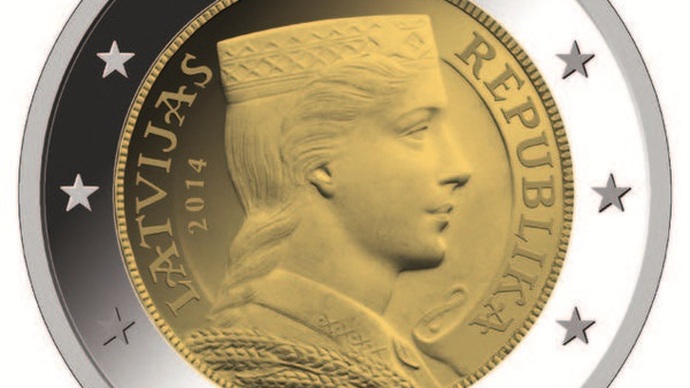
What will the new money look like? The design samples for the Latvian euro coins can be viewed here - http://www.bank.lv/es-un-eiro/latvijas-eiro-monetu-dizainparaugi The most Latvian in spirit, in my view, will be the EUR 2 coin - a portrait of a Latvian maiden in profile, as originally depicted on the reverse of the 5-lats silver coin minted in 1929. Around the edge of the coin: DIEVS * SVĒTĪ * LATVIJU (God Bless Latvia).
comments