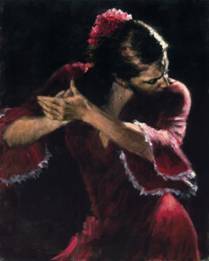
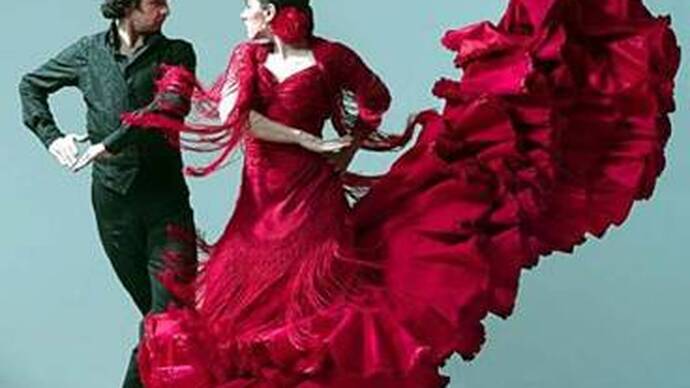
Viewed through the flamenco family tree, tangos originated mainly from the Romani music branch. This accounts for the sharp, accented movements, the strident sound, and the performance's focus on rhythm rather than melodic quality. The song or dance usually begins with clapping in the above-mentioned rhythm and continues throughout the entire performance, accentuating moments of climax and relaxation.
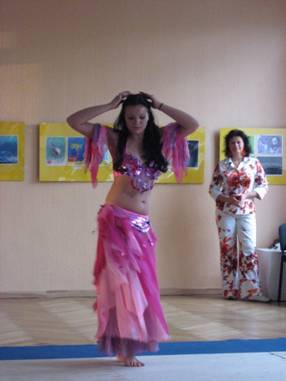
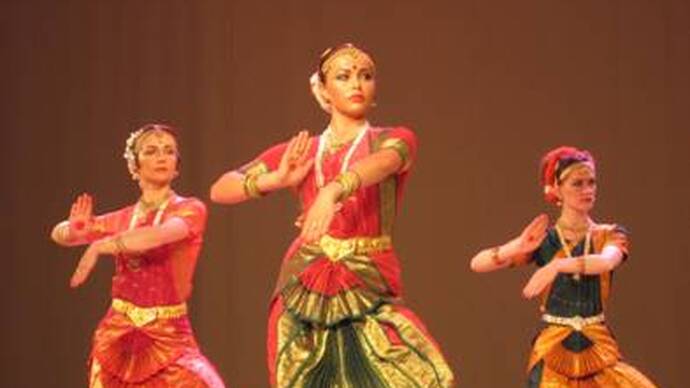
On Thursday evening, 10 August, I attended the open class at the exotic dance centre Alegria, held at 4 E. Birznieks-Upīša Street, in the hall of the Young Technicians' Centre. Centre director Ilze Zariņa introduced four dance styles that can be learned from Alegria's teachers - belly dancing, Indian dance, flamenco, and Gypsy dance. To illustrate each dance style, there were teachers' performances (see video).
Flamenco music and dance contain a great many improvisational elements, which is why every performance is unique and flamenco is difficult to transcribe in musical or choreographic notation. The art of performing flamenco is usually passed from teacher to student through training and observation.
A thoroughly lovely event took place on 12 July at the Madona Culture House. Dance studio Mantigra, in cooperation with Madona City Council, organised the 1st Exotic Dance Festival.