Don't Listen to What They Say - Watch How They Say It!
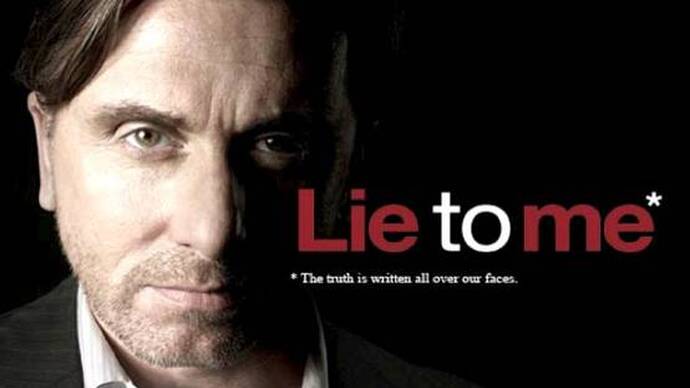
The main character of the series "Lie to Me" (2009), Dr. Lightman (actor Tim Roth), just like the well-known Dr. House, claims that all people lie. He can distinguish lies from the truth almost infallibly - not by listening to how convincingly a person speaks, but by observing their facial expressions and gestures.
The main character of the series "Lie to Me" (2009) (actor Tim Roth), just like the well-known Dr. House, claims that all people lie. He can distinguish lies from the truth almost infallibly - not by listening to how convincingly a person speaks, but by observing their facial expressions and gestures.
Back in my student days I was thoroughly engrossed in Alan Pease's "Body Language," which broadly described the main gestures that indicate a person's emotional state. For example, the most common lying gestures are: covering the mouth, touching the nose, rubbing the eyes, grabbing the ear, scratching the neck, and tugging at the collar, and so on. Now this series is like honey on bread.

However, it is not so simple - learning a few hundred human facial expressions and knowing everything the other person thinks. Lies come in many forms, ranging from lying to other people (a partner, loved ones, colleagues, acquaintances, etc.) to lying to oneself, which is usually done in the name of self-protection and stress reduction. The theory of lying has several classifications. Lies are examined from both a moral standpoint and from a psychoanalytical perspective. Research shows that in the course of ten minutes, people lie on average at least two or three times.
The series discusses and the main character is considered a professional at detecting micro-expressions in facial movements - when a person, hiding lies and even managing their body language well, nonetheless reveals their true emotional state on their face for a tiny fraction of a second. These micro-expressions cannot be controlled consciously and appear involuntarily. One can train and learn to control one's voice timbre, gestures and smile - but not these facial micro-expressions. Most interestingly, in everyday life, the people around us do not even notice them in those closest to them.
It turns out the main character of "Lie to Me" has a real-life prototype - University of California professor and psychologist Paul Ekman (1934), who is practically a walking lie detector. Ekman has devoted more than 30 years of his life to researching and developing the theory of lying, and is currently the leading specialist in this field, as well as the author of the aforementioned theory of micro-expressions. He is the head of the company «Paul Ekman Group», which develops training methodology for lie detection and consults politicians, security services and other organisations.
British-born actor Tim Roth (real name Timothy Simon Smith, 1961) is in my view an extraordinarily well-chosen performer for the lead role. The uncertain gait, perpetually relaxed, seemingly careless gestures, the head tilted to one side in observation, and the piercing gaze. A difficult character, unsuited to a settled family life. A witty loner who does not indulge in empathy in conversation and expression when communicating with loved ones and colleagues, let alone with strangers. Distancing himself from emotions or allowing them their expression, he nonetheless retains objectivity in his judgements. At first glance visually nothing special - even an unattractive man; in terms of personal charisma extraordinarily likeable, captivating and magnetic - one could fall in love.
In a word - I recommend watching it!
Sources:
http://en.wikipedia.org/wiki/Paul_Ekman
http://en.wikipedia.org/wiki/Tim_Roth
http://en.wikipedia.org/wiki/Microexpression
http://www.paulekman.com/


comments