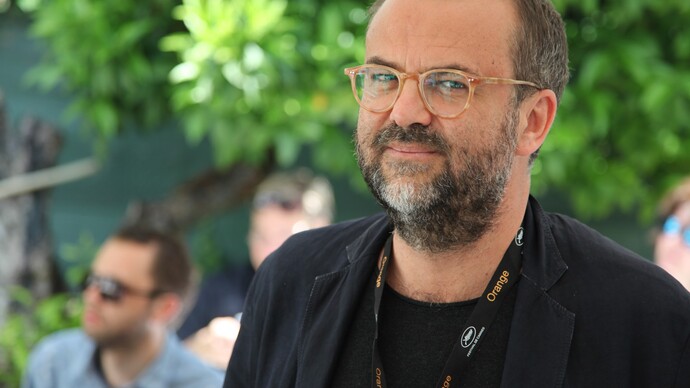
The Films of Lars von Trier
Trier's films are grounded in love, forgiveness and evil - with the last being the oppressive, dominant force in people. Evil cannot be resisted with love and forgiveness. The only escape from evil is to physically destroy it.
My recent cinematic obsession has been watching all of Trier's works. This time I want to talk about three of them: "Breaking the Waves", "Dogville" (Dogville, 2003) and "Dancer in the Dark". These are not fairy tales for adults, the kind that fill TV screens, in which princesses await their prince, the wise and noble always prevail, justice is fair and good ultimately triumphs. Trier's films are grounded in love, forgiveness and evil - with the last being the oppressive, dominant force in people. Evil cannot be resisted with love and forgiveness. The only escape from evil is to physically destroy it.

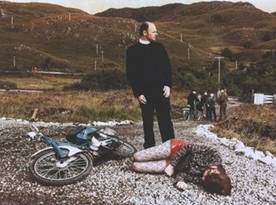
The paradox of life that Trier has perceptively noticed and highlighted in his films is this: the more you forgive people the wrongs they have done to you and the more powerfully you love them, sacrificing yourself physically or spiritually, the more their hatred, envy and malicious treatment of you increase. Bess McNeill (Emily Watson) from "Breaking the Waves," Grace Margaret Mulligan (Nicole Kidman) from "Dogville," and Selma Ježková (Björk) from "Dancer in the Dark" elevate love for one's neighbour, trust and forgiveness to the highest level - the level of Jesus - above the moral and ethical norms of society. All three women surrender their bodies and self-respect to complete destruction, patiently accepting every humiliation, slander, theft, rape, expulsion, stoning - for "they know not what they do." They believe admirably in the goodness of people, and nothing can change this conviction. Even the executioner who places a noose around one's neck is equally worthy of an embrace, of tenderness, and of forgiveness.
People constantly play the roles of victim and executioner - situationally, dominantly or as pretence. In any case, as soon as you find yourself in the victim's role and at the same time encounter an executioner, the outcome is one: you will be destroyed. Bess and Selma die as victims, but Grace ultimately chooses to take on the executioner's role and at the film's end orders the burning of the village together with all its inhabitants, who for months enslaved her, exploited her, raped her, insulted her and kept her chained in the place of a dog. Would you not settle scores with people who had treated you that way?!
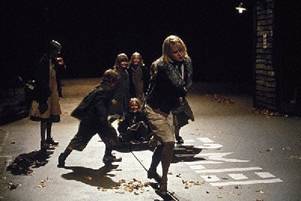

Bess and Selma are eccentrics, fragile souls who need guardianship, for on their own they simply cannot survive in this world. Both have loyal friends who try to protect them from the destructive behaviour that inexorably leads to their end. But for Bess and Selma the goal is higher than the means. Bess is expelled from the local village community, from the church; her mother turns away from her, locking the door and no longer letting her in - yet she believes she can save her husband's life by giving herself to the most unscrupulous exploiters. Faith is superior to reason, to medical diagnoses, to public opinion, to traditions and norms. The husband survives, Bess dies - but she has fulfilled her mission on this earth.
I recommend all three of these films to everyone who has grown weary of Hollywood's gloss, its indestructible superheroes and the desire to think along.
About Lars von Trier
Lars von Trier (Lars Trier, born 30 April 1956) is a Danish film director and screenwriter. Nominated for several awards at the Cannes Film Festival for the film "Breaking the Waves" (Breaking the Waves, 1996), the film "Dancer in the Dark" (Dancer in the Dark, 2000) and the film "Melancholia" (Melancholia, 2011).
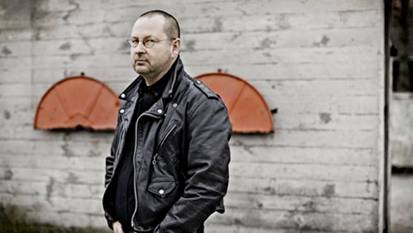
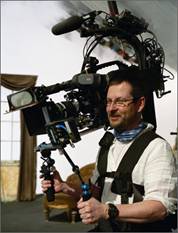
In 1995, Lars von Trier together with director Thomas Vinterberg created the Dogme 95 manifesto, which holds that the primary principle of filmmaking is concentration on the film's subject matter, story and acting, rejecting the use of such methods as special effects and various post-production technologies that excessively alienate the viewer. They created a "Vow of Chastity" consisting of 10 rules that must be observed by anyone wishing to make a film in the Dogme 95 style.
• Filming must take place on location. Props and sets must not be brought in (if a particular prop is necessary for the story, a location must be chosen where this prop is to be found).
• The sound must never be produced apart from the images or vice versa. Music must not be used unless it occurs where the scene is being filmed.
• The camera must be hand-held. Any movement or immobility attainable in the hand is permitted. The film must not take place where the camera is standing; filming must take place where the film takes place.
• The film must be in colour. Special lighting is not acceptable (if there is too little light for exposure the scene must be cut or a single lamp may be attached to the camera).
• Optical work and filters are forbidden.
• The film must not contain superficial action (murders, weapons, etc. must not occur).
• Temporal and geographical alienation are forbidden (that is to say that the film takes place here and now).
• Genre movies are not acceptable.
• The film format must be Academy 35mm.
• The director must not be credited.
comments