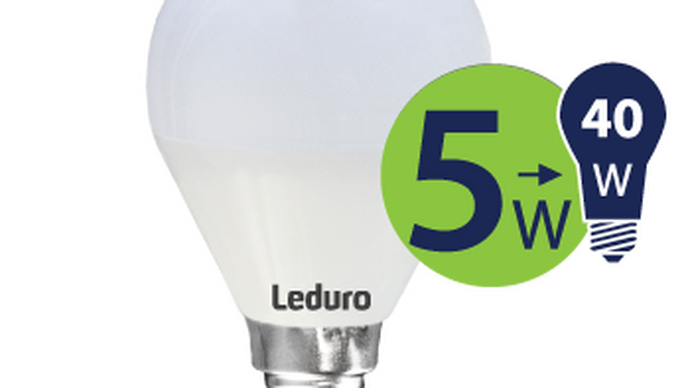
What You Need to Know About LED Bulbs
Unlike old incandescent bulbs, where the only determining factor was wattage (W), with LED things are a little more complex - there are several parameters worth knowing and considering when buying an LED bulb.
Bulb manufacturers have over time produced not only bulbs of different lengths, sizes and fittings (E27, E14, etc.), but also of different types: incandescent, halogen, fluorescent (or "energy-saving") and LED. The latter are said to be the most economical and longest-lasting, as the manufacturers themselves claim. Unlike old incandescent bulbs, where the only determining factor was wattage (W), with LED things are a little more complex - there are several parameters worth knowing and considering when buying an LED bulb.
Brightness
One stereotype about LED bulbs is that they are not bright enough compared to the old type. The quantity of light is measured in lumens; wattage measures how much electricity a bulb will consume. These two quantities are not directly related, though it must be admitted that one can sometimes serve as a rough guide.
For example, a 60W incandescent bulb produces ~860 lumens of light, a 14W energy-saving bulb - 775 lumens, while a 10W LED - 800 lumens.
These are approximate values, but in the case of LED, the aim is to have few watts but many lumens.
Colour Temperature
Another stereotype is that the light produced by LED bulbs is blueish and cold. Light temperature is measured in Kelvin. For home use, the recommended (and therefore ideal to purchase) range is from 2700K to 3500K. Old incandescent bulbs emitted warm light at 2700K. The warmth of light has nothing to do with the warmth you feel on your skin. Unlike old bulbs, LED bulbs heat up minimally.
I have noticed that there are two types of bulbs - those where the LED elements are visible, and those with a diffusing cover. We have made our choice in favour of the ones with a cover. Consequently, it is worth noting that LED bulbs often have a specific beam angle. A 360-degree angle applies to those that shine in all directions (similar to the old ones).
Colour Rendering Index (CRI)
This index determines how natural colours will appear under that lighting. While old bulbs had a CRI of 100 (the maximum), LED bulbs typically have a CRI of only 80. It is not advisable to use bulbs with a CRI below 75 in living spaces. Some sources mention the manufacturer LEDNovation, which has achieved a CRI of 94. Budget-end bulbs (as found in Latvian shops) have a CRI of 80.
Lifespan
In theory, LED bulbs should last 50 times longer than incandescent ones. It is generally accepted that an LED cannot last longer than 50,000 hours. However, 40,000 and even 25,000 hours is a sufficiently long lifespan. For reference, there are 8,760 hours in a year. This does not mean the bulb will burn out at that point - rather, the amount of light it emits will decrease by approximately 70%. The exact percentage by which it decreases is indicated by the parameter "L". Alongside this, the parameter "F" is also used, which indicates what percentage of bulbs are expected to survive until the end of their theoretical lifespan.
40,000h L70 / F50 means that after 40,000 hours the bulb will emit only 70% of its original light, but it is expected that only 50% of bulbs will still be functioning by that time.
What's Inside the Bulb
An LED bulb is technologically and constructionally considerably more complex than its predecessors. The characteristic of LEDs is that the elements themselves operate on direct current, while the mains supply - as is well known - is alternating current, which means a converter is needed (in the image - the green board). The quality of the converter will determine whether the LED bulb flickers. Some sources also note that the most common cause of LED "burnout" is precisely this converter, which resourceful post-Soviet inhabitants have even been known to repair, giving the bulb a second life.
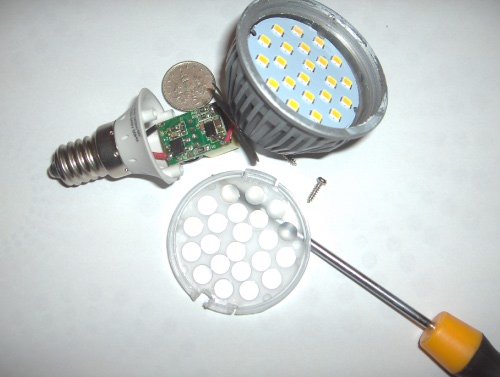
Figure 1. LED bulb
My Experience
I have purchased two LED bulbs:
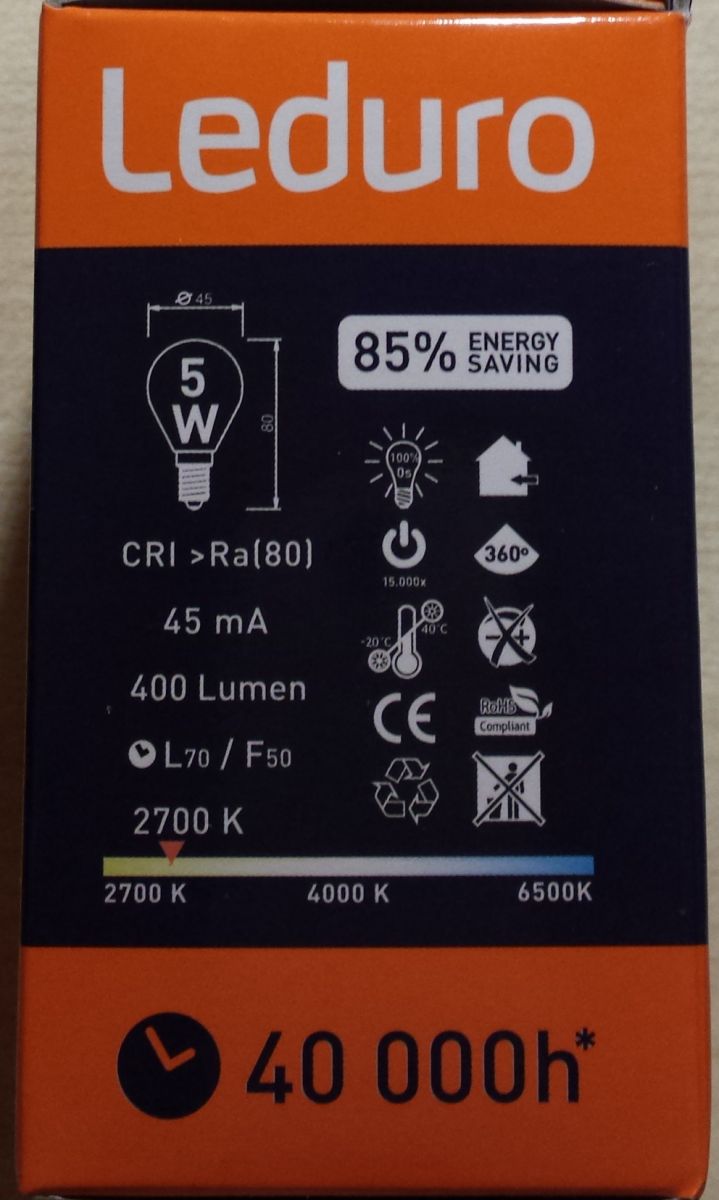
Figure 2. Leduro, E14, 5W, 400lm. EUR 5.99
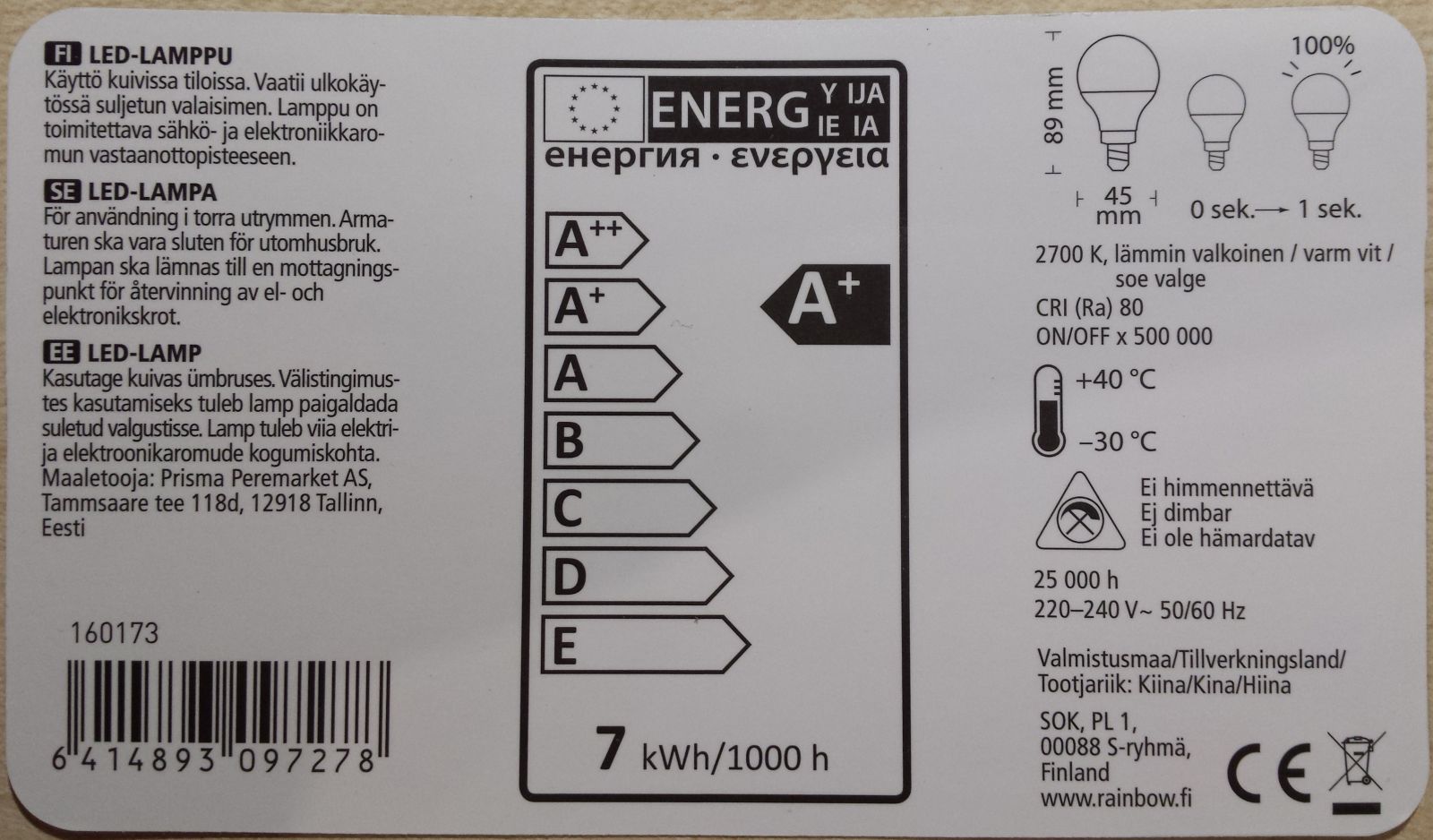
Figure 3. Rainbow, E14, 7W, 470lm. EUR 5.79
Although both have the same stated colour temperature - 2700K - in practice the Leduro turned out to be considerably cooler (or alternatively, the Rainbow warmer). :( The Rainbow, despite its stated wattage of 7W and light output of 470lm (versus Leduro's 5W and 400lm), shows no visible difference to the eye. The Leduro bulb is shorter, while the Rainbow is closer in length to an incandescent equivalent.
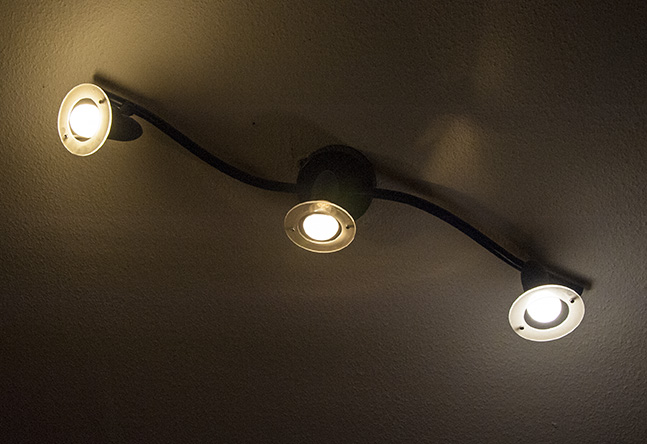
Figure 4. Left - Rainbow, centre - incandescent, right - Leduro
Conclusions:
If LED bulbs are intended for ceiling lighting, the overall interior colours should be taken into account. Warm or slightly cool light is neither good nor bad in itself. If a room has yellowish wallpaper or brownish furniture, warm light will make them appear even more yellow and brown, while cooler light will make them less conspicuous.
I have not tried branded LED bulbs (Philips, Osram, etc.), although I assume that apart from the price, no significant surprises are to be expected. I would like to try technologically different LED options, such as LEDNovation.
comments