Human Races
I recalled a long-ago heard or even taught classification - the white, black, red, and yellow races. Looking at it more closely now, it turns out that is quite limited and schematic. There are a great many racial theories - one mentions three, another four, yet another five principal races, not to mention the many sub-races.
On the second Sunday of Advent we were visiting friends. After dinner, over a glass of good rum, we began to discuss the future in both a global and local sense. We touched on Vanga's prophecies, the global village, the end of the Mayan calendar in May 2012 and the so-called end of the world it was said to herald, possible ecological and natural catastrophes, solar flare activity, religious wars, and the dominance of one race over another. Until the question arose - who actually knows how many races there are and what they are, which nationalities belong to which race, what the characteristics of each race are, and so on?
I recalled a long-ago heard or even taught classification - the white, black, red, and yellow races. Looking at it more closely now, it turns out that is quite limited and schematic. There are a great many racial theories - one mentions three, another four, yet another five principal races, not to mention the many sub-races.
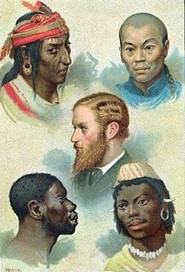
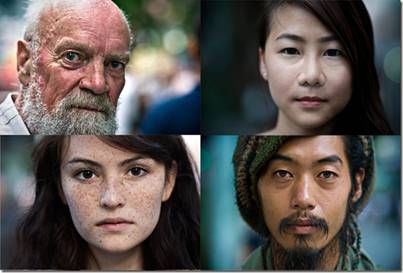
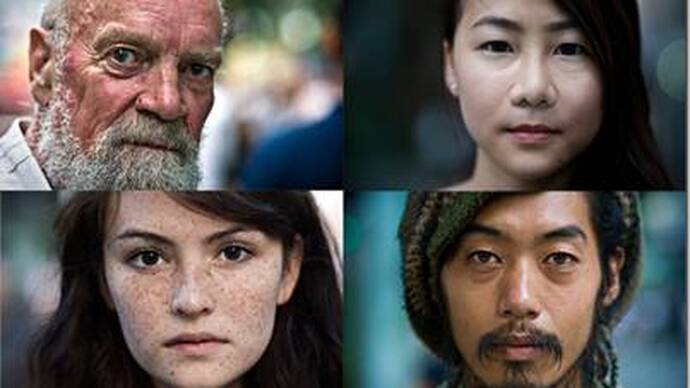
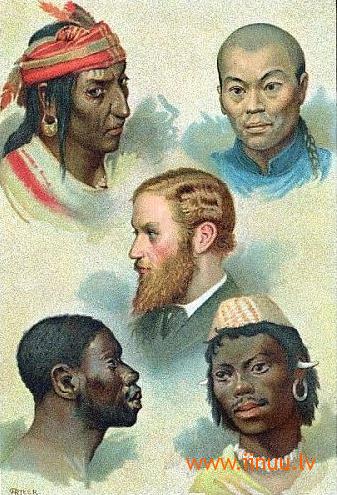
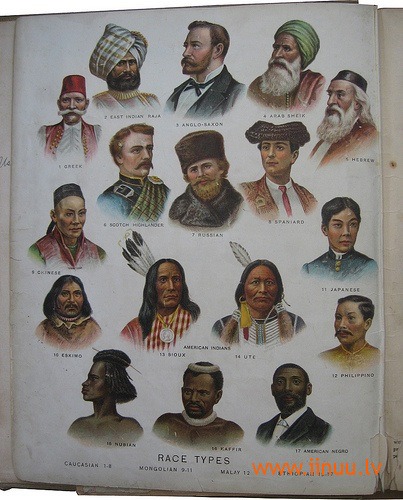
Image from Heritage-Images, late 19th century. & photo by Danny Santos "Portraits of Strangers"
Why would one need to know or be interested in this? If only to avoid carelessly tossing around words like "racism" and "globalisation" without understanding their meaning. The relatively recent discovery about children with Williams syndrome (the only ones who do not have racial prejudices) has led to the conclusion that racial antipathy is a genetic phenomenon programmed into all people in the seventh chromosome. [1] Interestingly, the 2008 state examination in geography for secondary school compiled by ISEC asked pupils to answer very precisely: "Write according to what main characteristic humans are classified into races!" [2]
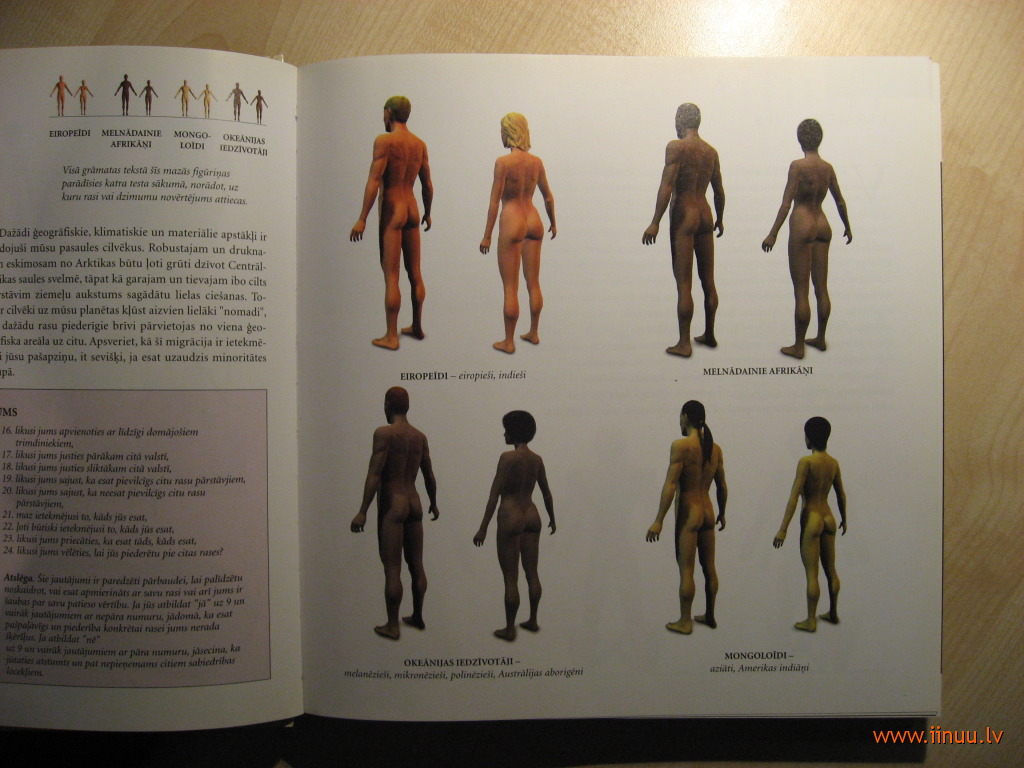
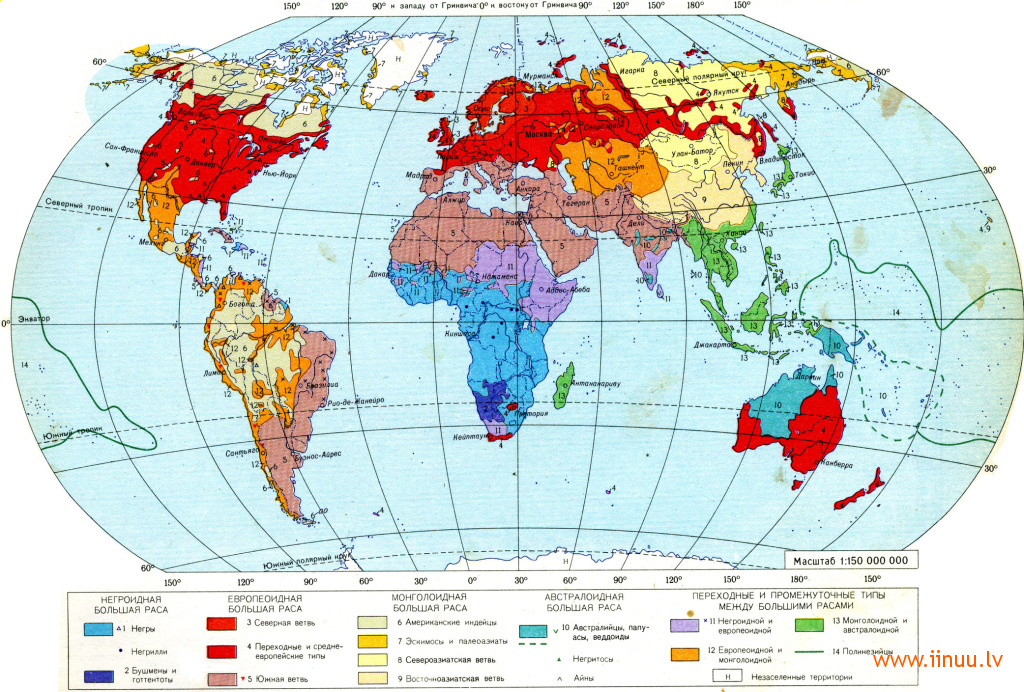
The following definition of race can be found in a dictionary of foreign words [origin: German Rasse < French race < Italian razza < Arabic]: a human type that has formed in the course of evolution as a result of different living conditions, characterised by its own inherited morphological and physical features (skin, eye, hair colour, etc.); there are three major races - Europoids or the Eurasian race, Negroid-Australoids or the equatorial race, and Mongoloids or the Asian-American race. [3]
As I mentioned, there are quite a few different racial classifications [4], ranging from ancient times to the present day - some logical, grounded in scientific research, and some, from a modern perspective, somewhat comical, such as the racial classification created in 1746 by the Swiss botanist Carl Linnaeus (Carl von Linné) [5], based on psychosomatic and physiological traits.
1. Americanus - Americans. Red-haired, choleric, erect posture, persistent, self-satisfied, governed by tradition.
2. Europaeus - Europeans. Blonde, sanguine, muscular, agile, sharp-witted, imaginative, governed by law.
3. Asiaticus - Asians. Yellow-faced, melancholic, flexible, cruel, miserly, fond of luxury, dressed in loose clothing, governed by public opinion.
4. Africanus or Afer - Africans. Black in colour, phlegmatic, weak in body, cunning, indifferent, sluggish, fatty, governed by caprice.
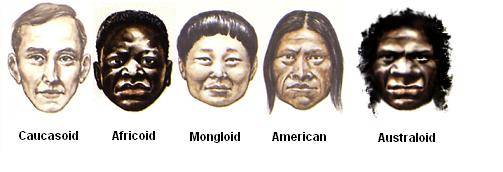
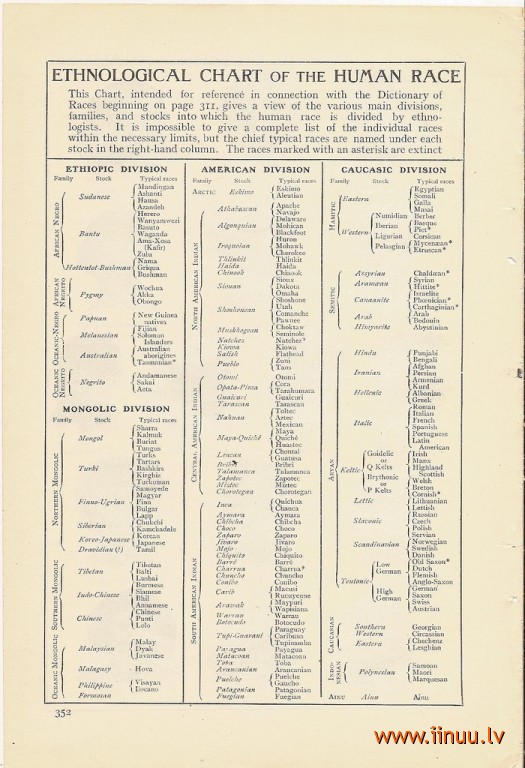
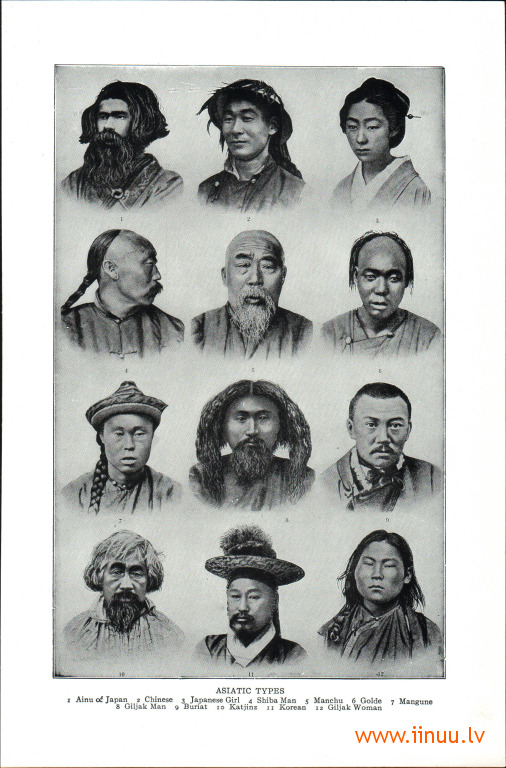
Anthropological classification of human races (late 19th – early 20th century)
The most comprehensive division across all classifications is nonetheless into three principal races - the Europoid race, the Mongoloid race, the Negroid race - plus the mixed races: mulattos (Negroid + Europoid), mestizos (Mongoloid + Europoid), zambos (Mongoloid + Negroid), Creoles (British settlers + descendants of African slaves). More detail on each follows.
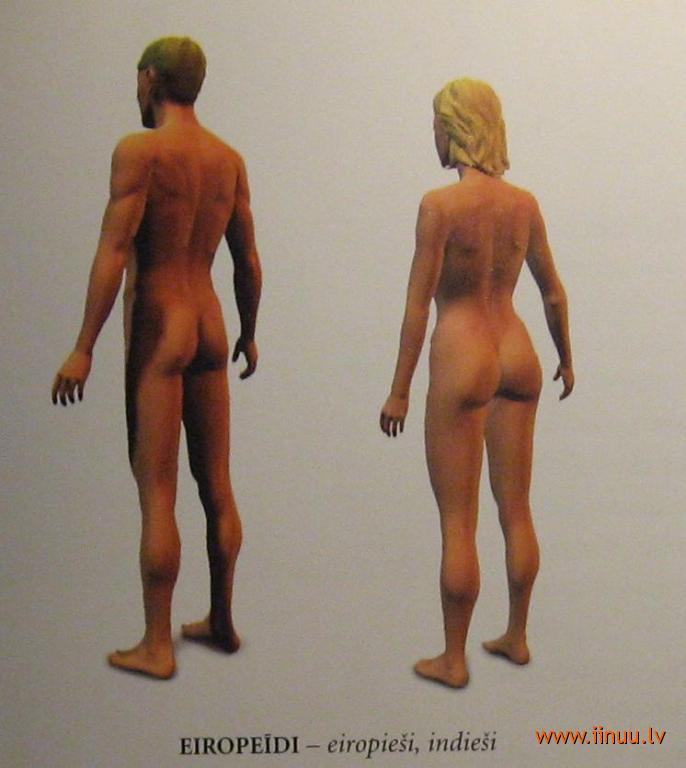
The Europoid race [origin: German Europoide < Europa + Ancient Greek eidos 'form'] - a human race characterised by relatively fair skin, soft straight or wavy hair, a strongly projecting straight nose, thin lips. They are divided into two branches: the southern branch is characterised by darker skin and dark hair and eyes; the northern branch - by fair skin, blonde or light brown hair, blue or grey eyes. [3] Also called the Caucasian race. Inhabits mainly Europe, the Middle East, North Africa, North India, and later also North and South America, North Africa, and Australia.
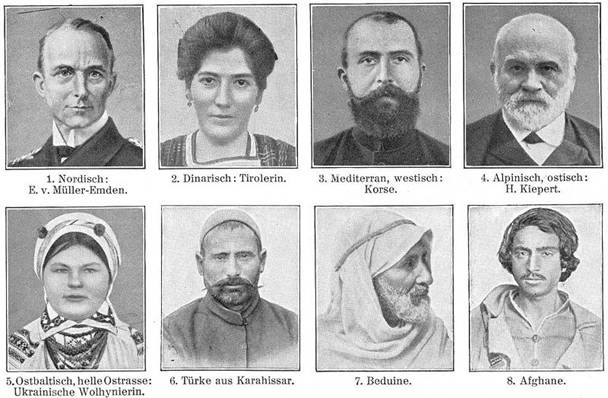
Meyers Blitz-Lexikon (Leipzig, 1932) - Europoid types
Naturally, it is interesting to look more closely at the Baltic sub-race [7] and its characteristic features, formulated by Russian anthropologist V. Bunak (Бунак, Виктор Валерианович, 1891–1979). This sub-race (or us) inhabits the Baltic Sea coast and has the following features:
• a large proportion of fair-haired people with light-coloured irises;
• facial width around 140mm;
• moderately elevated nose bridge;
• average nasal index (70.0–84.9% width-to-length ratio).
A very interesting overview of the Europoid sub-races with matching photographs - http://racialreality.110mb.com/subraces.html For instance, this would be the typical white - or more precisely, Lithuanian - face. :)

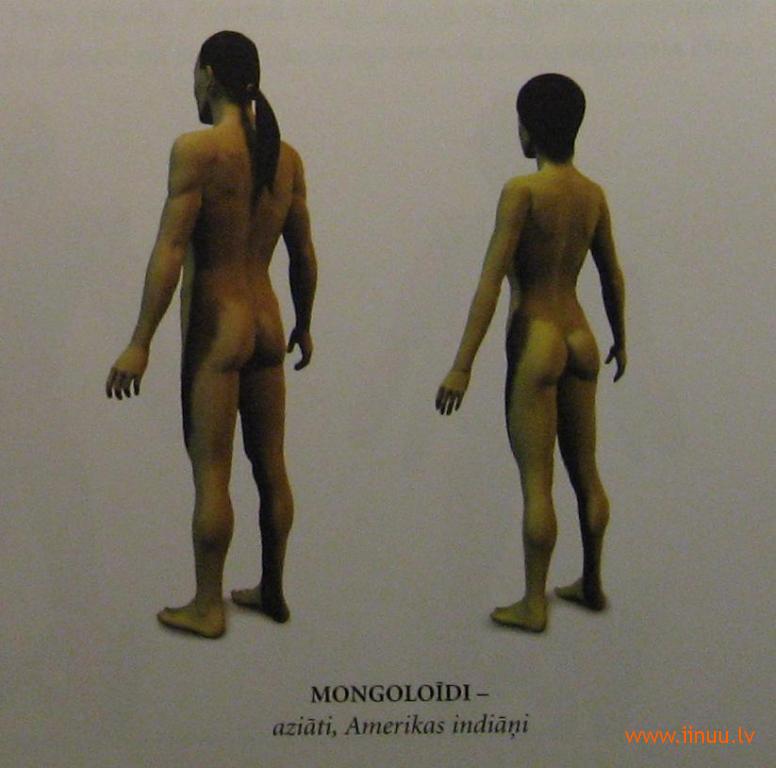
The Mongoloid race [origin: mongol (the Mongolian self-designation)] - also called the Asian-American race, the yellow race. Its representatives are characterised by a flat face, yellowish skin colour, black hair, and the upper eyelid forms the so-called Mongoloid fold. [3] Inhabits Asia, the Far North, and the Americas (Native Americans). [8]
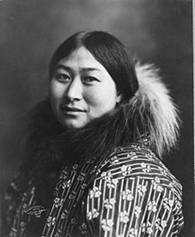

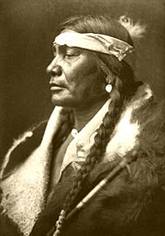
Inuit woman & Taiwanese man & North American Indian
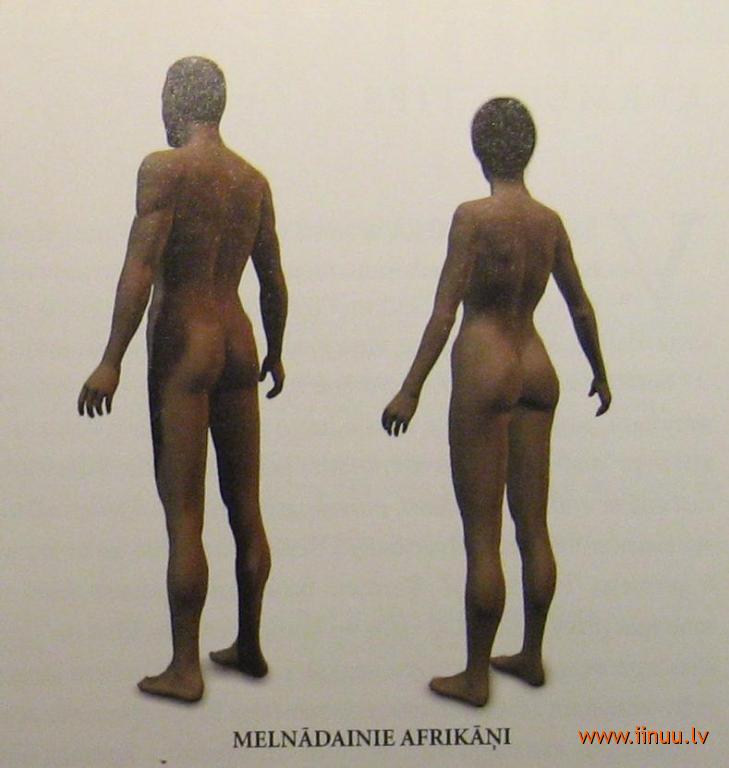
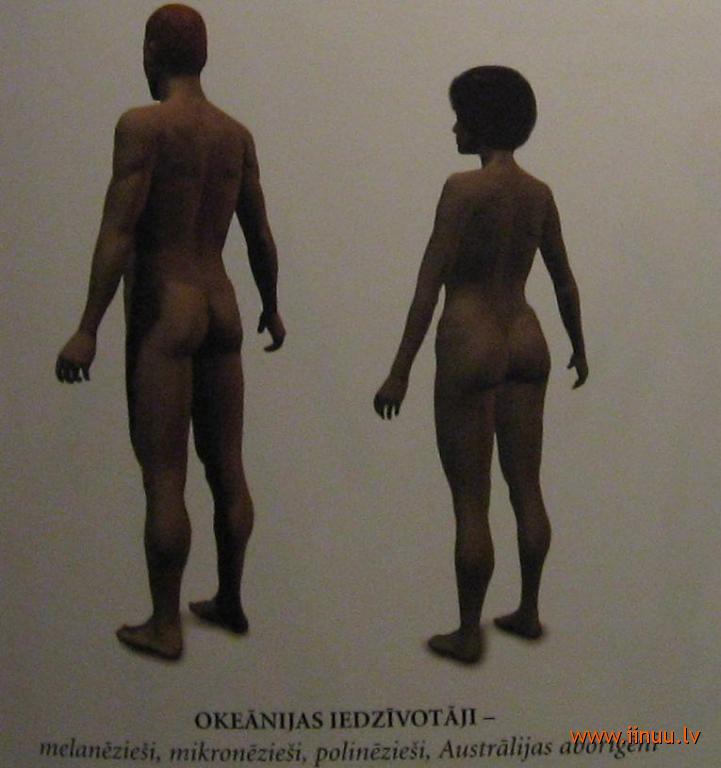
The Negroid race [origin: Spanish negro < Latin niger (nigri) 'black'] - people of the black race. [3] Varied body build, long extremities (arms and legs), dark skin (particularly rich in the pigment melanin), curly hair, broad nose, thick lips, jaw projecting forward without a pronounced chin dimple. Inhabits Africa from the Sahara Desert southward, and later also the Americas. Closely related to the Negroid race but in some classifications distinguished separately is the Australoid race.
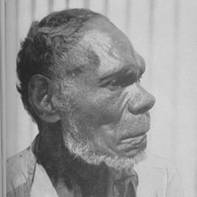
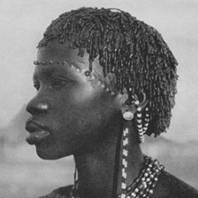
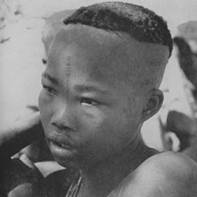
Australian & Sudanese woman & boy from the Kalahari Desert
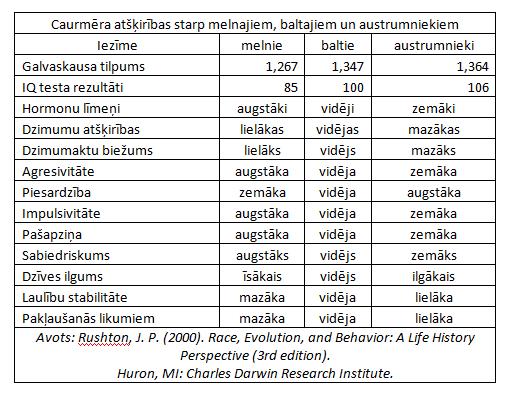
In closing, a glimpse at a study comparing representatives of three races [10]:
Sources used:
[1] The only people in the world found to have no racial prejudices - children with Williams syndrome
[2] STATE EXAMINATION IN GEOGRAPHY FOR SECONDARY SCHOOL 2008
[3] Dictionary of foreign words.
[4] Racial classifications
[5] Carl von Linné - http://en.wikipedia.org/wiki/Carl_Linnaeus
[6] Europoid race - http://en.wikipedia.org/wiki/Caucasian_race
[7] Baltic race
[8] Mongoloid race - http://en.wikipedia.org/wiki/Mongoloid_race
[9] Negroid race - http://en.wikipedia.org/wiki/Negroid_race
[10] J. Philippe Rushton - Does race matter in human characterisation?
comments