This year the impression arose that great emphasis was placed on cinema. Art films were shown at Spīķeri and on the wall of the Saeima building, documentary cinema at the contemporary arts centre kim?, and vertical cinema at the restored concert hall "Rīga" in the Academy of Sciences building. The last was something new and fresh for Riga audiences.
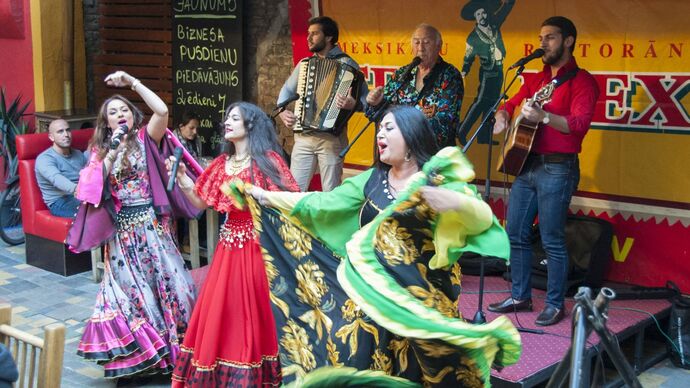
On Thursday evening, in the courtyard of the Tex-Mex restaurant on Dzirnavu Street, we attended the opening concert of the International Roma Culture Festival. During the evening, the Roma ensemble AME-ROMA performed popular melodies from Soviet-era films about Romani life - "The Gypsy Camp Vanishes into the Sky" (1976) and "A Cruel Romance" (1984) - as well as Russian romances such as "Очи чёрные".
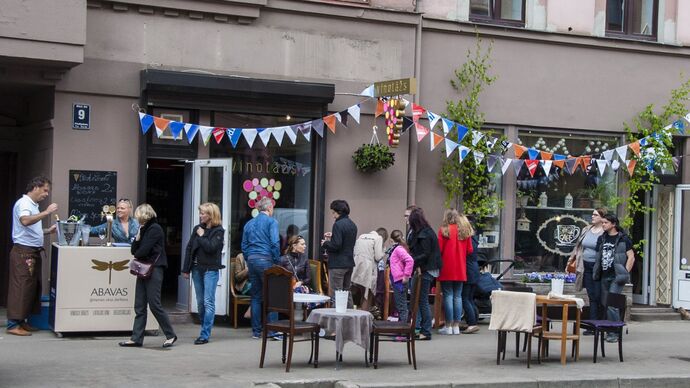
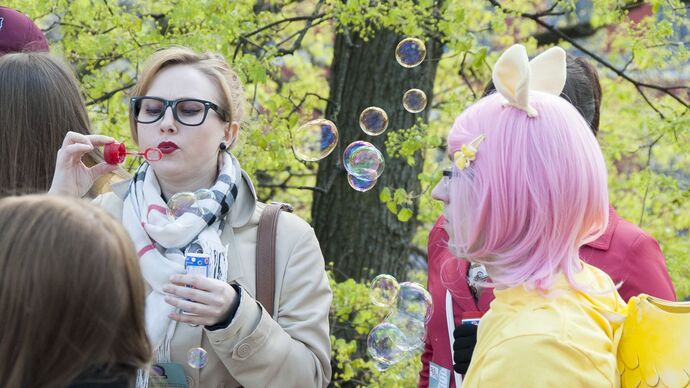
Trading, crafting, painting, singing and listening, playing music and playing games, tasting and snacking - all the length of Miera Street. Colourful ribbons and pennants fluttering in the wind on strings stretched across inner courtyards brighten the overcast skies. Children's chatter and squeals of delight when a small finger manages to touch a just-blown soap bubble.
The word "museum" in this event becomes ever more symbolic with each passing year, because Museum Night involves not only municipal enterprises - such as the Riga Municipal Police this year, opening their premises to visitors - but also factories (Aldaris), libraries, and universities. And that is not such a bad thing.
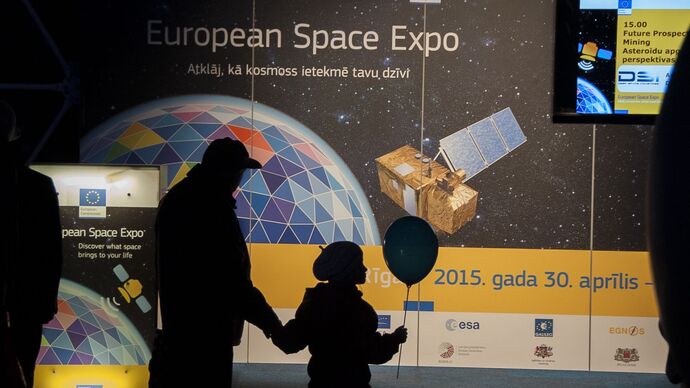
From 30 April to 10 May this year, an igloo-like tent - a dome - has been erected in Riga by the Rainis Monument, where anyone interested can enter free of charge and learn about the possibilities provided by European space programmes here on Earth.
It turns out this bubble-blowing event has been taking place for the fifth year running. Young and old gather with various containers of soapy water and blow soap bubbles of all sizes. After the gathering at Bastejkalns, a procession follows through the streets of Riga to Dome Square.
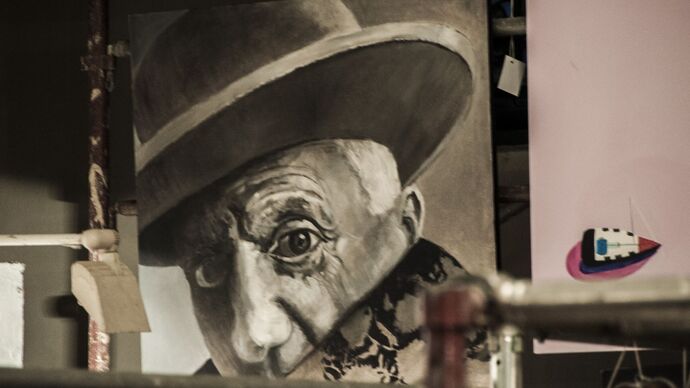
Having done a couple of rounds and handled a few works by emerging artists, we left - unfortunately nothing really spoke to us. Quite a lot of the commercially popular little cats, horses, and views of Venice. We wondered: perhaps the best and most vibrant works had already found their owners in the very first days of the fair?
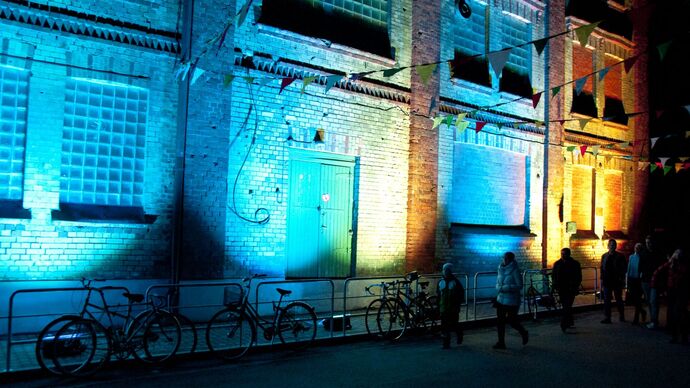
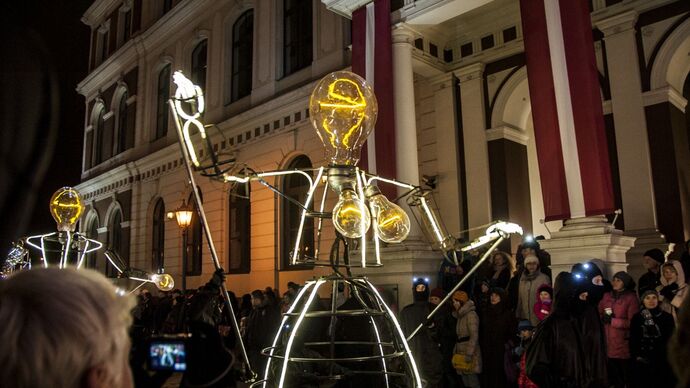
In pursuit of impressions, we spent two evenings in two pleasant companies. What we unambiguously enjoyed was the light procession or parade "The Secret Life of Light" - a dynamic, fun, and attention-grabbing performance. The other installations were fairly uniform - more or less vivid projections on building facades.
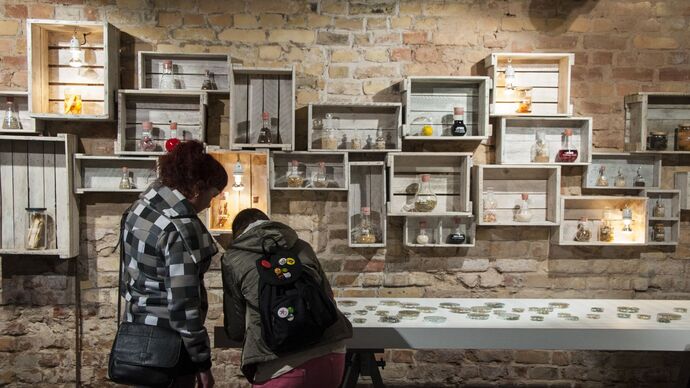
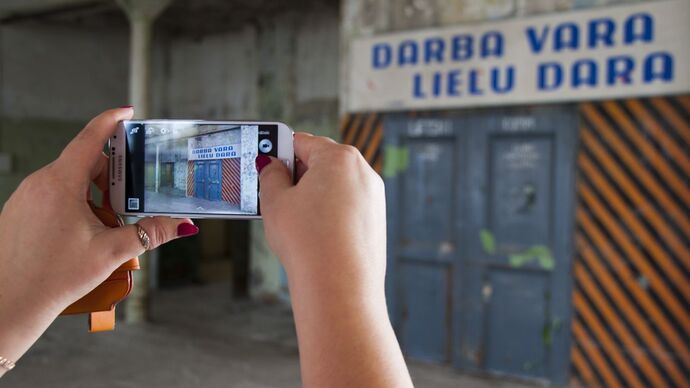
The venue hosting the international contemporary art festival SURVIVAL KIT this year is itself worthy of a separate story. The installations are arranged in the spacious grounds and building of the former textile factory "Boļševička", which was built at the start of the 20th century as the "Buffalo" leather footwear factory. The spaciousness, industrial spaces, and light of the building are ideal for displaying art works.
For four days, Building No. 5 of the Riga Psychiatry and Narcology Centre became a flowering garden where not only the residents of that building but any city dweller could seek peace and closeness with nature. Walking barefoot across the lawn, one could peek into themed rooms. Each was dedicated to some story, some human fate, some human talent, and the fragile boundary between reason and madness.