Autumn is usually associated with maturity, and so it is - autumn people stand firmly on the ground and are grown-up in their judgements. They do not drift in clouds of illusion; they can see and accept the harsh reality of life. Autumn people are good calculators, quite pedantic and deliberate. Autumn people are diplomatic and principled; they are diligent and industrious, always holding to their firmly formulated views. Things go well for them, thanks to their balanced character.
Summer people have "broad" souls and are generous, because they usually lack for nothing (and they consider this a matter of course rather than a gift of fate). They are inclined towards risk and are not at all careerists (not at any price - if it works out, it works out; if not, that's fine too), but they are quite hardworking, and that brings them their main successes.
This morning I woke up earlier than usual, sat down at my beloved time-devourer (read: computer), and stumbled upon an article on Apollo - a company has appeared in Latvia offering loans under a contract, the signing of which means you pledge your soul as collateral. Of course, driven by my eternal curiosity, I visited the "advertised" website. Well, to put it exactly as the Bible quote goes - "what has already happened will happen again, for there is nothing new under the sun." Only in the 16th century a soul was sold for 100 silver or gold thalers, whereas in 21st-century Latvia - for paper 50 lats.
Each of us enjoys going to the nail technician from time to time and getting our nails sorted. Some also prefer to do their own manicure. But the nail shape we choose and the nail polish colour we most often use is entirely personal - a question of taste, practicality, beauty, and it turns out - character as well. So let us take a look at girls' nails to perhaps decode a little of their secrets!
A long-known saying - don't judge a man by his hat, but by his shoes. Every knowledgeable woman can say that the first impression of a man and the shoes he wears can be quite telling. The better-kept and more expensive the shoes he wears, the more put-together he is himself and the more stable and financially secure his situation. But what about women?
My interest in this science or pseudoscience (whichever you prefer) was sparked by a programme on the television channel "24ТЕХНО", where an English phrenologist talked about the history of the theory and briefly introduced its essence. In any case, it is one of the ways for a person to get to know themselves and others, and to understand their predisposition towards one thing or another.
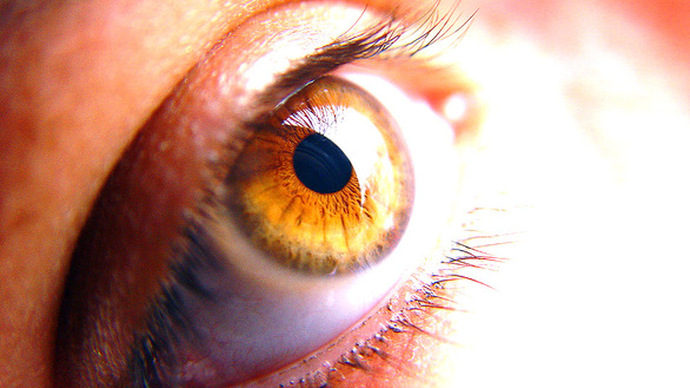
Each of us has at some point met a person whose eye colour has astonished or moved us. Most often it is the owners of saturated eye colours who attract our attention - coal-black, deep green, or unusually light blue eyes. Poetry is written about them, songs are composed, because they create a certain impression of mystery and otherworldliness. Eye colour is often used to try to determine a person's character or traits. Although scientists claim that the only thing that can be determined 100% from eye colour are markers of genetic heritage.
A personal comfort zone is in reality a terrible thing, as it significantly hinders any change or development in a person's life. Any influence of external circumstances or the people around us directed at changing our personal comfort zone is perceived as a threat. One's own comfort zone can only be changed by the person themselves, if they are ready to relinquish their victim or hero status in the eyes of another - most often a very close and significant person. Are you ready to share what your comfort zone is?
People enjoy telling jokes - about blondes, for example - because a rooted belief exists that hair colour determines intelligence or foolishness. But how is it really? Moreover, these days hair colour is not something that limits a woman or a man. One visit to the hairdresser and a blonde becomes a brunette. It turns out there are also studies on hair colour that reveal some of a person's more pronounced character traits. So here is what psychologists and astrologers say.
So I thought about people who are always dissatisfied with something or for whom things constantly "don't work out". Very often these people understand that this cannot continue and something must change, but they do it reluctantly - or, if change has occurred, after a while the dissatisfaction is back.
.jpg?w=690&mode=16x9|crop)