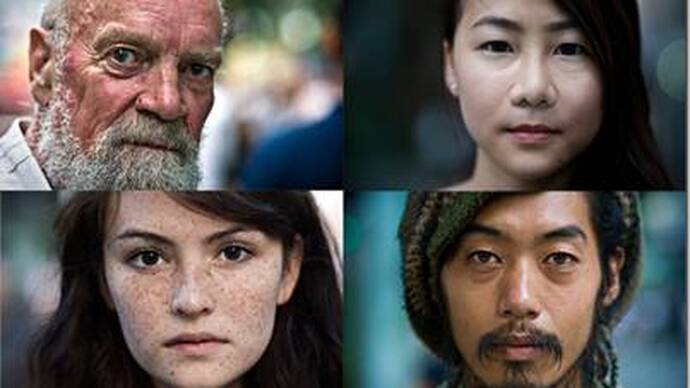
I recalled a long-ago heard or even taught classification - the white, black, red, and yellow races. Looking at it more closely now, it turns out that is quite limited and schematic. There are a great many racial theories - one mentions three, another four, yet another five principal races, not to mention the many sub-races.
There has long been an idea to write about Latgalian mentality - how a čangalis (Latgalian) differs from a čiulis (non-Latgalian Latvian), why they hold so firmly to their language, their land, their roots, traditions. But it's hard to write about things so close, emotional, intimate, and yet very self-evident. It seems that after the play "latgola.lv", viewing Latgalianness from the outside, I can finally try to do so.
A truth known to all - habit has great power. Is it good or bad to be ruled by everyday habits, or should they be noticed and disrupted from time to time? Habit is in reality a liberation from the decisions that would otherwise have to be made constantly. It is only because a large part of life runs on its own without any deliberation that forces are freed to engage intensively with the unfamiliar.
The awareness that something belongs to us makes us happy. The more and the higher-quality objects or subjects we own, the more our sense of wellbeing is heightened. But the more firmly the conviction establishes itself that it belongs to me, the greater the dependency becomes.
Which of you or your acquaintances or colleagues has ever brought a sick note to work stating that they were absent for two or three weeks due to depression? At least no such case is known to me in Latvia. Moreover, most people don't even regard it as an illness but as a weakness of will. They'd say - he simply can't pull himself together, why is he playing the helpless one!
Would you believe that even by what fruits you choose for dessert or snack between meals, something can be said about a few of your character traits? American psychologist Elaine Kahn is said to have compiled a description of fruits and corresponding human character traits. Read about this classification and what I think about it all.
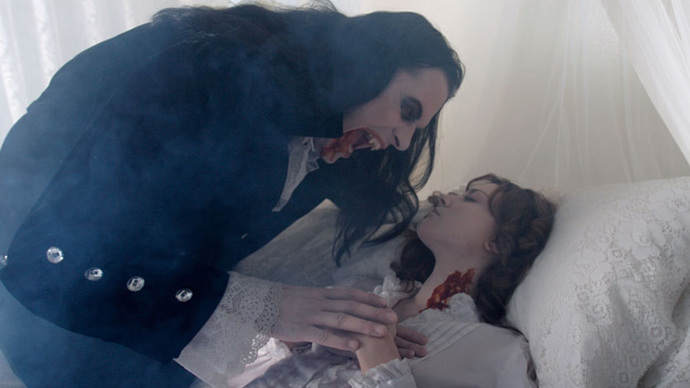
Horror films - a genre that thoroughly tickles the nerve endings. At times you want to close your eyes or crawl under the blanket, but then a moment later your gaze is nailed to the television screen again. A paradox - you're scared, but you want to keep watching. So where lies the "salt" of horror films? Why do we enjoy watching them?
Just as Freud once made a great fuss about slips of the tongue - which are never accidental and reveal something about a person's inner state of mind - so too doodles and scribbles in the margins of paper are not accidental. Psychologists have for a long time studied the connection between unconsciously drawn lines and a person's inner experiences. I will try to summarise a few findings briefly.
Spring people are egocentric, concentrating all joys and sorrows, successes and misfortunes solely upon themselves. At times they are naive as children, capable of wonder, of displaying indignation or confusion, great enthusiasm or deep disappointment. A spring person's mood must be guessed, otherwise one may unwittingly get hurt. That is why spring people are mostly admired but not loved. Relationships are complicated by sudden mood swings and whims.
Winter people are endowed with strong willpower and purposefulness, yet with a certain pronounced self-love and stubbornness. They are always confident in what they do, so it is hard to knock them off balance. The stubborn character, unwavering conviction of their own rightness, and inflexibility cause problems in family life. Moreover, they are not among the most talkative - discussing and talking through a problem is not in their nature. Winter people are silent and ponder everything deep within themselves. Words for them are empty air, winter people prefer to prove themselves through deeds.

.jpg?w=690&mode=16x9|crop)