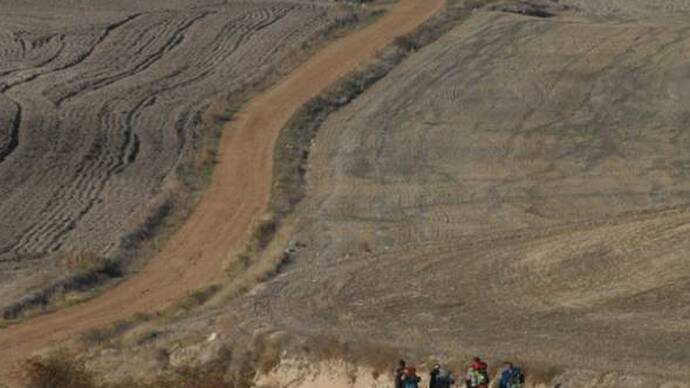
I was moved by Emilio Estevez's feature film "The Way" (2010), which I watched yesterday - based on the story of a man who has lost his son and walks the Camino de Santiago in his place, from France to the north-western Spanish city of Santiago de Compostela, where the relics of St. James rest. The Camino de Santiago is more than 800 km long, to be covered on foot, and it is each person's individual journey of discovery, forgiveness or dedication.
On Thursday evening we went to the "Rīga" cinema to watch the premiere of the new Latvian film "Dancis pa trim" (Dance for Three) together with the film's creators. The evening included: soldiers' songs, the appearance of the film crew, a moment of silence in memory of those who have passed, a glimpse into the making of the film, and the film itself. I was glad that the events depicted and the characters were not idealised.
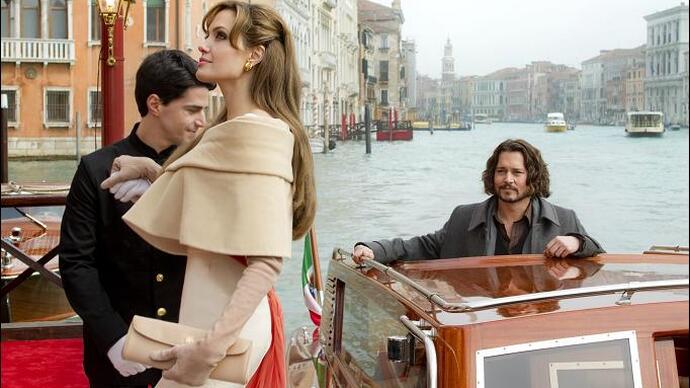
We have just returned from KinoLora, where we watched the film "The Tourist" (2010). The plot is not even so exceptional and original, though fairly tense and with intrigue, but the packaging is very enjoyable. Beautiful people (Johnny Depp, Angelina Jolie, Timothy Dalton, Rufus Sewell), beautiful clothing and interiors, beautiful and romantic cities - Paris and Venice, beautiful relationships. I must say, Venice is one of the few cities I have visited and yet it has still not lost its charm of secret longing. Familiar and forever foreign.
For those tired of Hollywood glamour and the occasional shallowness of feeling, I recommend watching something from the old pieces. The musical documentary "Latcho Drom" (1993) by French director of Romani origin Tony Gatlif ("Safe Journey" in Romani). It shows the Romani road through different times and seasons, through several countries and cultures, from India to Spain, passing through Egypt, Turkey, Romania, Slovakia, Hungary and France. Each stretch of the road is played out and sung, reflecting the distinctive Romani way of life, traditions, the rhythm of existence, crafts and worldview.
Stumbled upon by chance - not new (from 2007), but artistically engaging - a 14-episode feature film "Ликвидация" (Liquidation), alternating between Russian and Ukrainian. The setting is Odessa, 1946 - that is, shortly after the war. The main storyline follows law enforcement agencies' struggle against organised criminal gangs in Odessa, contraband traders, document forgers and illegal gamblers. Running through it all are human relationships in the post-war period, when everyone carries their own life tragedy and the deaths of many loved ones behind them.
While watching the film "Amaya," one's feelings can be loosely divided into three parts: at first an extraordinarily realistic portrayal of the environment and human relationships, an outlining of the plot and characters; then the subtle, almost imperceptible yet symbolic details characteristic of Eastern culture - rain outside the window reflected in Amaya's face like ceaseless tears, the ticking of a clock that dispassionately counts the moments of a human life, wind chimes set in motion this time by a fan rather than the free mountain wind, and so on; and finally a poignant sense of doom, sadness, satisfaction, pain and love.
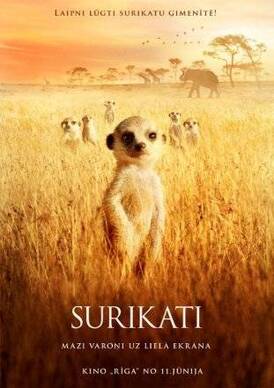
Welcome to the meerkat family! Little heroes on the big screen at the "Rīga" cinema. An extraordinarily sweet and cheerful poster - I couldn't walk past. :) A captivating documentary about meerkats, remarkable little desert animals that guard their relationships with one another much like we do. The central character is a meerkat pup named Kolo, and we follow his life story in Africa's Kalahari Desert.
The main character of the series "Lie to Me" (2009), Dr. Lightman (actor Tim Roth), just like the well-known Dr. House, claims that all people lie. He can distinguish lies from the truth almost infallibly - not by listening to how convincingly a person speaks, but by observing their facial expressions and gestures.
A film for connoisseurs, in which an extraordinarily successful combination of visual and sonic imagery is revealed. It draws you in not through any particularly gripping plot, but through music, rhythms and the depiction of subtle feelings. The story exists outside of place and outside of time. This house and these people could be anywhere where they were fated to draw closer and sense a kindred spirit.
Today we watched the science fiction film "Avatar," in which the inhabitants of the planet Pandora spoke a distinctive language. Moreover, this language was so vivid that the subtitles below almost left no doubt that such a civilisation and such a language truly exist. It turns out that linguists and film artists worked for several years to achieve this effect of reality. And it is now a language that can genuinely be learned.