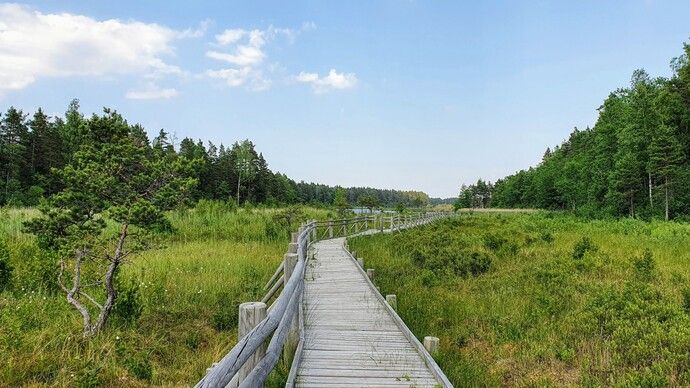
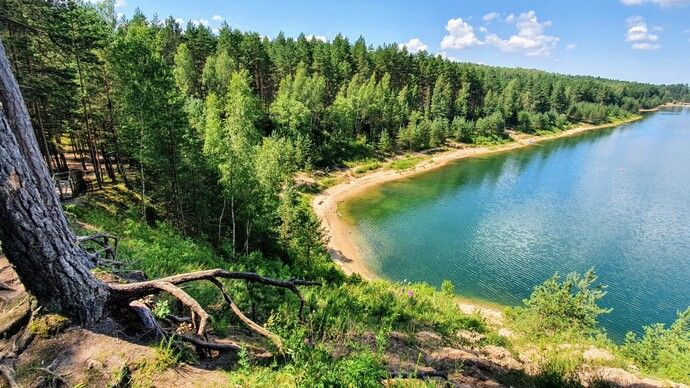
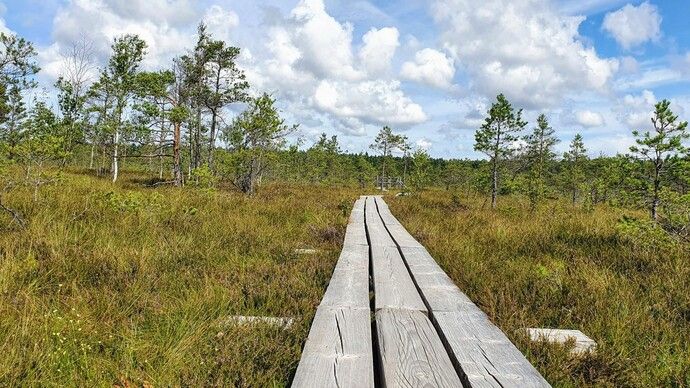
Taking it purely by trail length and number of points of interest, the most walked region is Kurzeme. And yet this list does not even include the many trips along the seashore, where every so often there is a little path winding through the dunes toward the sea, revealing fantastic views of the rocky or wind-felled-tree-decorated beach.
Each Latvian region has its own wealth and its own characteristic natural scenery. If it once seemed that a trip 100–200 km from Riga was some special event, everything now feels so compact, manageable, and reachable in a mere 1–2 hours. Get up on a Saturday or Sunday morning, have a sip of coffee, type a couple of keywords into Google Maps, get in the car, and off you go.
This year, like never before, we have made use of the opportunity to travel around Latvia, walking several shorter and longer nature trails. So I am happy to share information on what is worth seeing and at the same time getting some exercise on weekends.
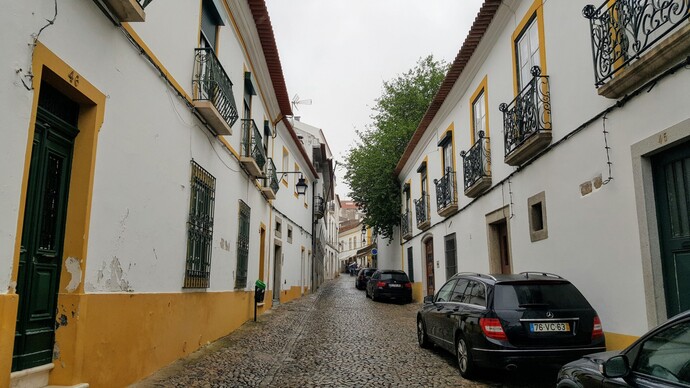
The last day of the journey, when from Spain we returned once more to the tranquil Portugal. One really must start thinking that the ocean's proximity cools heated minds and the land's mentality is much more velvety. We drove through a fairly hilly and sparsely populated region, through which the road wound like a lazy snake. Every so often the view opened onto valleys with streams, and then from seemingly nowhere on a steep hill a white-walled city appeared.
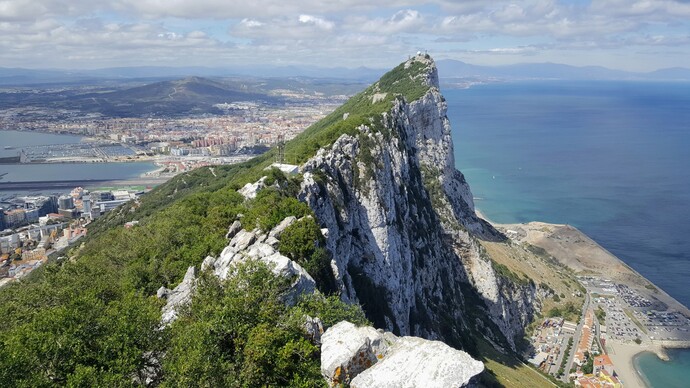
Currently a small patch of British land that connects the Mediterranean with the Atlantic Ocean, yet with a seemingly independent rhythm of life, its own flag, and the unusual-for-Britain traffic flow on the right side of the road. A coveted piece of land since ancient times - even today Spain has not given up hoping to reclaim it.
Each time we visit a country, we plan one day of doing absolutely nothing. The usual indispensable elements are sunbathing, the sound of sea or ocean waves, a leisurely rather than purposeful stroll in nature, wine, and good food. This time we savoured the delights of the Andalusian village El Rompido, not far from the city of Huelva. During the day - sangria on the beach, in the evening - wine and paella, late in the evening - flamenco and wine again. What can you do - life is beautiful.
Two places that you absolutely must see if you have found yourself in Seville are the Real Alcázar palace with its magnificent garden, Moorish (medieval Muslim) patterned tiles and gilded decorations, as well as the old Roma quarter Triana on the peninsula in the central part of the city. It is probably this fusion of cultures that has always drawn me when thinking of Andalusia.
If one mentions the folklorised saying "See Paris and die," then living even a few days in Andalusia and attending the Feria de Abril is of the same kind for me - only I'm in no hurry to the other side; I'm getting on quite well right here. The magnificence with which Seville - the capital of Andalusia - greeted us did not disappoint.
Before heading in the direction of Spain, we nevertheless decided to drive to the southernmost cape of Portugal, jutting out westward into the ocean. The name of the cliff and lighthouse found on the map - Cabo de São Vicente - promised something good. And so it was, but a moment before this cape we came across one fantastically beautiful beach, Praia do Beliche, to which one had to descend by a fairly steep step path.
Since this boat excursion, 184 days have passed - or 4,416 hours, or 264,960 minutes, or 15,897,600 seconds - but the flavour of the emotional experience has remained. Such ocean expanse, a strong but warm wind current, sizeable waves that tossed the rubber motorboat up and down as if at play - as if to say: your dozen little human lives are nothing compared to the eternity embodied that day by the ocean waters. Much oxygen flowed in, and an indescribable feeling of freedom - a thousand times more powerful than the feeling of fear or danger.