Easter Holidays in Paris - Part II
The weather truly indulged us and in just a few days we were able to see quite a lot of Paris - its most famous sights and architectural masterpieces. So let us briefly walk through the central districts of Paris once more. If asked to name the symbol of Paris, most people would certainly mention the Eiffel Tower. The 320 m tall tower was built in 1889 for the World's Fair and was originally intended for demolition later on. But its popularity was so great that the tower stands and functions to this very day.
The weather truly indulged us and in just a few days we were able to see quite a lot of Paris - its most famous sights and architectural masterpieces. So let us briefly walk through the central districts of Paris once more.
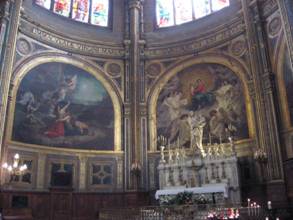
The Beaubourg and Les Halles district is remembered for the rich mercantile past of the city's trading centre and today's testimonies to it, as well as for the intrusion and settling of modern art among the ancient Parisian buildings and cobblestone squares. St-Eustache church is considered one of the most beautiful in Paris. It has a Gothic plan and Renaissance-style decorations on its tall arches, pillars, and columns.
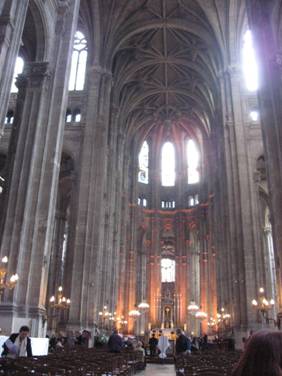
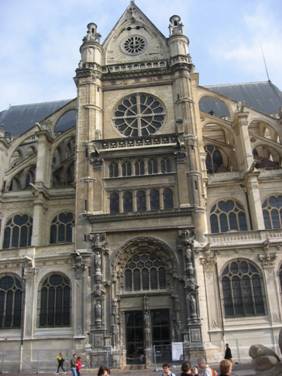
The chancel windows were made from sketches by Philippe de Champaigne. Molière is buried in the church, and Cardinal Richelieu was merely baptised here.
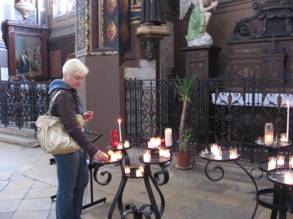
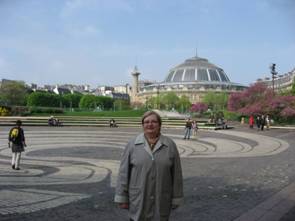
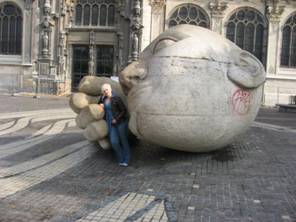
In the square beside the church is depicted the Ear of Paris. In ancient times, when this district was the scene of active trading, some who had broken the law would hide among the merchants' stalls. They would put their ear to the ground to hear whether any constables on horseback were coming, so they could hide in time. As a symbolic testimony to this, Henri de Miller's sculpture L'Écoute ("Listening") can be seen here. In the distance behind the Ear Square, the grain exchange building Bourse du Commerce is visible.
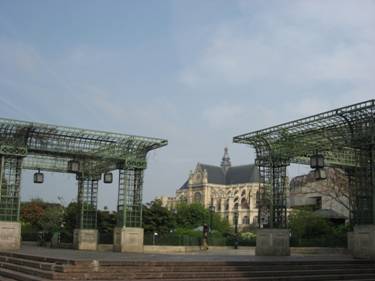
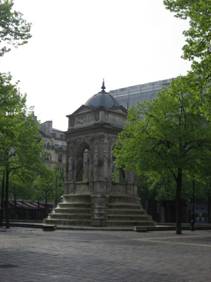
From the old market stalls, iron pillars with ancient lanterns have survived. In the adjacent square is the Renaissance-era Fontaine des Innocents - the Fountain of the Innocents - designed by Jean Goujon.
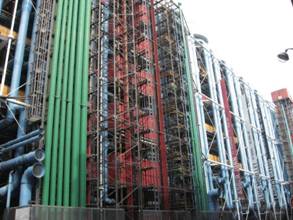
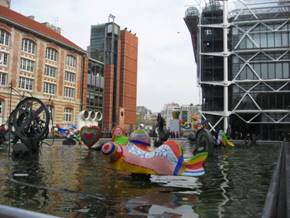
Walking along Rue Berger ahead, we arrive at a building with all its "innards" turned inside out - that is, all utility pipes, sewage conduits, ventilation shafts, steel supports, and lift shafts are visible on the building's façade. That is the Centre Pompidou, the Museum of Modern Art, where works of Fauvism, Cubism, and Surrealism can be viewed. Next to it a fountain with no less modern creations.
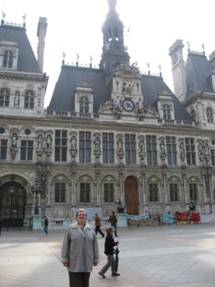
The Marais district with Paris's city hall square and the splendid town hall Hôtel de Ville, which is the official residence of the city mayor.
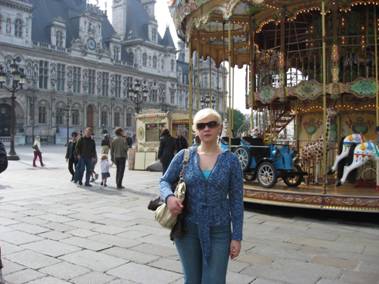
Île de la Cité was formerly the centre of political power and now boasts notable architectural monuments. From Île de la Cité a bridge leads to Île Saint-Louis, which is an elegant residential area. According to stories, there is an ice cream shop there selling dozens of flavours of ice cream. A pity there was no time to check for ourselves. :)
One of the Gothic treasures of Île de la Cité - Notre-Dame, the Cathedral of Our Lady of Paris, which most people know from Victor Hugo's famous novel. It turns out it was formerly a rather unremarkable church until Hugo brought it into the spotlight. The only historical fact associated with this church is Napoleon's coronation.
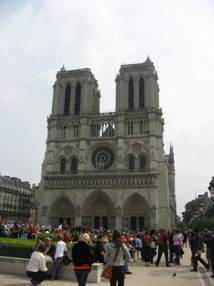
The foundation stone of Notre-Dame was laid in 1163 by Pope Alexander III, marking the beginning of 170 years of construction work. The cathedral is 130 m long and its tower spire reaches a height of 90 m. It houses France's largest organ and many works of art - paintings and sculptures.
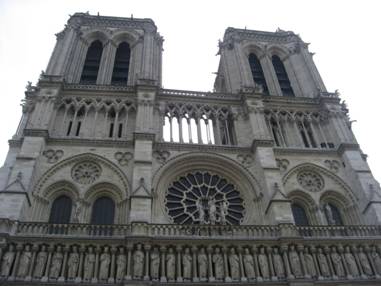
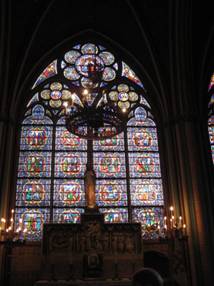
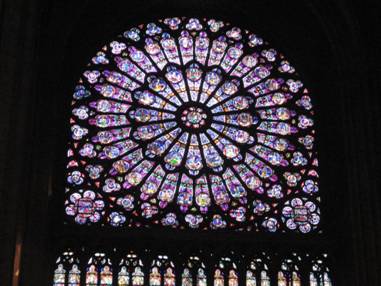
The central entrance is adorned with a 13th century sculptural composition - the 28 Kings of Judah. The eye is naturally drawn to the magnificent rose windows and stained glass. Behind the cathedral is the green and flowering Square Jean XXIII, dedicated to Pope John XXIII.
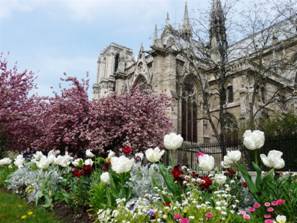
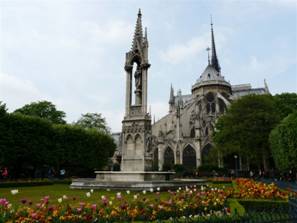
Photo: Silvija
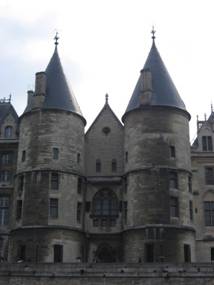
On Île de la Cité there is also the Palais de Justice with its grand entrance gates and the former prison - Conciergerie. The Conciergerie became a prison in the late 14th century. During the French Revolution approximately 4,000 prisoners were held here, including Marie Antoinette and Robespierre prior to their guillotining.
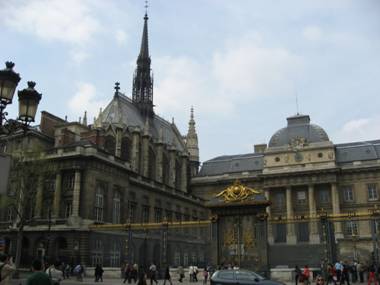
The church visible behind the Palais de Justice is on two floors - the upper blue floor was intended for the aristocracy, while the lower red floor was for commoners. The church is splendidly illustrated and is sometimes called a visual illustrated Bible.
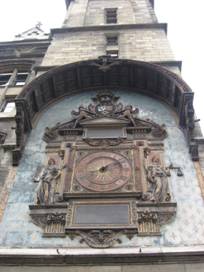
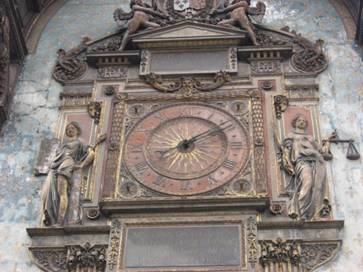
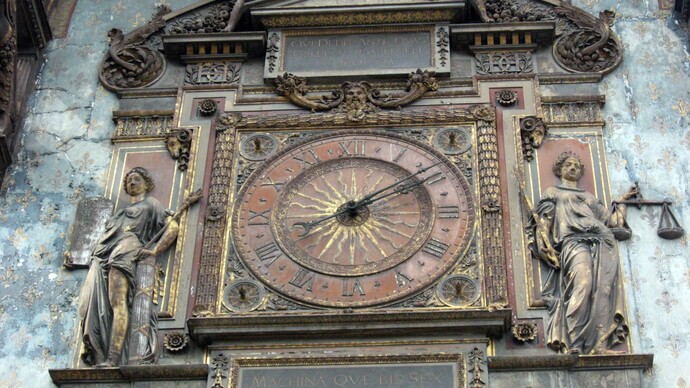
In the Conciergerie building an 11th century torture chamber and a 14th century clock tower have been preserved. The old clock still runs and shows the correct time.
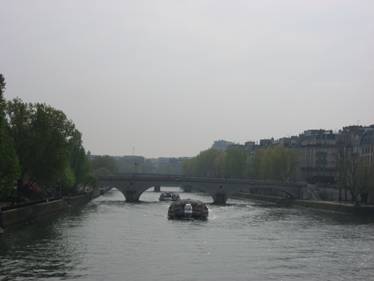
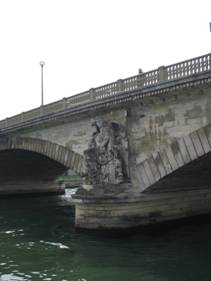
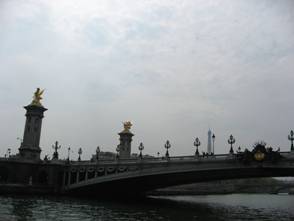
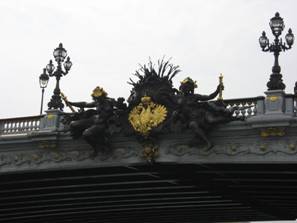
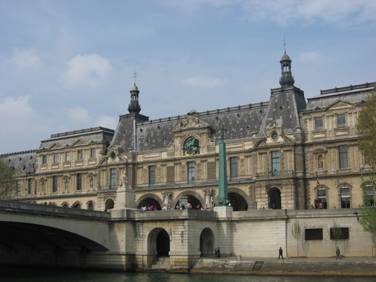
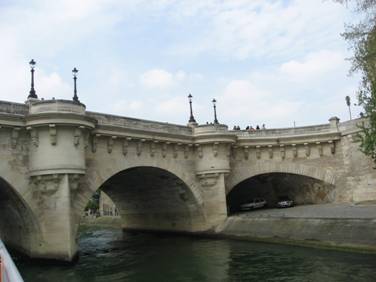
If you are on a tour of a city through which a river flows and there is the opportunity to take a boat ride and see the city from the water, this must be done without fail. In Paris there are very many bridges over the River Seine and each one is unique in its decorations and dedications. The bridges are not very long nor very high, because as our guide told us, a few years ago travel by tour boats was impossible since the water level was quite close to the bridge railings.
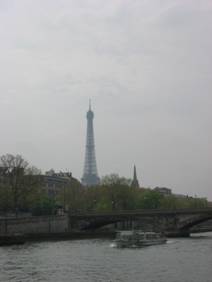
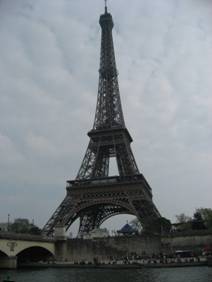
If asked to name the symbol of Paris, most people would certainly mention the Eiffel Tower. The 320 m tall tower was built in 1889 for the World's Fair and was originally intended for demolition later on. But its popularity was so great that the tower stands and functions to this very day. Until 1931, when the Empire State Building was built in New York, the Eiffel Tower was the world's tallest structure. It weighs 10,100 tonnes and is held together by 2.5 million rivets and 18,000 metal parts. Every four years approximately 40 tonnes of paint are used to repaint the tower's metal structure.
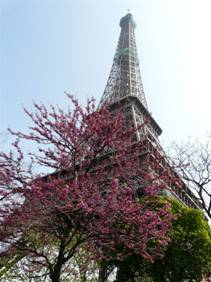
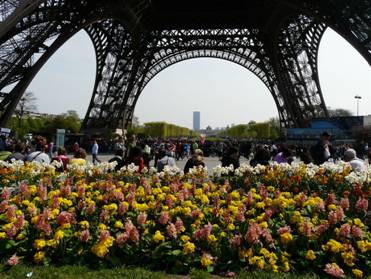
Photo: Silvija
Gustave Eiffel's (1832–1923) achievement was marked in 1929 by the placement of a bust sculpted by Antoine Bourdelle at the foot of the tower. Experts surmise that much of Eiffel's success should also be attributed to his assistant, which is why at the very top floor of the tower there is a room with wax figures depicting both of them.
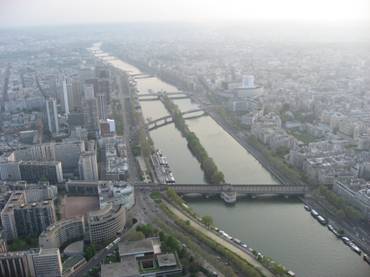
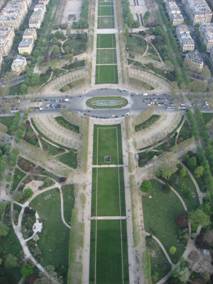
The Eiffel Tower has 3 levels. The first level at 57 m can be reached either by lift or by climbing the many steps on foot (360 in total). I will honestly admit we did not go - but a film about the history of the Eiffel Tower's construction is screened there, including about Charlie Chaplin's and Adolf Hitler's visits to the tower.
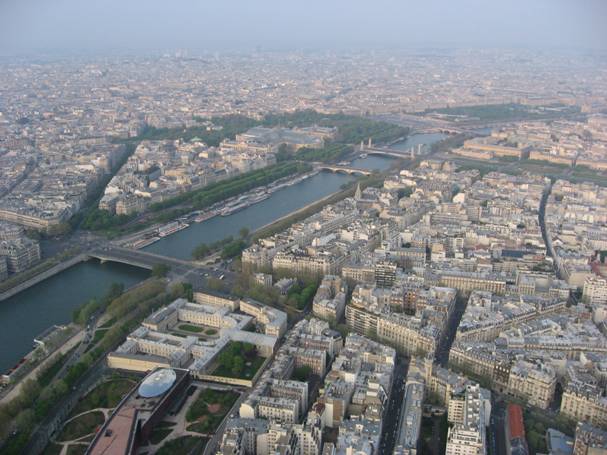
We did walk around the second level, at 115 m, if for no other reason than that one cannot reach the summit any other way - one must get out of the lift and stand in a rather long, multinational queue. Many people from all corners of the world wish to see Paris from above - Chinese, Indians, Russians, Arabs, Italians, and of course Latvians too. The third level, which is 276 m above the ground, can hold approximately 800 people, so it gets quite crowded up there. Everyone eagerly wants to have their photo taken; some sip champagne, others are absorbed in gazing at the surroundings.
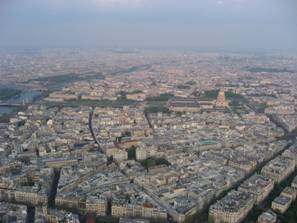
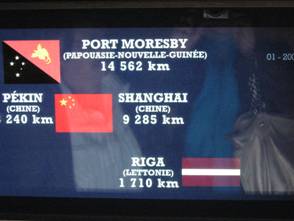
An even more fascinating view opens up when the city sinks into the evening dusk, the sun sets, and the tower and its surroundings are illuminated.
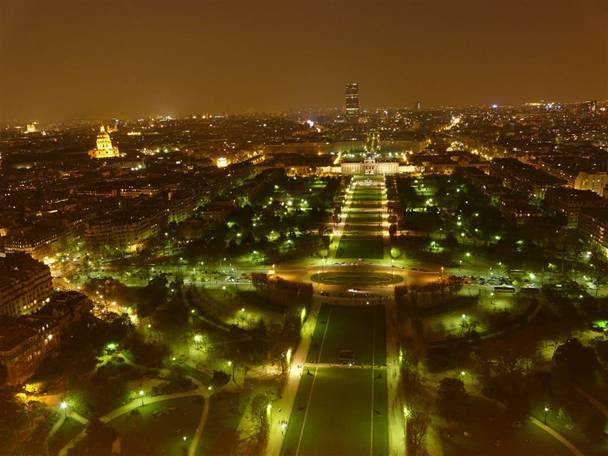
Photo: Silvija
But even that is not all - it is only another small fragment of this charming city, which conceals many new discoveries, artistic and architectural masterpieces within itself.
comments