.jpg?w=690&mode=16x9|crop)
Easter Holidays in Paris - Part III
The Musée du Louvre, although in recent years associated above all with the thrilling plot of Dan Brown's novel "The Da Vinci Code" and the symbolic mystery of the grandiose glass pyramid, is nevertheless a historic building rich in historical events. Most visitors, of course, gathered around Leonardo da Vinci's famous painting Mona Lisa. Even now, having seen the original with my own eyes from a few metres away, I cannot understand what everyone finds in it.
So let us continue our walk through spring Paris. The Tuileries district - the most royal of all, if only for its many magnificent palaces, exhibition halls, and first-class hotels.
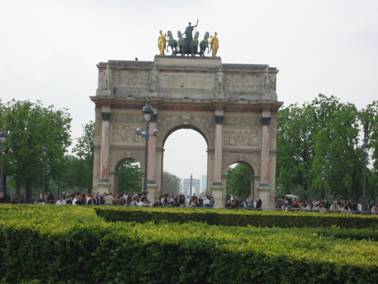
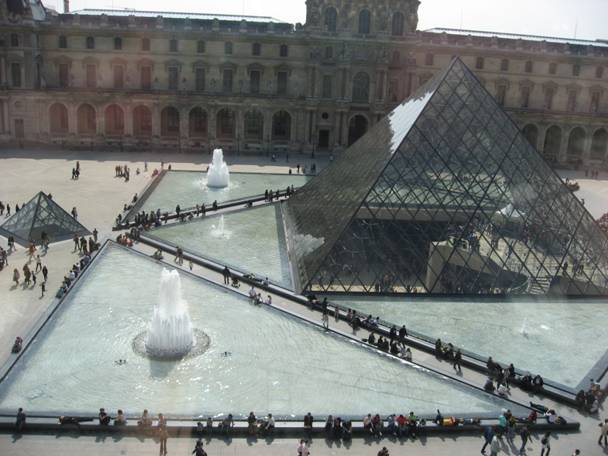
Musée du Louvre, although in recent years associated above all with the thrilling plot of Dan Brown's novel "The Da Vinci Code" (Dan Brown "Da Vinci Code") and the symbolic mystery of the grandiose glass pyramid, is nevertheless a historic building rich in historical events. The Louvre was built in 1190 as a fortress. Under François I in the 16th century it was developed as a Renaissance-style palace with a royal art collection. It was opened for viewing as early as 1793. The distinctive glass pyramids were unveiled in 1989, with the largest of them serving as the central entrance and exit of the museum. The savvier visitors (including us, having heeded the guide's advice) look for the museum entrance near the Arc de Triomphe du Carrousel opposite. Via the underground passage one can freely walk through to the ticket offices without standing in a long queue at the pyramid.
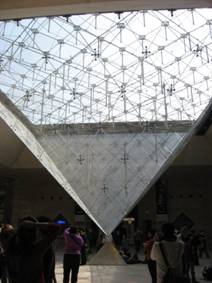
The entry ticket price, compared to other European museums and the grandeur on offer (17 km of galleries), is quite reasonable - 9 EUR. When going to see the museum's exhibition, one must immediately plan for 3–4 hours, and even then you will see only part of the collection. More than that is impossible to walk through physically or to absorb.
Although the space is grandiose, orientation is easy if one follows the maps obtained at the information point and the signs placed in each hall. What also pleasantly surprised us was that one does not have to spend the whole time under the piercing gazes of the hall guards. Photography was also freely permitted without any pointless prohibitions or additional fees. Triple doors, which can separately seal off each room if needed, and surveillance cameras were placed as unobtrusively as possible; the bag check and ticket scanning created a sense of security rather than of intrusive surveillance, as can be the case in some museums in our own country.
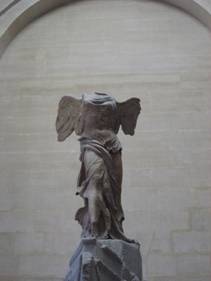
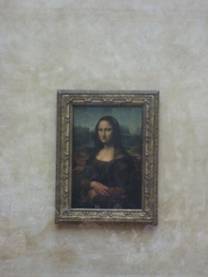
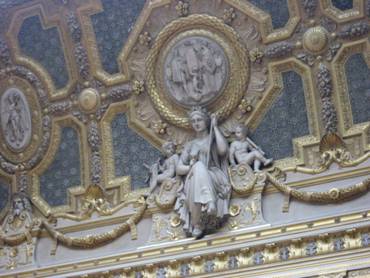
Most visitors, of course, gathered around Leonardo da Vinci's famous painting Mona Lisa. Even now, having seen the original with my own eyes from a few metres away, I cannot understand what everyone finds in it. A painting barely A4 in size with dull colours (art historians would probably strike me dead on the spot :) ).
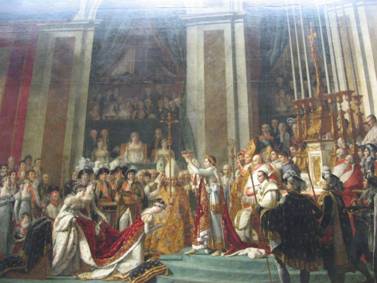
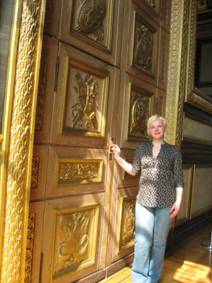
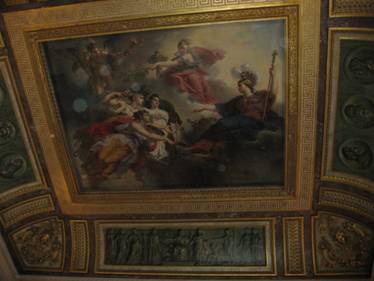
An interesting large-format painting by David, depicting the moment of Napoleon's self-coronation. Also every hall with its ceiling paintings and gilded massive doors is itself a separate work of art. For example, the crown room Galerie d'Apollon is decorated with ceiling ornaments representing the twelve signs of the zodiac.
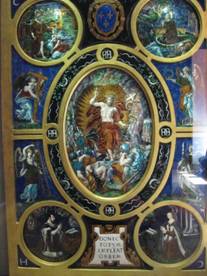
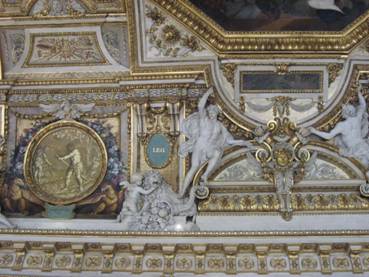
A monogram combining three letters D H C - King Henry II united in this symbol the initials of himself and two women he loved - his mistress Diane de Poitiers and his wife Catherine de Medici.
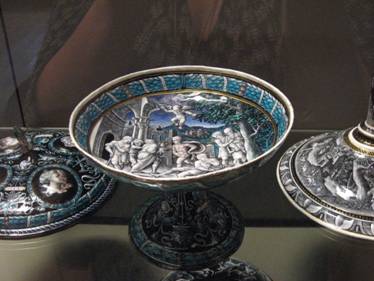
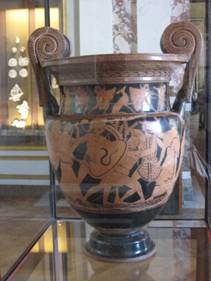
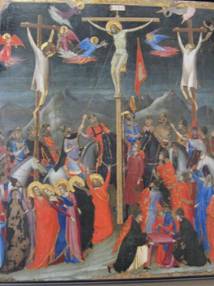
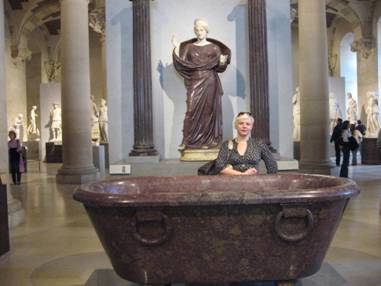
I should say that we walked through and viewed only the Denon wing with the Italian, Spanish, and French painting galleries, and a small part of the Richelieu wing. And that already took three and a half hours, even though if one's feet had not been completely numb one could have walked and enjoyed it for more and more. I would definitely recommend that visitors to Paris call in at this museum, if only to get an impression - to speak of a thorough examination of the collection is quite another matter. In truth, one could spend a week there.
Not far at all from the Louvre is Palais Royal - Cardinal Richelieu's palace, which in the 17th century was the abode of royalty. Today it houses the Council of State and the Ministry of Culture. Behind the palace courtyard there is a lovely flowering garden, which unfortunately today is three times smaller than it was in the 1630s.
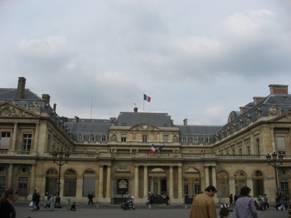
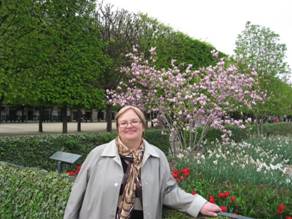
In front of the Louvre museum, stretching in the direction of the Champs-Élysées, are two landscaped gardens - Jardin du Carrousel and Jardin des Tuileries. On the site of the latter garden there formerly stood the Tuileries Palace; a new garden has now been created with decorative hedges and many sculptures.
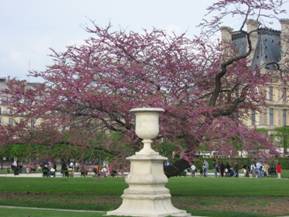
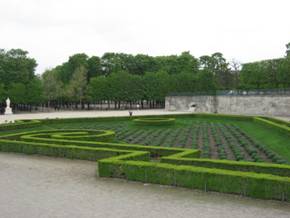
Passing through these gardens we arrive at Place de la Concorde - a square recognisable from a distance by its 3,200-year-old obelisk from Luxor. The obelisk is decorated with ancient Egyptian hieroglyphs and a gold pyramid at its summit - a gift to France as the country whose researchers were the first to decipher ancient Egyptian writing.
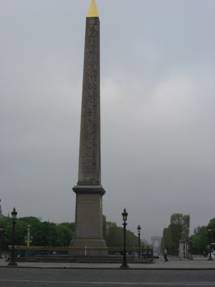
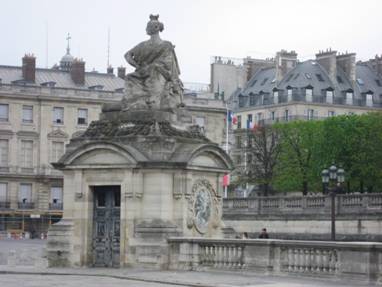
The area of the Place de la Concorde is more than 8 hectares. In the 18th century, buildings adjoined the square only on its northern side. The square was later supplemented with two magnificent fountains and 8 sculptures symbolising France's largest cities.
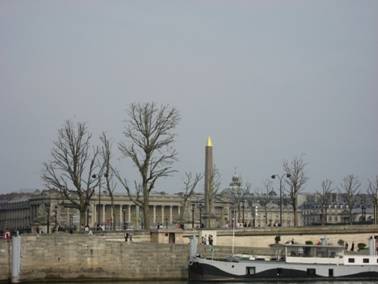
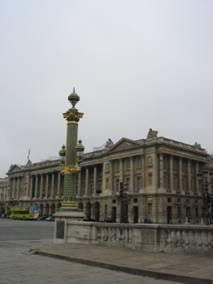
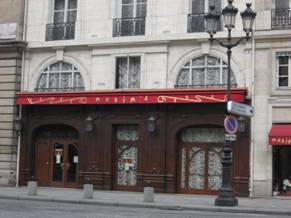
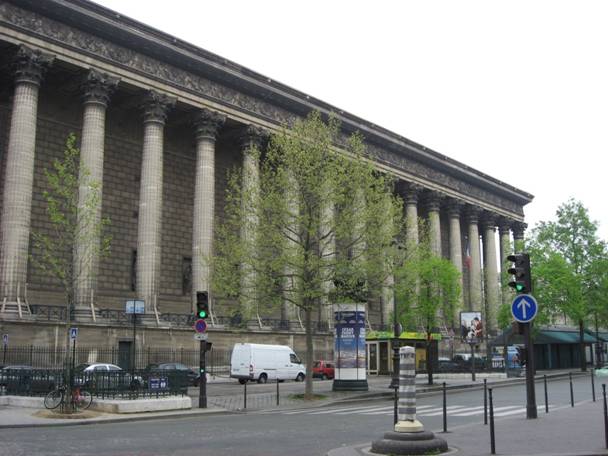
Moving from the square deeper into the city and passing one of the most famous and oldest restaurants in Paris, "Maxim's" (at one time owned by Pierre Cardin), we arrive at the Madeleine Church, La Madeleine. This church is distinctive for having no windows - light enters only through the ceiling vaults. This church, designed in 1764, resembles a Greek temple. It is surrounded by 52 Corinthian columns. The bas-relief on the bronze doors depicts the Ten Commandments.
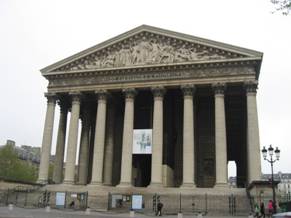
Next to the church is a flower market where the famous Lady of the Camellias (a character from Alexandre Dumas's 1848 novel, and in real life the courtesan Marie Duplessis) used to buy her flowers.
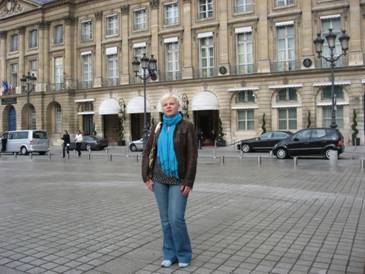
Then on to Place Vendôme - the finest example of 18th century Parisian elegance. This square was created in 1698. Over the years it has been home to wealthy and famous people, bankers, jewellers, and musicians. At no. 15 on the square, César Ritz created the famous Ritz Hotel - the highest-class hotel in Paris.
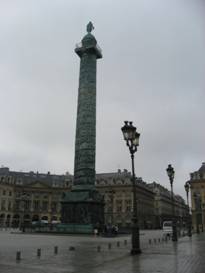
In the centre of the square stands a statue of Napoleon I, cast from melted cannons after a won battle.
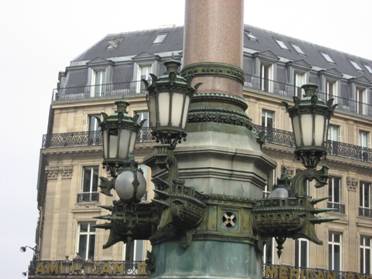
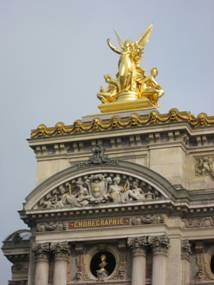
Imperceptibly we find ourselves in the Opéra district, where in all its splendour stands the Opéra National de Paris Garnier. The opera house is made unique by both the diversity of materials used - marble, stone, bronze - and the combination of Baroque and Classicism.
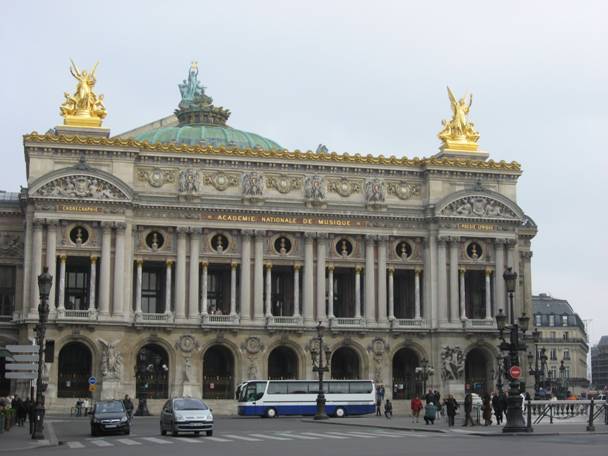
This is the very same famous opera house haunted by the Opera Ghost, where many mysterious things occurred several years ago. It was therefore decided that tickets for box 5 would never be sold, leaving the seat for the Opera Ghost to watch performances. Recalling Andrew Lloyd Webber's classic musical "The Phantom of the Opera" and its most spectacular film adaptation, one thinks of water-flooded basements. And rightly so, because groundwater constantly accumulates beneath the opera house.
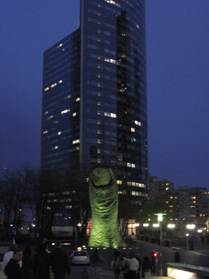
Late in the evening we took the metro to see modern 21st-century Paris - the La Défense district. Modern office and shopping centre buildings, each of them accompanied by a contemporary art object - for instance, a giant thumb sculpture.
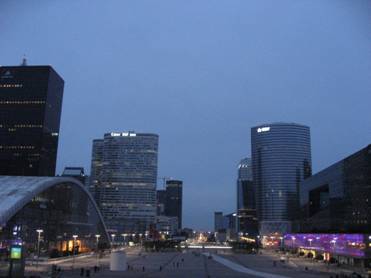
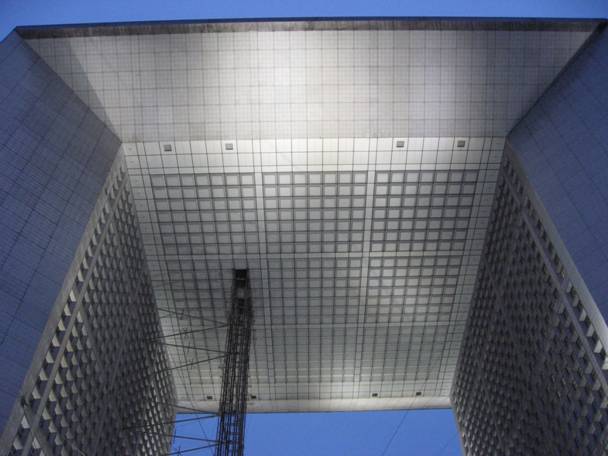
In the centre of the district rises a grandiose cube with a hollow interior - La Grande Arche. It turns out that an exhibition gallery is housed within it.
Such - varied and colourful - is the Paris that revealed itself to us over a few days. Both modern and full of novelties, and saturated with historic testimonies and antiquity, but in any case evoking nostalgia and admiration.
comments