Cryptocurrency - An Alternative Means of Payment and Exchange
Recently I have had occasion to communicate with the business managers of a couple of companies in Latvia who have developed and offer cryptocurrency exchange platforms to both private and corporate clients. The topic is currently at the top of everyone's agenda. Attitudes towards it are far from uniform - ranging from outright denial to fan-level enthusiasm. But most importantly, right now there are far more questions and uncertainties than understanding. I decided to compile a few simple explanations that may help you form your own stance on this relatively new means of payment.
Relatively new - because the first cryptocurrency, Bitcoin, became known to the world as far back as 2009. Its creator, a developer who hides behind the pseudonym Satoshi Nakamoto. There are currently more than a thousand different cryptocurrencies in the world (in one list I found as many as 1,494 names). At present, Bitcoin (BTC) is the most expensive cryptocurrency and, if we convert to familiar currencies, 1 Bitcoin is priced above 11,000 US dollars.
Cryptocurrency is a medium of exchange that uses cryptography to secure transactions and control the issuance of new units. A typical property of cryptocurrencies is decentralised control, which distinguishes them from centralised electronic money systems. Another property is the recording of transactions in a public ledger (the blockchain) - that is, blockchain technology is used.
The holders of digital wallets can be, and essentially are, anonymous. This frightens banks and state institutions, from whose hands the control function is slipping away - payers cannot be traced, commissions cannot be applied to them, and it is impossible to monitor what purchases they make (horror stories circulate about weapons or prohibited substances possibly being purchased on the dark net). On the latter point - if such people wish to buy something illegal, they will do so with ordinary money too.
In Latvia, only a few companies accept payments for services in cryptocurrency: airline airBaltic, law firm BDO, and construction company Rīgas Fasādes. However, it appears that in the near future, under the influence of the prevailing frenzy in society, other companies will join them.
Quite recently, while watching the programme "Aizliegtais paņēmiens" ("Forbidden Technique"), I discovered to my surprise that there is apparently even a cryptocurrency exchange machine in Riga, where you can insert paper money and receive a few Bitcoin units in your digital wallet - which you can then use to pay for, say, a coffee. Where it is physically located, I could not find information online.
Latvian legislation has not yet introduced cryptocurrency regulation, but the position of the supervisory authorities is as follows: from a financial accounting perspective, cryptocurrency is essentially to be recognised as a commodity (product) that can be used as a medium of exchange if the parties so agree. The Court of Justice of the European Union, whose rulings are binding on Latvia, on 22 October 2015 recognised that cryptocurrency units are to be regarded as means of payment and that transactions with them are to be exempt from VAT.
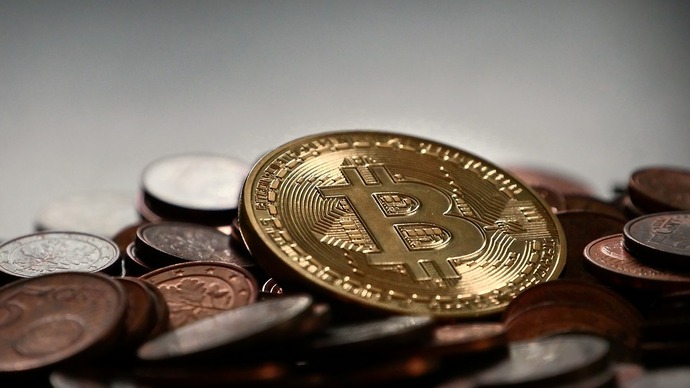
Cryptocurrencies are virtual - don't be misled by images of coins on Shutterstock or other image galleries, or the souvenir coins purchasable on eBay that have no added value and with which you cannot actually buy anything meaningful - only flatter your own Ego.
Sources used:
https://en.wikipedia.org/wiki/Cryptocurrency
https://www.mindlink.lv/lv/aktuali/kriptovaluta_1/
https://coinmarketcap.com/all/views/all/
comments