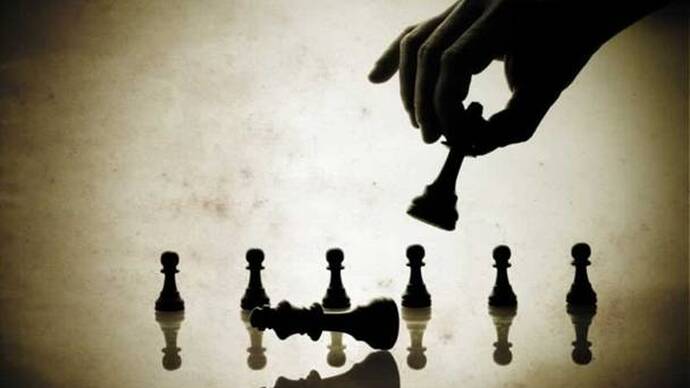
Strategy
Doesn't it sometimes happen that a lull sets in where there should be a brainstorm, and a good idea simply cannot find a way to express itself - if only because it's not clear where to start or when the right moment will be? Then you remember that well-known concept called strategy. But - what kind of strategy?
Doesn't it sometimes happen that a lull sets in where there should be a brainstorm, and a good idea simply cannot find a way to express itself - if only because it's not clear where to start or when the right moment will be? Then you remember that well-known concept called strategy. But - what kind of strategy?
What is strategy?
Let us start with a definition. Strategy is a long-term plan or programme with a clearly defined goal, stages for achieving it, and a mechanism for doing so. The concept of strategy was originally used primarily in the military domain, but today its application is far broader - particularly in the fields of public administration, politics, business, and other spheres of human activity. Tactics, by contrast, is a narrower concept subordinate to strategy, and is often associated with one particular aspect or stage of the strategy.
It is quite rightly noted that strategy has its origins in the art of war and combat. To achieve the goal you have set, whether you like it or not, you will encounter certain difficulties and certain opposing forces. There will be a fight. But the most interesting thing is that a combat strategy is universal and can be applied in any sphere of life. So, what follows is a summary of the five fundamental points of strategy mentioned in the Chinese book on war.
 What is strategy built on?
Here I want to refer to two books by P. Coelho that I have come to love for their philosophical bent - Manual of the Warrior of Light and Like the Flowing River. Both contain a thought about a person's strategic choice to voluntarily engage in a fight.
Capable men and women seek the best conditions and, if they cannot find them, they create them themselves. (Quote from Like the Flowing River, 2008)
The absolute foundation of every strategy is self-respect. A person can achieve a great deal, but cannot achieve everything. Each person must clarify the limits of their desires, ambitions, and abilities. Any work or achievement is meaningless if it brings no satisfaction, smothers enthusiasm, or limits the opportunity to learn (and here I mean not school or courses, but learning from mistakes and from the people we encounter).
The fundamental points of strategy.
1. The Law of Will. You must do what sets your heart on fire with genuine passion. If we defer the realisation of our dreams, we lose the energy we need. The same from the art of war - before going into battle you must have strong CONVICTION (even faith) in the aim of the fight.
2. The Law of Seasons. A battle in winter conditions will differ from a battle in summer. Or, to rephrase: don't act when you should wait, and don't wait when you should act. Think carefully about WHEN to go into battle!
3. The Law of Geography. A battle in an open field will differ from a battle in the mountains - or, in other words, always assess your surroundings and the opportunities they offer. It is important to study the space and place you have decided to occupy, WHERE you will realise your plans, how to expand this space if needed, or how to retreat if it becomes necessary.
4. The Law of Allies. You need friends who will encourage you at the right moment, who will not be afraid to point something out, give advice, or offer a suggestion that differs from your own views. You need to feel a SHOULDER beside you - for no one fights alone.
5. The Law of Ingenuity. It is only possible to understand what is happening when we try to change something. But ingenuity will be empty fantasy if it is not grounded in SKILL (the skill of combat).
"The best warrior is one who plans his battle." (Quote from Manual of the Warrior of Light, 2000)
Returning to the lull in one's thinking, I am convinced that the best way to free up your thoughts is to put them on paper (or these days, even a virtual one). It is no coincidence that people say: someone dictates - I just write it down. :)
comments