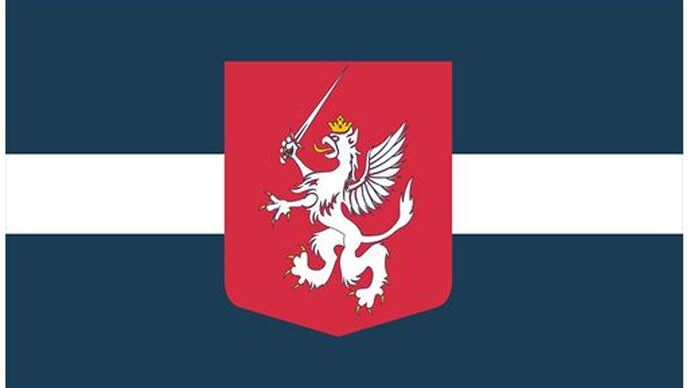
A Latgalian Language Class
In this article I have compiled the main differences of the Latgalian written language from Latvian, and provided examples of writing in Latvian and Latgalian. The main message is not for Latgalians to change their oral language habits, but to adhere to a unified grammar in writing, so that it is understandable and learnable for themselves and others.
On the evening of 6 November of this year, responding to the initiative of the Latgolys Studentu Centrs (Latgale Student Centre), we attended a Latgalian written language class at the Faculty of Philology of the University of Latvia on Visvalža Street, led by Māra. About a dozen people had gathered, each coming from a different corner of Latgale. The differences could be noticed immediately in speech: Northern Latgalians distinctly used broadened "a" sounds in word endings, Eastern Latgalians pronounced words a little more firmly, while Southern Latgalians used palatalisations and sibilants much more frequently.
The language class throughout was based on the Latgalian written language, which was approved on 28 September 2007 at the State Language Centre of the Republic of Latvia as "Latgalīšu pareizraksteibys nūsacejumi" (Rules of Latgalian Orthography). These are grounded in the work on Latgalian written language standardisation begun in the 1930s by Dr. phil. Pīteris Strods and now continued since 2003.
Summarising what was covered in the class, the main differences of the Latgalian written language from Latvian are:
– palatalised or softened consonants, such as "m", "t", "d", "p" and others - these are pronounced softly, but written similarly to Latvian:
Latvian lietus (rain) - Latgalian ļeits (incorrect, but pronounced that way), leits (correct);
Latvian sniegs (snow) - Latgalian sņīgs (incorrect, but pronounced that way), snīgs (correct);
How to know which consonants in Latgalian must be pronounced softly but not written with a palatalisation mark? All those that come before the vowels "i", "ī", "e", "ē", "ie", "ei", "iu" - or, as teacher Māra said, "in front of the holy letters."
– the extra-broad "e", which in speech we hear more like an "a" - as a reminder, in Latvian grammar there is the narrow and the broad "e". Thus the Latgalian "e" is to be pronounced even broader than the Latvian broad "e".
Latvian upe (river) - Latgalian upe [pronounced: upja];
Latvian Rēzekne - Latgalian Rēzekne [pronounced: Rjāzakņa];
Latvian mēle (tongue) - mēle [pronounced: mjāļa];
– the diphthong "uo" or "ō" - the first variant is approved and recognised in the given orthography rules, and is also closer to the Baltic language family; the second variant "ō" is older and more customary in many parts of Latgale, given that all church prayer books and the popular journal "Katōļu Dzeive" are published using "ō".
Latvian vārds (word) - Latgalian vuords;
– the vowel "y", or the hard "i" - how to know when to write and pronounce it hard, and when soft? The following rules apply: 1) at the beginning of a word and after the consonants "k", "g", "j" - write "i"; but after "r", "č", "š", "ž" - write "y"; 2) if "i", "ī", "e", "ē", "ie", "ei", "iu" follow, then write "i";
Latvian ūdens (water) - Latgalian iudiņs;
Latvian jūra (sea) - Latgalian jiura;
Latvian viņš (he) - Latgalian jis;
Latvian rika (throat) - Latgalian ryka;
Latvian čūska (snake) - Latgalian čyuška;
Latvian ebrejs/žīds (Jew) - Latgalian žyds;
Latvian šūt (to sew) - Latgalian šyut;
Latvian šuvēja (seamstress) - Latgalian šivieja;
– in Latgalian there is practically no 3rd declension - the only noun belonging to the 3rd declension in Latgalian is "Jezus Kristus" (Jesus Christ), plus modern neologisms such as "Mikus", "Edžus" and the like. When declining nouns in Latgalian, all the above-mentioned orthographic rules must be taken into account, and it must be borne in mind that in any case form a word can never end in the hard "y".
– retained consonants in nouns with the suffix "-šona" - as is known, in Latvian nouns with the suffix "-šana", consonants have historically merged and today one is used in place of two.
Latvian nešana (carrying) - Latgalian nesšona;
Latvian lūšana (breaking) - Latgalian lyuzšona;
Latvian griešana (cutting) - Latgalian grīzšona;
– a few more frequently used words that differ significantly between Latvian and Latgalian:
Latvian un (and) - Latgalian i;
Latvian jā (yes) - Latgalian nui (the borrowed Russian "da" would not be preferable);
Latvian nē (no) - Latgalian nā;
Latvian kāpēc? (why?) - Latgalian parkū?
Latvian par ko? (about what?) - Latgalian par kū?
Latvian tāpēc (therefore) - Latgalian deļtuo;
Latvian projām (away) - Latgalian paceli;
Latvian (iet) pa ceļu (to go along the road) - Latgalian pa ceļu;
Latvian kaut cik (at least some) - Latgalian koč cik;
Latvian rakstīt (to write) - Latgalian raksteit;
The main message is not for Latgalians to change their oral language habits, which are rooted in the family and native area, are slightly different in each corner of Latgale, and include many distinct words - but to adhere to a unified grammar in writing, so that the language can be preserved and passed on to many future generations. Moreover, only a language for which grammatical norms have been developed can be learned by people of other nationalities, and also by Latvians from other regions - from Sēlija, Zemgale, Vidzeme, Kurzeme. A unified written language is also important in Latgalian-language press publications, books and websites, so that every speaker of the language can equally correctly understand what is written.
Useful links:
Latgalīšu pareizraksteibys nūsacejumi (2008) - http://termi.lv/lg/
Baļtīšu-latgalīšu vuordineicys dorba verseja (21,501 words) - http://www.vuordineica.lv/
Latgolys Studentu Centrs - http://lgsc.lv
Latgalīšu Kulturys Gazeta - http://www.lakuga.lv/raksteiba/
Latgalian Wikipedia - http://ltg.wikipedia.org/wiki/Suoku_puslopa
comments