Advent - the Coming
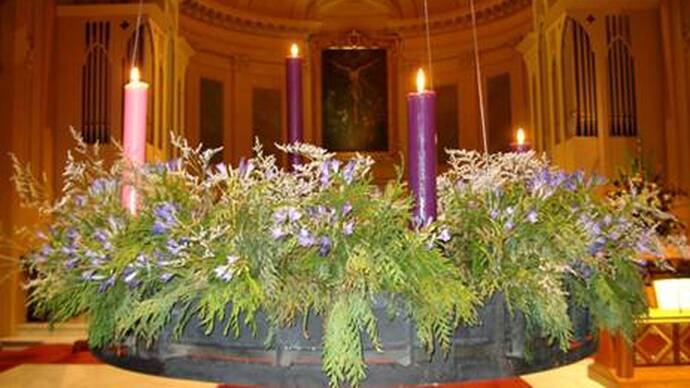
According to ancient traditions the wreath has two meanings - the royal and the victorious. Pine or fir branches used in weaving wreaths are always green, symbolising hope and eternal life. The traditional colour of Advent is violet, indicating that a king is awaited, as well as that it is a time of fasting.
On the origin of the word
The word "Advent" in its translation from Latin means "coming". Cicero (106–43 BC) used this word to designate the entry of a military commander into a city. It always meant entry with great force.
In Latvian the question arises of how to use the word correctly - "Advents" (masculine) or "Advente" (feminine)?
Searching for the truth, I came across the explanation of linguist Jānis Endzelīns. With regard to the period encompassing the four Sundays before Christmas, the masculine noun "advents" is to be used. Similarly in the masculine gender other longer time periods are denoted: "gavēnis" (Lent), "mēnesis" (month), "ceturksnis" (quarter), "gads" (year). Comparatively shorter time periods are usually denoted by feminine nouns: "dekāde" (decade), "nedēļa" (week), "diena" (day), "stunda" (hour). In the "Latvian Encyclopaedic Dictionary" this word is also found in masculine form, as a separate entry - "advents". It is likewise used in the church calendars of traditional Christian confessions.
"Advente" is a term that has arisen in modern usage to also denote an individual Advent Sunday. Thus one could say that within Advent there are four Adventes: the first Advente, the second, the third and the fourth Advente. On these Sundays one can say: "On the Advent wreath we light the second Advent candle".
On the period
On the first Sunday of December the first Advent is marked, which in the Christian world designates the beginning day of the waiting for Christmas. It is precisely with the first Advent that the new year of the Christian church begins. Advent also marks the period from the fourth Sunday before Christmas, and it is a time of quiet and reflection before the birth of Christ.
This year, in 2008, the first Advent fell as early as 30 November, the second we will welcome this Sunday - 7 December, the third Advent - 14 December, the fourth - 21 December and then Christmas Eve itself - 24 December.
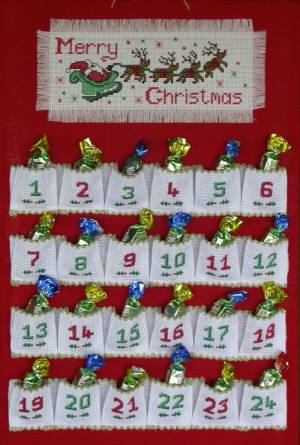
Although it is a time of fasting, for the little ones waiting for Christmas, several manufacturers nowadays provide the so-called Advent Calendar with 24 little doors or compartments, each hiding a small gift or sweet. Abroad this tradition is widely spread, but now it has come to us as well.
Advent begins in 2010 - 3 December,
Advent begins in 2011 - 27 November
Advent begins in 2012 - 2 December
Advent begins in 2013 - 1 December
Advent begins in 2014 - 30 November
Advent begins in 2015 - 29 November
The symbol of Advent
The well-known Advent wreath (bought or made by one's own hands), in which we light one candle each week. Four candles symbolise four weeks - four steps on the path to Christmas. The light of the candles marks the entry of light into darkness, and with each moment, each week, there is ever more light. The circle formed by the wreath has since ancient times symbolised eternity and unity.
According to ancient traditions the wreath has two meanings - the royal and the victorious. Pine or fir branches used in weaving wreaths are always green, symbolising hope and eternal life. The traditional colour of Advent is violet, indicating that a king is awaited, as well as that it is a time of fasting.
Read more about Advent -
comments