
Banned Books
Looking back into more distant history or the very recent past, there were several publications and books that were strictly forbidden to read or quote. All bans were, of course, primarily related to restrictions on free thought in society. I was surprised to learn that Latvia today also has a list of banned books.
This evening I let my eyes wander across the bookcase, where editions from various years stand in rows on the shelves, then to the two recently purchased books on the windowsill, and yet another gifted to me, and yet another considerable pile of newspapers and magazines. Ah, when will I manage to read all of it, or at least browse through the latest ones. These days there is so much information that it rolls over you like an avalanche every day - all you can do is choose what and about what you want to read.
But looking back into more distant history or the very recent past, there were several publications and books that were strictly forbidden to read or quote, as it could result in being burned at the stake, imprisonment, or heavy fines. All bans were, of course, primarily related to restrictions on free thought in society, the protection of morality or religious postulates, and ensuring that the prevailing political order was not threatened.
There was once even an Index of Forbidden Books (Index Librorum Prohibitorum) - a list of written works, publications and books that the Roman Catholic Church prohibited from being read, on pain of excommunication. The first such list was published in 1529 in the Netherlands. It was followed in 1543 by an edition in Venice and in 1551 in Paris. [1]
Only on 14 June 1966 did the Vatican abolish this list of banned books, which had existed in Europe for more than 400 years and had contributed to the repression of progressive thinkers. The list had included around 4,000 banned books.
An interesting fact: Adolf Hitler's book "Mein Kampf" (My Struggle, 1925) was never included in this index. It achieved print runs of millions and has been translated into a great many languages worldwide. After the collapse of Nazism in the mid-20th century, the book was strictly banned in most countries of the world, or published in limited editions with accompanying commentary. In 1995 "Mein Kampf" was also published in Latvian.
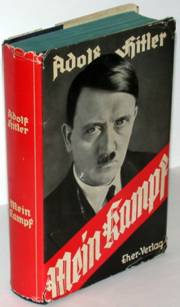
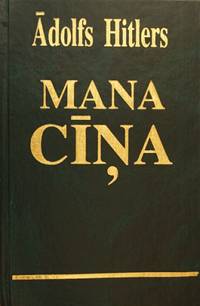
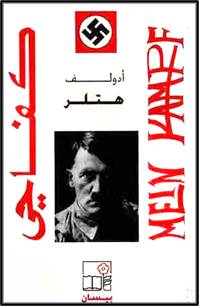
Adolf Hitler "Mein Kampf" (1925 German edition, 1995 Latvian edition, Arabic language 1937)
It turns out that the well-known Brothers Grimm fairy tale "Little Red Riding Hood" (1812) was also associated with Nazi regime propaganda, symbolising the rescue of the German people from the cunning of the wicked Jews (the grey wolf) - which is why after the war the Allies also banned this fairy tale in Germany.
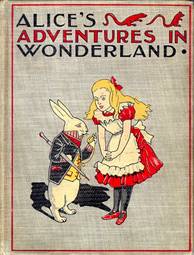
Another fairy tale that has been banned - this time in China - is Lewis Carroll's "Alice's Adventures in Wonderland" (1865). It was banned in 1931, on the basis of a violation of a law prohibiting animals from speaking in human language.
If you look at your bookshelf today, the books that were banned in the 20th century are now available in Latvian translation and accessible to everyone, with no punishment threatened for reading them. For example, British author George Orwell's dystopian novel "Animal Farm" (1945). In Latvian it could only be published in 1984.
The novel is written in the form of a political allegory based on events that took place in the USSR during Joseph Stalin's rule. As a result, Soviet functionaries immediately placed it on the list of banned books, and reading or publicly discussing the book carried the threat of certain trouble right up to the 1980s. Do you remember this?
"All animals are equal, but some animals are more equal than others"?
But it was not only the unshakeable political order that was being protected - so too was public morality. Gustave Flaubert ended up in the dock after the publication of his novel "Madame Bovary" (1857), charged with glorifying a dissolute lifestyle.
Similarly, David Herbert Lawrence's novel "Lady Chatterley's Lover" (1928) achieved great popularity worldwide, yet was available to readers in Great Britain only in the 1960s. The author was initially accused of distributing pornography, and a court case was even brought against the publisher Penguin Books for publishing an obscene publication. The writer fled Britain for Australia and the USA; his works were criticised and censored, yet today D. H. Lawrence is recognised as a significant representative of modernism in English literature.
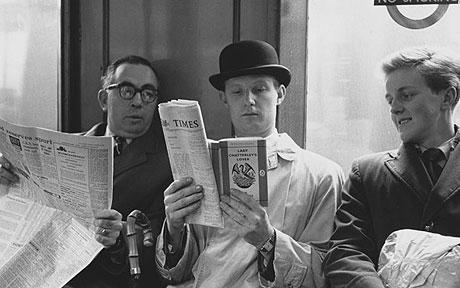
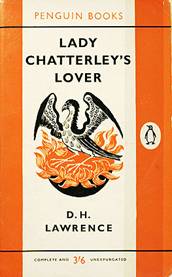
Photo from www.telegraph.co.uk
Quite recently, in 2012, British author E. L. James's novel "Fifty Shades of Grey" provoked public debate, becoming scandalous for its erotica, its drift towards sadomasochism and other erotic fetishes. The publishing rights to this trilogy were reportedly purchased by 37 countries. It has been banned in several US libraries.
I stumbled by chance upon an article by journalist Aids Tomsons titled "Latvia Has Compiled a List of Banned Books," which claims: "Which books are on this list, which may not even be publicly quoted, is not yet being disclosed to the public. But if you publish a fragment - for example, on the internet - you may face a prison sentence of up to ten years." [2]
It seemed unreal that in a democratic 21st-century society such lists are still being compiled. In any case, it is incomprehensible why this list has not been made public, given that there is apparently some form of liability attached to it. And what could be on it these days?!
[1] Index of Forbidden Books - http://lv.wikipedia.org/wiki/Aizliegto_grāmatu_reģistrs
[2] Latvia Has Compiled a List of Banned Books - http://www.tvnet.lv/zinas/viedokli/510358-latvija_tapis_aizliegto_gramatu_saraksts
comments