Christmas Beliefs and Omens
Say what you will, but the nights of the solstice carry a certain veil of mysticism, a sense of primordial antiquity and a special light or darkness. It is no wonder, then, that these threshold periods are associated with various beliefs, predictions of the future, divination and even enchantments. These traditions, rituals and mysticism were certainly part of our ancestors' worldview. Can we find application of the ancient beliefs for predicting the future today?
Say what you will, but the nights of the solstice carry a certain veil of mysticism, a sense of primordial antiquity and a special light or darkness. It is no wonder, then, that these threshold periods are associated with various beliefs, predictions of the future, divination and even enchantments. These traditions, rituals and mysticism were certainly part of our ancestors' worldview. Can we find application of the ancient beliefs for predicting the future today?
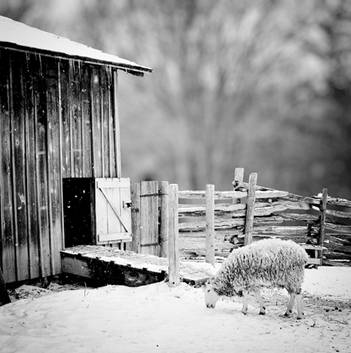
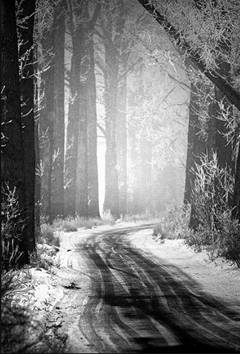
Photos: Ren Hui Yoong & Łukasz Stępniewski
Here I have gathered some of the winter solstice beliefs and rituals that a modern Latvian can observe and take note of.
On weather forecasts.
• If there is much snow before Christmas, there will be much rain before Midsummer.
• Take note: if the waters (rivers, lakes, ponds) freeze three times before Christmas, the summer will be bountiful.
• If there is a snowstorm at Christmas, next year will bring much honey.
• If there are many frost flowers on the windows around Christmas, there will be a good fruit harvest.
• A green Christmas means a white Easter.
• If the sky is starry on Christmas night, the following year will bring a good harvest; conversely, a cloudy sky foretells a poor harvest.
On prosperity in the coming year.
• On Christmas Eve all the lights should be burning so that Lady Luck (Laimīte) can see where to walk.
• At Christmas there must be at least 12 dishes at the table, so that abundance shall not be lacking throughout the year.
• On Christmas Eve, cross signs are drawn with chalk on all doors, then evil cannot enter all year long.
• On Christmas Eve one must run barefoot around the house three times, so that one's teeth will not ache.
• On Christmas Day all work must be finished quickly, so that work goes well throughout the coming year.
• So that money is never lacking, one must not spend all one's money at Christmas.
• On Christmas Eve, bread, salt and fire must necessarily be kept on the table, then the next year will be blessed.
• So that next year brings much money, a black cat must be carried around the church on Christmas Eve.
• One should eat peas by the handful - then next year one will scoop up money by the handful.
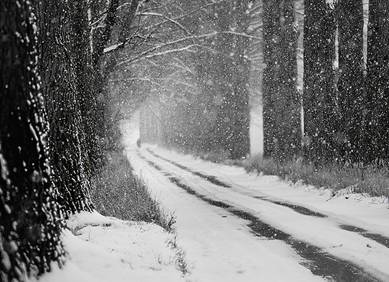
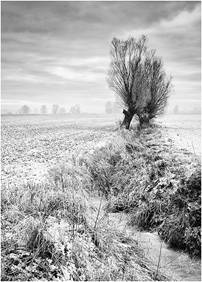
Photo: Łukasz Stępniewski
Divining a future marriage or suitor.
• On Christmas Eve, pour water into a bowl, drip in two drops of candle tallow and stir. If the drops come together, the couple will marry.
• Young maidens draw sticks from a pile. If one gets a full and straight stick, the suitor will be handsome and wealthy; if small and crooked - short of stature and poor.
• A maiden who wishes to marry must sweep the room on Christmas morning, sweep out the dust outside, stand on it and call out in a loud voice. Whichever direction the dog barks from, that is the direction her intended will come from.
On the course of life.
• Whoever rises early on Christmas morning will have to rise early all year long.
• Strangers must not be kept in the house on Christmas night.
• Going to a crossroads on Christmas night, one can learn everything that will happen in the coming year.
• Under the dishes on the table are placed bread, a key, a ring, money, sand - and each person is allowed to take their own. Whoever draws out bread will be prosperous; a key - will become a householder; a ring - will marry; money - will become wealthy; sand - everything will fall apart, like a house built on sand.
Go and test it for yourself!
• At Christmas midnight the water in wells supposedly turns to wine for a few minutes.
• Whatever the 12 days after Christmas are like, such will be the coming 12 months.
comments