Latgalian Mentality
There has long been an idea to write about Latgalian mentality - how a čangalis (Latgalian) differs from a čiulis (non-Latgalian Latvian), why they hold so firmly to their language, their land, their roots, traditions. But it's hard to write about things so close, emotional, intimate, and yet very self-evident. It seems that after the play "latgola.lv", viewing Latgalianness from the outside, I can finally try to do so.
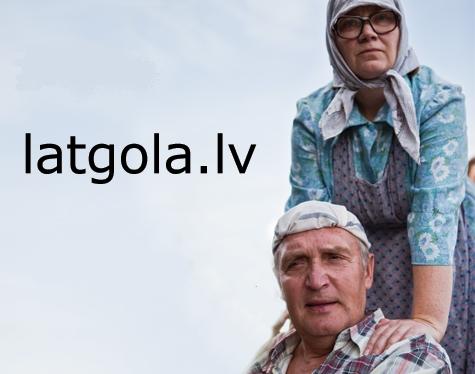
Yesterday at the National Theatre we watched Anita Ločmele's - a Danskovīte, a woman from Baltinava - folk comedy "latgola.lv". A great pleasure that it has found its way from the local Baltinava amateur theatre "Palāda" to the big stage. The performance is emotionally rich and speaks to its audience. Not a single free seat in the hall, completely packed including all extra seats. The audience follows along with great engagement, applauds, laughs, answers questions posed from the stage, and sheds a tear of emotion. The atmosphere is altogether uplifting and stirring. The vitality of Latgalian life flows from the stage - songs, the intricacies of relationships, amusing everyday situations, colourful characters. The feeling that the actors have lived more than just those two August days in the Baltinava area - so well have they been able to capture Latgalian characters and the particularities of their mentality.
At first it seemed the performance lacked the old, good Latgalian folk songs, wedding polkas, and grandeur of sound. But in the end I understood that the music and song lyrics in standard Latvian made this performance more accessible and understandable to Riga audiences. Although the spirit of the songs was full of Latgalian pride and patriotism, it was not separatist or opposed to the non-Latgalian part of Latvia, but rather a feeling of unifying community, warmth, and shared joy and pain for the homeland - Latvia.
 Until now I have had sitting inside me a thought, a desire to write about Latgalian mentality - how a čangalis (Latgalian) differs from a čiulis (non-Latgalian Latvian), why they hold so firmly to their language, their land, their roots, traditions, and everyday customs. But it's hard to write about things so close, emotional, intimate, and yet very self-evident. For say what you will - even a Latgalian who has lived in Riga for several decades is and remains Latgalian, with their distinct mentality. They learn to pronounce the broad "ē", the tricky "ķ" and "ģ" (which are foreign to the Latgalian language), shed the broken intonation, drive smart cars - but the character remains unchanged and the language is not forgotten. It seems that after this performance, viewing Latgalianness from the outside, I can finally try to characterise Latgalian mentality.
Simplicity and directness. If something is said, it is said as one thinks - you can take offence or not. In relationships too they do not distinguish themselves by extraordinary subtlety; they don't throw compliments, endearments, or passionate declarations of loyalty or love around. "Nu cīši smuka bōba" (Well, quite a beautiful woman) could be considered the highest praise from a man's side. But that does not mean there is no depth of feeling - they run even too deep, because there is no greater authority or trusted person than the other half: "sīva - muns prezidents, i čiulim tū nasaprast" (wife is my president, and the čiulis won't understand that), "muna dzeive" (my life).
In general, relations in a Latgalian family are such that the woman, the wife, is the mistress of the home and manager of the household, and will not tolerate another woman in her kitchen. Moreover, she will never have the man do women's work - cooking, cleaning the house, sewing, doing laundry, or milking cows. Very unfashionable, not very modern, right? Yet if needed, she will come without objection to help the man as well - mowing hay, ploughing the earth, slaughtering a pig, patching a roof. Anything within her strength. Latgalian women are very strong - I don't mean only physical strength (though you'd hardly find a weak, helpless delicate creature in the Latgalian countryside), but rather the resolve - to go and do. It sounds like - what is the man for at all?! But no, a Latgalian woman needs a man nearby, because "tai kai drūšōk" (that way it feels safer). Who else would she take care of everything for, who would she worry about, who would she bicker with in the evenings, have a heart-to-heart talk with, snuggle up to on cold winter evenings.
Moreover, a Latgalian woman manages everything - does the household chores, tidies up the yard, sets the table for guests, and in the evenings still runs off to sing, dance, and perform in various amateur groups. In general, a Latgalian sings, paints, and makes pottery. I know no family in Latgale where among the relatives there is not some musician, painter, or skilled craftsman. The indispensable figure of the musician in the films of director J. Streičs is 100% justified. A wedding or a funeral without a musician is unthinkable. If at a celebration, especially a wedding, there is no singing and dancing, something just isn't quite right. We have attended weddings here in Latvia in Vidzeme and across the border in Germany, and the Latgalian soul was thoroughly confused when there was no wedding waltz and jolly polkas with the floor swaying and shoe heels nearly worn off. The first thought - "nu, kai ni pi cylvākim" (well, it's as if not among proper people).
A Latgalian eats a lot and drinks a lot. In Latgale they say "labi napaiesi, kōjis navoklōsi" (if you don't eat well, you won't drag your legs) - watch how someone eats, that's how they work. It's no coincidence that the action of the play "latgola.lv" centred around the table. That is a sacred thing for a Latgalian. Whenever a guest, a neighbour, or someone from afar - perhaps not even that close - comes into the home, the table is immediately laid, they are seated to eat, to have a bite, and only then comes the talking. You go back to Latgale from Riga after a longer period and it feels like you've been living from "table to table". And these aren't light snack tables, but with proper, hearty main courses where bread, potato, meat, butter, sour cream, milk, and similar are indispensable. In the play, those healthy breakfast cornflakes are called by Ontans "vystu kombikormu" (chicken feed). That's how it is - everything is called by its proper name.
In general, a Latgalian needs everything to be REAL - a very powerful character trait. Real meat - if not from one's own pig, then bought from a known farmer's holding, not from supermarket shelves full of E-additives. If bread, then dark rye; if white bread, then such that it's warm and soft, fresh from the oven. If milk, then from the cow's udder, and never mind the enormous fat %. Butter should be home-churned, yellow as a sunflower and with a little salt. And everything gets a sign of the cross over it - the small loaf and the little pat of butter alike.
At Christmas - a real fir tree (if a tree can't be afforded, then at least a branch in a vase), not the plastic kind favoured by Slavic neighbours. Let the needles smell and fall in every corner of the rooms - there will be something to do all year long, fishing them out from between the floorboards when washing the floor. No artificial flowers (neither as a gift nor on graves) - if the fancy roses can't be afforded, then wild ones picked from the meadow, but the bouquet will smell of summer.
Real wool and real leather are needed. My grandfather always repeated that he was not so rich as to buy various "rubbish". On Sundays he wore long leather boots and real loden cloth trousers; on working days - knitted wool socks; and he slept on rough bleached and grey linen sheets. Plywood furniture is no furniture at all - a Latgalian needs wood, a real sturdy plank bed to support the ample weight.
In Latgale everything is TWICE AS MUCH (I agree with what actress Anna Klēvers said, who played Daina's/Anne's daughter in the play): "They measure everything in buckets, from hospitality to beer, moonshine, and sauerkraut soup. There is a lot of everything - both emotions and tangible things." I have always grumbled - why must the garden have an enormous number of beds to weed so that in autumn and winter there is enough not just for yourself and the whole family, but to give to the neighbour and to send to all the Riga relatives in a generous parcel (as if there were nothing to eat in Riga, or one couldn't afford to buy things). But then that is in a Latgalian's blood, there's nothing to be done about it - there must be plenty of everything, so there is enough, so there is a surplus, so there is provision for a rainy day. As the song goes "Dūd Dīveņi ūtram dūt, na nū ūtrai meily lygt" (God grant to give to another, not to beg from another) - and asking for help is something a Latgalian doesn't know how to do, too proud for that.
A Latgalian has two virtues instilled over generations - work and the church. When it comes to work, it is not even the busy-bee diligence celebrated in folk songs from Kurzeme or Vidzeme that bears fruit later - it is an extraordinarily deep sense of duty towards work. If it has to be done, then it has to be done. Regardless of whether it is comfortable or hard or easy, whether the timing is right or not, whether it pays off or not. The second - the church, as a place one simply has to go - on holidays, in deep sorrow, and in great joy. A Latgalian gets married in church, baptises children, bids farewell to the departed with the pastor's blessing and church songs: "dūd jīm mīru vysim ticeigum aizgōjušim, o Kungs" (grant them peace, all believers who have passed away, O Lord). Despite the fact that in the rhythm of modern life one forgets about Sunday prayers, Lenten fasting, and Ash Wednesday - at cemetery days (kapusvētki) people travel to Latgale from all over Latvia and from abroad.
Latgalians are those peculiar folk who will wish every stranger "loba dīna" (good day) or "vasals" (good health/hello), but will not let anyone into their soul. They will only trust the person closest to them. I remember an occasion when, after my studies, having lived in Riga for five or six years, I went to the countryside to my great-grandparents' home - now a practically uninhabited hamlet a couple of kilometres from the Russian border. I was walking along the country road; an unfamiliar old man was coming towards me. When I had almost passed, he turned and said: "Nav labi meitiņ, ka tai īmi i lobas dīnas napasoki vacōkam cylvākam." (It's not right, little girl, to walk past like that without saying good day to an older person.) I was red-faced with shame. Used to rushing past everyone in Riga without even a glance, let alone a greeting.
I laughed heartily at the story told in the play "latgola.lv" by the narrator (Mārtiņš Egliens). A smart black car pulls up at a field in Latgale; out steps a richly dressed foreigner, apparently to ask for directions. He approaches two brothers working in the field and asks: "Do you speak English?" - "Nā" (No). - "Sprechen Sie Deutsch?" - "Nā." - "Parlez-vous français?" - "Nā." The stranger turns around, gets in the car, and drives away. One brother says to the other: "Sacieju, volūdys jōmōcōs!" (I told you, languages must be learned!) The other replies: "A tys treis zinō, nu i nūderā jam?!" (But he knows three, and it didn't help him either!) However comical it may be, that too is one of the Latgalian's character traits - finding one's own rightness in everything. How good or bad that is, that is already another question.
comments