.jpg?w=690&mode=16x9|crop)
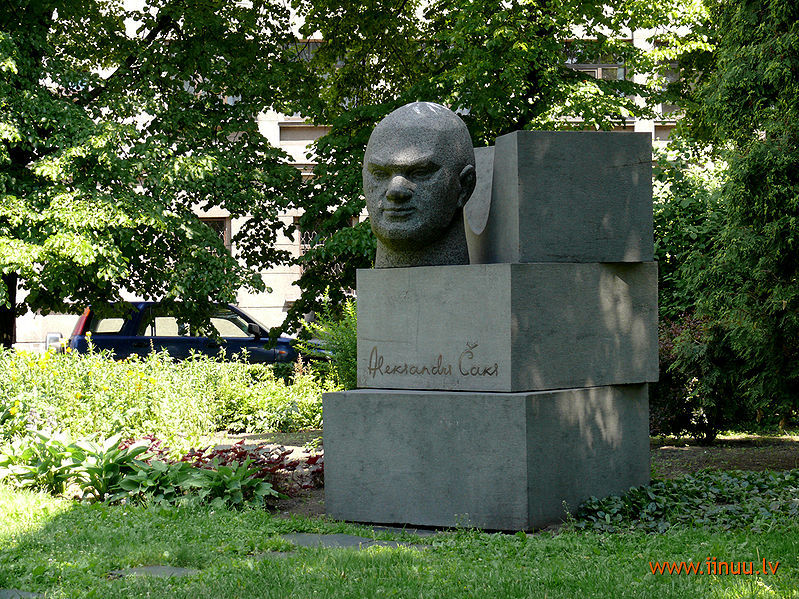
Aleksandrs Čaks Turns 108 Today
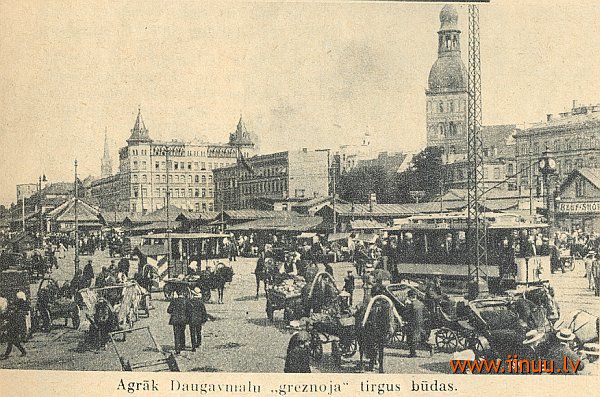
Today Saša would celebrate his hundred and eighth birthday. We would celebrate too, but each of us, caught up in our daily concerns, is distant from the Riga of the 1920s and 30s - a reality that always becomes so close and palpable the moment you pick up any collection of Čaks's poetry. But enough of biographical facts - anyone can read those in a literary history textbook. Let us talk instead about love!
Today - 27 October - Saša would celebrate his hundred and eighth birthday. We would celebrate too, but each of us, caught up in our daily concerns, is distant from the Riga of the 1920s and 30s - a reality that always becomes so close and palpable the moment you pick up any collection of Čaks's poetry.
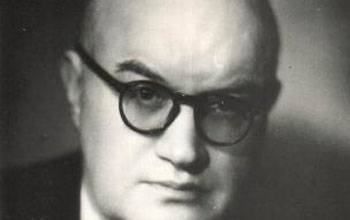
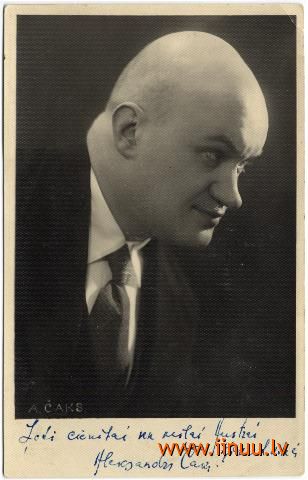
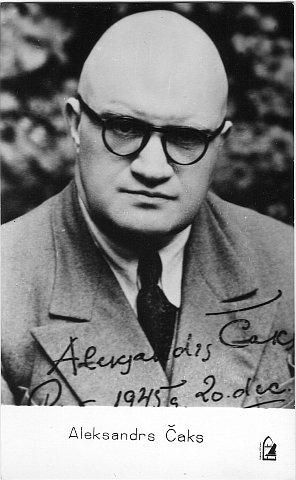
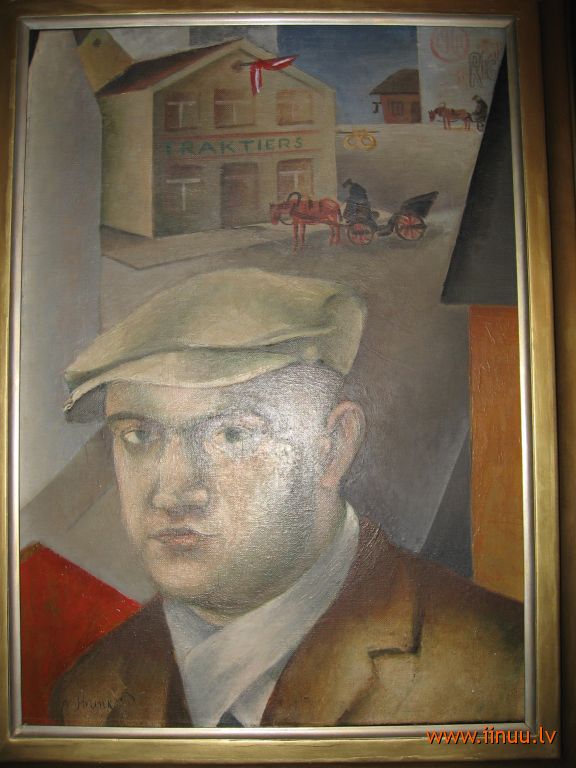
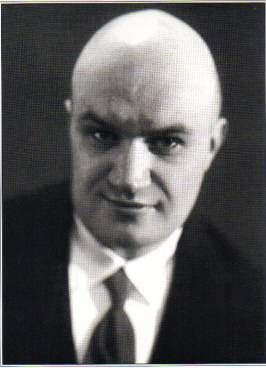
Aleksandrs Čaks (Čadarainis)
The tradition of celebrating Aleksandrs Čaks's birthday (real name Aleksandrs Čadarainis, 27 October 1901 - 8 February 1950) began during our student days, in a small dormitory room on Jūrmalas gatve in 1999; from then on we gathered every year in varying numbers and compositions. Particularly memorable was our gathering in 2002, which featured songs accompanied by two guitars. How do I remember all this? We have a book of wishes, dreams, quiet hopes, and love, in which all the warm words written by those dear and close to me are preserved - written when we gathered each autumn.
He was a poet of the city and his time. The first to perceive and reflect the aesthetic of the city in Latvian poetry. He is called an urbanist poet, because instead of a blooming garden he had a flower pot, instead of a river - street gutters, lakes replaced by puddles, nature by orange peel and radish tops, nightingales by the creak of shop signs and cats' cries in the narrow cobblestone alleys. His literary character - a street lad, a hooligan, a mocking denier of traditional values, a street boy "in a jockey's cap and worn-out boots", a poetically inclined oddity who has wandered into some wholly unpoetic drinking den - contrasts so sharply with the author's own outward appearance that it would be hard to find an analogy. A. Čaks was always neatly and elegantly dressed, composed and slightly ironic. So who was such bravado for?
A. Čaks distanced himself from the context of Latvian poetry of his time and lived in his own era - here and now - neither drowning in memories of the past nor floating in illusions of the future. The author himself explains this choice of character: "The street lad, the apache - my character, a simple literary device with which I try to defend the freedom of the individual." It is perhaps this personal freedom that is the most captivating quality I hear in his poetry of the 1920s and 30s. And also the most tragic quality of his creative work, when authority in Latvia changed hands one after another and waited for everyone to dance to their tune. He danced for a while too, until he broke.
But enough of biographical facts - anyone can read those in a literary history textbook. Let us talk instead about love! Women had a special place in Aleksandrs Čaks's life and work. They are fragile and slender as a ski; simple and open, unconcerned about their appearance; they are artful and fatale with lips as if bloodied; women - moths of the night; women - ladies, proud, distant, and untouchable; strange girls. Čaks's street lad remained quiet and flustered, following with his gaze perfumed and elegantly dressed young ladies on the street.
The Poetry of Aleksandrs Čaks
Reading poetry from the collections "Heart on the Pavement", "The World Tavern", or "My Paradise", it seems the poet would have had enough love to fill the hearts of dozens of women, yet in real life there were only four women. They left lasting marks in Čaks's life - some broke, others healed the poet's heart and received lines of poetry dedicated to them. Muses. They were not deterred by the poet's reserved manner nor his bald head - after treatment for typhus in Russia, Čaks lost all his hair at the age of 23. For the same reason he left no descendants. Čaks loved women and love itself with equal intensity.
A. Čaks's first known beloved was his classmate from Riga 2nd State Secondary School, Leontīne Rundele. Čaks affectionately called her Lonija. When the poet was working in Drabeši as a boarding school teacher and administrator, the daughter of a Cēsis hotel owner, Angelika Blaua, nine years his junior, would often secretly arrive by bicycle without her parents' knowledge. According to what the translator and Čaks's muse Milda Grīnfelde recounted, the famous poem "Confession" or "Mist tears at the window..." was written specifically for Angelika Blaua. However, it turns out that the "Confession", written on 29 July 1930 - two days before Angelika's name day - was later also gifted by Čaks to his school-years love Leontīne Rundele, who was firmly convinced that the poem had been written specifically for her. Angelika, meanwhile, having briefly visited Riga from the USA in the 1970s, told her childhood friend Milda Grīnfelde: "There was actually nothing like that between me and Aleksandrs Čaks..." The absolute truth about what was and what was not we shall never know, and the facts only speak of both women's paths turning in the direction of other men. Čaks declined Leontīne Rundele's suggestion to marry and start a family; she later emigrated to the USA, where she died on 22 May 1990 under her married name - Ritums. Angelika too married not Čaks but his friend, the physician Arvīds Kļaviņš, and during the Second World War went into exile - first to Germany, later to Australia and the USA.
The poet met his next and only official wife, the Culture Department typist Anita Bērziņa, ten years his junior, on 8 November 1933 at the home of her colleague, the future wife of the literary critic and publisher Jānis Kadiļš, Alexandra. Sašiņa, as her friends called her, was celebrating her birthday. On that first evening of acquaintance Čaks did walk Anita home and even asked a very direct question: "Do you want to be the mother of my son?" The addressee was so taken aback that she said nothing in reply. The situation was complicated by a serious problem - Anita already had a suitor, an older gentleman, for whose sake the young woman had previously left her fiancé.
From their meeting to the wedding eight years passed - Anita and Aleksandrs married on 18 October 1941. Their life together was no idyll, if only because both were too different from each other. Anita had literary gifts that Čaks wished to develop in her, but the schooling ended in rather a peculiar way: a few poems by the poet's wife were published in newspapers, remarkably resembling Čaks's own poetic world in handwriting and mood. The poet was not practical - he could not even drive a nail into a wall. He was stubborn - after arguments he was never the first to extend a hand in reconciliation.
A love triangle formed in Čaks's life: on 27 March 1943 at a social gathering the poet noticed a woman with whom he would remain until his death. That was Milda Grīnfelde. But for a time both women were in Čaks's life - Anita and Milda - until the first, thanks to a woman's intuition and an opened letter, found out she was being deceived. Anita fled from the communists, from Čaks, and perhaps from herself, though whether into solitude is not clearly known. Stories tell that during the Second World War she met high-ranking SS officers in Čaks's apartment next to the husband's room - officers who were her friends - and with one of them then left Latvia.
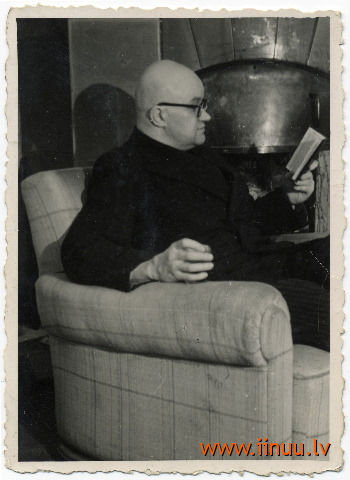
Čaks spent the last ten years of his life with Milda Grīnfelde. It was no idyll, but it was a stable and mutually complementary relationship. Fate had decided that the poet would die in his beloved woman's home - in the former apartment of Voldemārs Tone in the building at the corner of Brīvības and Ģertrūdes streets. Aleksandrs Čaks's birthdays throughout the last seven years of his life were always celebrated at Milda's home. Sometimes just the two of them. When a larger company gathered, there was singing too. Čaks liked to sing. He had either a second tenor or a baritone. But in general he liked to spend time in small company, also in a restaurant - a good restaurant. Though he also very much enjoyed shopping at the market.
It is known that Čaks had friendly relations with several women throughout his life, including the poet Austra Skujiņa. They were both great dreamers. Legs crossed, stomachs empty, sitting on the bare floor, they would dream about how they would one day live when they had plenty of money. Blue cigarette smoke hung like a cloud over their heads, which at the time were full of plans, dreams, and ideas. There is no reason to think, however, that the two poets were ever connected by intimate relations or physical tenderness.
Every year before our gathering to celebrate Čaks's birthday, I choose some motif from his poetry, some quotation that particularly speaks to me or characterises a period of life. This year I again want to speak about love - about love that allows two beings to merge into one.
"Is it not a wonder - we,
Who were two, are now only one,
One single one, -
As if our bodies had opened wide
And each received the other within itself.
Until now I thought only the contents of two vessels
Could flow together and become as one,
Now I know: two beings can also
Like quicksilver, like water, merge together."
Sources used:
http://www.tvnet.lv/women/parmums/personiba/article.php?id=5145199
http://www.literature.lv/lv/dbase/portrets.php?id=34
http://lv.wikipedia.org/wiki/Aleksandrs_%C4%8Caks
http://www.cakamuzejs.lv/muzejs.php
comments