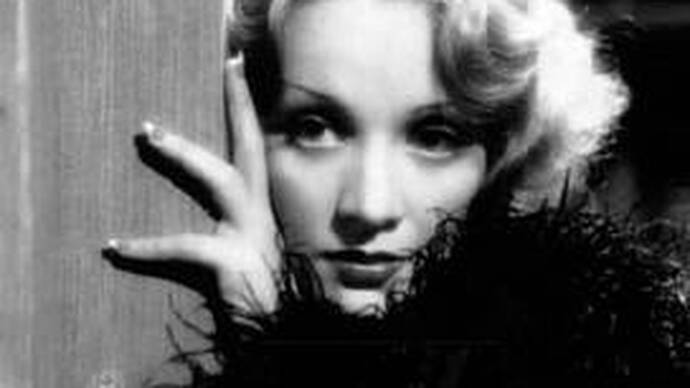
Marlene Dietrich - Queen of Decadence
Hearing the name Dietrich instantly conjures associations: war, black-and-white photography and cinema, cigarette smoke, a small stage in a tavern, an elegant maxi dress with an unusually slender waist, a massive fur collar, an icon of the era.
Marlene Dietrich, full name Marie Magdalene Dietrich von Losch (b. 27 December 1901 in Berlin - d. 6 May 1992 in Paris) - fatale, harsh, and beautiful. She created this image herself; it was also shaped by the era in which she lived.
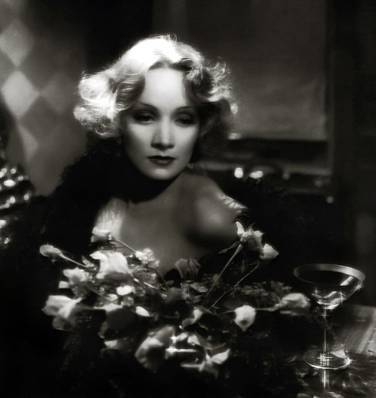
Hearing the name Dietrich instantly conjures associations: war, black-and-white photography and cinema, cigarette smoke, a small stage in a tavern, an elegant maxi dress with an unusually slender waist, a massive fur collar, an icon of the era. With the curiosity characteristic of every person to learn more about what lies behind a celebrity's polished image, I began searching for information on the internet. See what a mosaic I assembled...
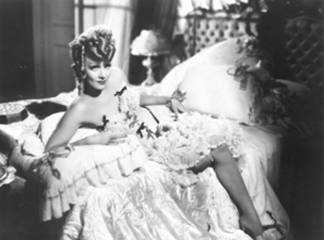
In her youth she was no great beauty - 165 cm tall, fairly full-figured, flat-chested, with masculine gestures and manners. She came from a good family and had trained in violin and acting from an early age. She was noticed in a cabaret performance - that is how Marlene's career in cinema began, eventually leading her to Hollywood, where she refined her image to the last detail and gained fame. The first time Dietrich appeared in the famous image she was known for was in the film "Morocco" (1930). The blonde, strictly sculpted wave of hair above a high forehead, the thin eyebrows, the deeply sunken cheekbones and gazelle legs.
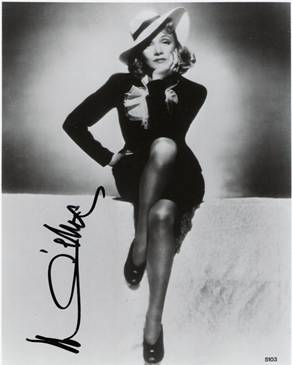
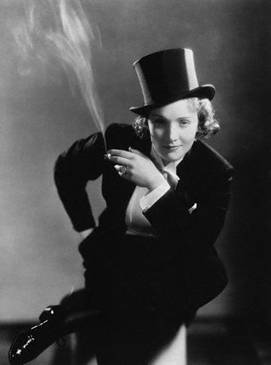
Dietrich was a setter of several fashion trends. She introduced many men's garments and accessories into women's fashion. Whether that was her inner genius and character trait - the daring to try - or her bisexual nature, who can say. She was even attributed the epithet "the best-dressed man in Hollywood". Dietrich combined the images of the femme fatale and masculine bravado in an admirably successful way.
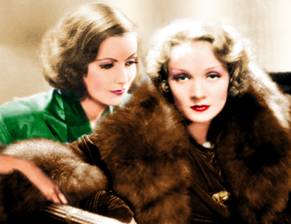
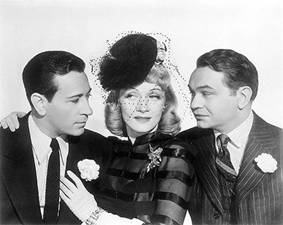
Dietrich was a pronounced opponent of the fascist regime. Marlene even served for a time in the American army, boosting the morale of soldiers going into battle with her performances. Here are a few yellowed photographs from Dietrich's life among the soldiers.
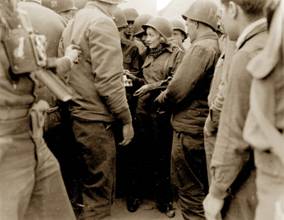
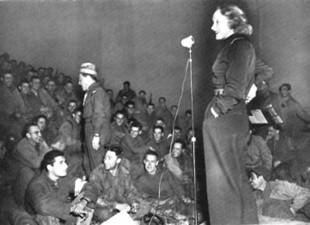
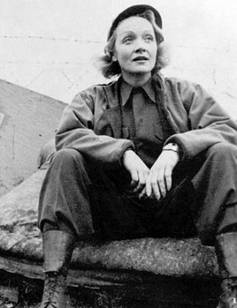
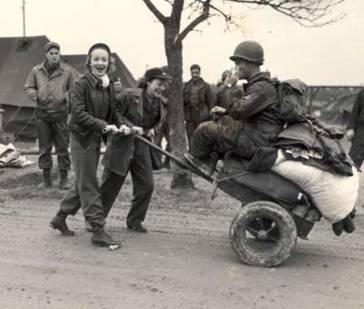
She spoke three languages fluently - German, English, and French. She loved music throughout her life from early childhood, playing and singing herself. Dietrich's most popular wartime song is, of course, "Sag mir wo die Blumen sind".
Listen - http://www.youtube.com/watch?v=P3ET1b0ymZs
Sag mir, wo die Blumen sind,
Wo sind sie geblieben?
Sag mir, wo die Blumen sind,
Was ist gescheh'n?
Sag mir, wo die Blumen sind,
Mädchen pflückten sie geschwind.
Wann wird man je versteh'n,
Wann wird man je versteh'n?
Sag mir, wo die Mädchen sind,
Wo sind sie geblieben?
Sag mir, wo die Mädchen sind,
Was ist gescheh'n?
Männer nahmen sie geschwind.
Wann wird man je versteh'n,
Wann wird man je versteh'n?
Sag mir, wo die Männer sind,
Wo sind sie geblieben?
Sag mir, wo die Männer sind,
Was ist gescheh'n?
Sag mir, wo die Männer sind,
Zogen fort, der Krieg beginnt.
Wann wird man je versteh'n,
Wann wird man je versteh'n?
Sag, wo die Soldaten sind,
Wo sind sie geblieben?
Sag, wo die Soldaten sind,
Was ist gescheh'n?
Sag, wo die Soldaten sind,
über Gräbern weht der Wind.
Wann wird man je versteh'n,
Wann wird man je versteh'n?
Sag mir, wo die Gräber sind,
Wo sind sie geblieben?
Sag mir, wo die Gräber sind,
Was ist gescheh'n?
Sag mir, wo die Gräber sind,
Blumen weh'n im Sommerwind.
Wann wird man je versteh'n,
Wann wird man je versteh'n?
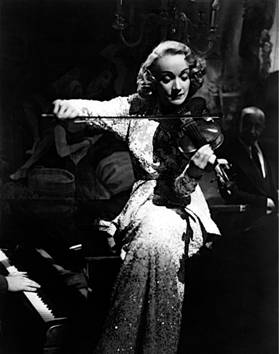
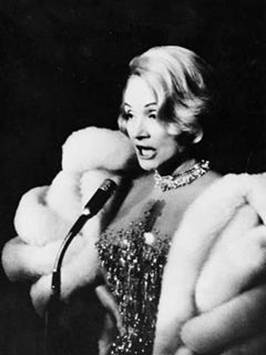
Dietrich was also called a queen, and she accepted this fully, completely aware of her status. There was even an occasion when a British princess invited her to a reception, but Marlene declined, explaining to friends why she should go to a princess when she herself was a queen.
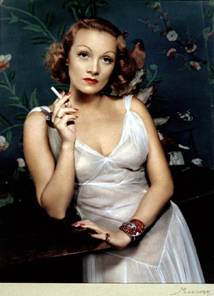
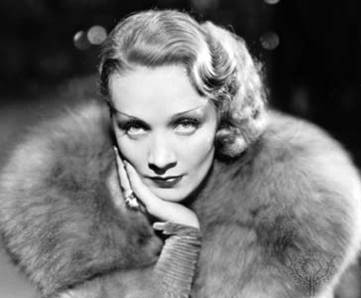
Among Dietrich's friends, lovers, and acquaintances were many notable figures of stage and literature. A relationship with Erich Maria Remarque, author of the world-famous novel "All Quiet on the Western Front", and she was among the first readers and critics of Hemingway's writings.
About some of these relationships - http://www.diary.ru/~marlene-dietrich/p36763204.htm - and about the complicated relationship between Dietrich and her daughter Maria, which was far from warm - http://marlene.ru/read/17
Dietrich lived a long and vivid life. She spent her last 13 years in seclusion in her Paris apartment. She was absolutely determined not to grow old or to transform from an object of admiration into an object of pity. Not without reason, inscribed on her tombstone are the words - Hier steh ich an den Marken meiner Tage - "Here I stand at the boundary of my days" - as if she had chosen when to live and when to go. Marlene also immortalised her image by writing memoirs and giving a several-hours-long interview that became the basis of a documentary film.
A few Dietrich sayings -
• If a person says they have done everything they possibly could, they are underestimating themselves.
• The inevitable must be accepted with pride.
• I generally advise women to wear mourning dress. In mourning a woman receives precisely the attention she needs at that moment.
• No great imagination is needed to fear death.
• Pride in love is more dangerous for a woman than for a man. If the situation must be saved, a man forgets his pride more easily and quickly.
• Tenderness - a better declaration of love than the most ardent promises.
• Every man is more interested in a woman who is interested in him than in a woman with beautiful legs.
• In love one cannot distinguish victory from capitulation.
• For a woman, beauty is more important than intelligence, because it is easier for a man to look than to think.
More about Marlene Dietrich -
http://en.wikipedia.org/wiki/Marlene_Dietrich
http://www.marlene.com/
http://www.marlene.ru/
comments