Sonya Hartnett "The Ghost's Child"
The plot of the book is built around Matilda's retrospective look at a life that has been filled with pain and loneliness. It seems she herself consciously chose this difficult path, for otherwise the life her parents were prepared to provide for her in her youth could have been quite orderly and peaceful. The dominant feeling when reading the book is sadness...
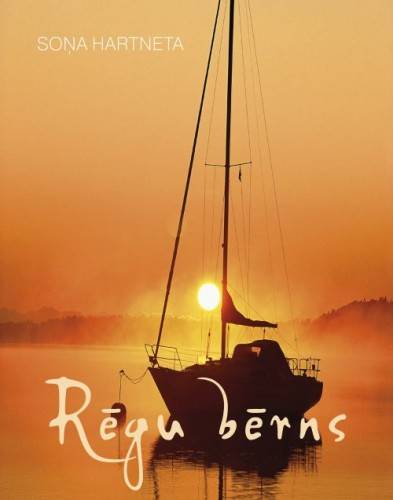
This book, however prosaic it may sound, spoke to me precisely because of its visual design and format, as I knew very little beforehand about the author herself from Australia. Visually, "The Ghost's Child" was reminiscent of something from the P. Coelho book series, and the blurb on the back cover was sufficiently intriguing. A story about a woman, Matilda, who throughout her life sought the answer to the question - what is the most beautiful thing in the world? The book was easy to take along, so I read it in a couple of days.
 The plot of the book is built around Matilda's retrospective look at a life that has been filled with pain and loneliness. It seems she herself consciously chose this difficult path, for otherwise the life her parents were prepared to provide for her in her youth could have been quite orderly and peaceful.
It seems she has even developed her own theory of pain over the years.
".. the fact that you receive bad news means that you are alive, so there is no reason to take offence."
"If you think only about what hurts you, the mind shows mercy, builds a white box, and lets you hide inside it."
Matilda has travelled the world, seen much, admired and collected around herself things that have preserved and can recall wonderful sensations from moments when a person encounters beauty.
".. possessions help people remember the life they have lived. So much changes over time, so much disappears. That is why it is good to be able to look at something that was there in the past and has remained the same. You look at this thing, you touch it - and you feel that it is exactly the same as on the day it became meaningful to you."
But a person is not a thing that can be kept and that remains unchanged. A person ages, and their perception of the world changes too - the years and experience take their toll. In my view, Matilda was unable to accept this truth; she always wanted to keep for herself what cannot in fact be kept. Whether that was her beloved Feather, or youth, or her parents, or the beautiful view of the sea over which sea eagles soar. As a result she loses everything and is alone again, having never found the right person with whom to be together until death parts them.
The dominant feeling when reading the book is sadness - both for the heroine's loss of her baby and the departure of her beloved, and for the merciless course of life and a fate that in old age can leave one alone beside a dying hearth, and for the absence of a close shoulder on which to rest one's head when things are truly hard. The last, in my view, is the most important of all, for it is what helps one to survive anything. Matilda had no close relationship with her parents with whom she could speak openly, nor a girlfriend with whom to share her experiences, nor a beloved man who would stay with her regardless of the distant blue almost-unreachable Pacific Islands that lured him away.
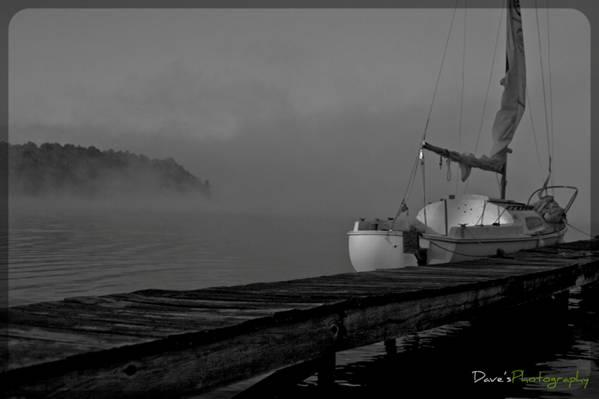
Photo by Dave Matthews - reminiscent of a passage from the book when the protagonist Matilda sailed alone on the ocean to search for Feather.
Reflecting on it, it seems this book is nevertheless more suited to the female reader. Matilda's experience of loss will be more understandable to women - not because men are less sensitive or incapable of understanding the tragic. Yet the choice Matilda makes, sailing alone on the ocean to search for Feather and conversing with the wind, as well as the suicide attempt after losing Elf, is more comprehensible to women.
Although Matilda, in the prime of her life, found fulfilment in the professional sphere - becoming a good and recognised eye doctor - I cannot shake the feeling that this is and remains a story about an unhappy woman.

comments