Reflections on... Cemeteries
Walking around a cemetery on a sunny day seems even interesting - reading inscriptions, years, dedications and studying photographs, the forms of monuments and crosses, it feels like walking through an open history book and database of persons. Here are reflections on the institution of the cemetery - why it arose and why people and society need it. What motivation would I have to be buried in a public cemetery after death?
This holiday weekend, after a long time, I managed to get out to the countryside to visit parents and relatives. Such a trip usually also includes visiting the graves of departed, i.e., deceased family members. For Latvians and especially for Latgalians, cemetery culture has been cultivated across several generations - from the cemetery festivals (kapusvētki) that are traditionally held every summer, to the tending, greening, and otherwise adorning of graves and their surroundings.
This time I would not wish to go into burial rituals, the customs of various peoples, the norms accepted in different religions, or personal experience. Each of us has accompanied someone dear on their journey to eternity - you will agree, that topic and those memories are not among the most pleasant. But while tending the graves this holiday weekend and looking on as if from the side, a series of reflections arose in me about the institution of the cemetery.
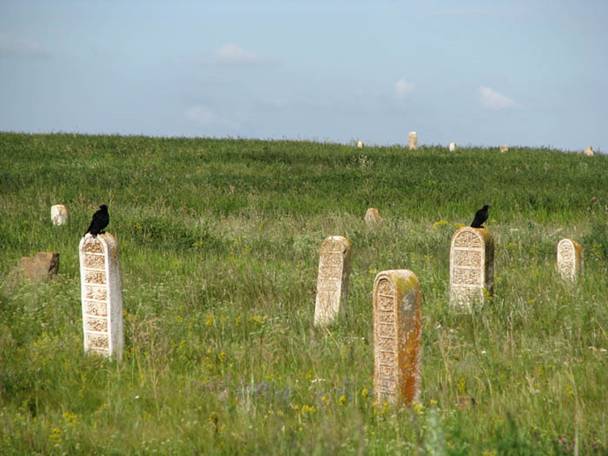
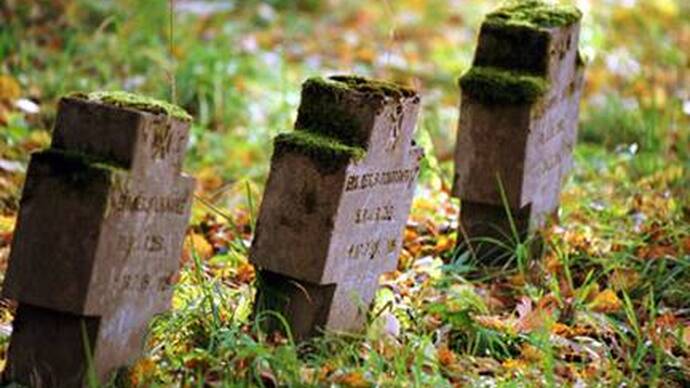
Walking around a cemetery (regardless of denomination and type - Catholic, Orthodox, Brethren, etc.) on a sunny day seems even interesting. Because reading inscriptions, years, dedications and studying photographs, the forms of monuments and crosses, it feels like walking through an open history book and a database of known persons. Moreover, a remarkable peace usually prevails here, creating a conducive atmosphere for various philosophical reflections. It is different at dusk and during the night hours, when any person in their right mind tries to give cemeteries a wide berth and certainly does not choose them as a place for walks. The mind conjures up frightening images, ingrained notions, and unconscious fears of something inexplicable.
Whatever the case, let us return to the institution of the cemetery - why it arose and why people and society need it.
The second question is even easier to answer, since it is connected to emotional attachment to another person and the reluctance to part with them even when they are no longer physically present. Yet this excessive attention - to how the grave looks, how expensive and valuable the stone from which the monument is made, how neatly the lawn has grown, whether fresh flowers have been changed every week - is in my view not at all intended as love for the departed or dear memories. We do it only for ourselves, even driven by certain egotistical and guilt-motivated impulses. If I once joined others in condemning those ungrateful people who abandon their relatives' graves after the funeral and make no appearance for several years, I now reflect - perhaps they are right after all, to devote all their attention and love to the living rather than the dead. Because when one is busily sweeping, gathering debris, or weeding the grass around the grave, arranging flowers in a vase, assessing how it all looks - one is not at all thinking about that person beneath. Memories return in moments of sadness or in cheerful company, when you recall some amusing expression you inherited from, say, your father. You meet them in a dream and consider it a good or bad omen. Is a departed person of less value if they are remembered through deeds, phrases, or situations rather than through the maintaining and adorning of their burial place? Will I be forgotten if there is no grave? Perhaps it is a fear of being forgotten that makes us wish to be buried in a cemetery in a solemn funeral ceremony after death? Could I not be remembered, for example, in quiet moments by going to the sea gate and sitting on a rock, or walking along the pier?
Cemetery - a territory of land designated for the burial of the corpses or ashes of the departed. Also the most popular burial method practised throughout the world. The emergence of cemeteries was essentially determined by three aspects: 1) the ravaging of various epidemics or mass killings as a result of warfare; 2) the emergence of larger and smaller populated places (cities, villages); 3) burial laws.
If the first two aspects are determined by natural selection and survival, the last was introduced by various governments and religions. Moreover, the burial of corpses in coffins or wrapped in shrouds occurred and continues to occur chiefly under the influence of Christianity, which took over Europe entirely. In ancient Greece and later in the Roman Empire, as well as among Celtic and Germanic tribes, the ritual burning of a departed person's body was customary. With the advent of Christianity such practices are assessed as paganism. Likewise, the church has also introduced strict judgement regarding how a person departed for the other world. Suicides are not to be buried in cemeteries, and the family, in addition to the pain of their loss, must also endure society's condemnation and shaming.
In practice there have been cases where departed people were buried right near the home, in the garden or in a small grove. What could prevent this, if it is private land and one chooses oneself what purposes to use it for? Interestingly, does any law cover this as well? (Lawyers, help!) Yet another question - if a grave is established, experience shows sooner or later it is dug up and the departed person's rest is disturbed regardless - countless archaeological excavations, exhumations for expert examination, construction works, disrespect towards a nation (the experience of Riga's Great Cemetery).
So reviewing all of the above - what motivation would I have (if given the chance to choose) to be buried in a public cemetery, rather than interred somewhere else or cremated after death, with my ashes scattered in the wind?
comments