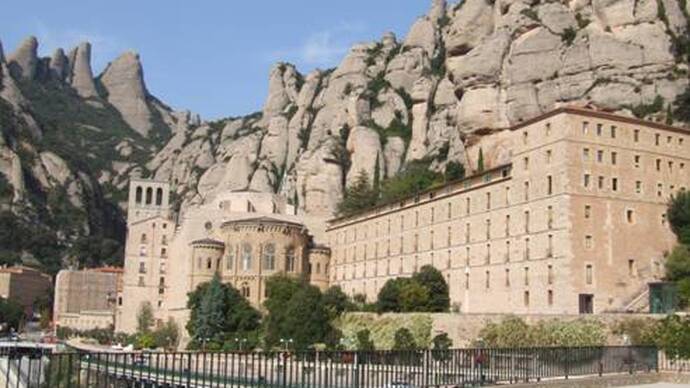
Montserrat - the Black Madonna
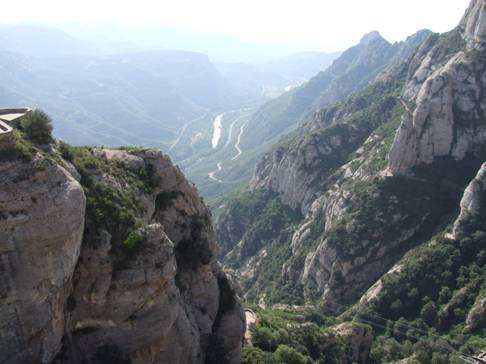
In translation from Catalan, Montserrat means the jagged, serrated mountain. The view is truly magnificent. The mountain peaks look as if polished by water and smoothed by the winds. The monastery, located approximately 50 km from Catalonia's capital Barcelona, is indeed embraced by jagged mountains.
Montserrat - this name is known mainly in Spain, though it is also the name of a British island, a district of Buenos Aires in Argentina, a municipality in Portugal, and a palace near the Portuguese town of Sintra. In Spain it is both a popular place name in the Catalan region and a woman's name. The latter is attested by, for instance, the popular Spanish opera singer Montserrat Caballé.
While in Catalonia in the summer of 2007, we visited the Montserrat mountains and the monastery located within them, famous for the Black Madonna statue.
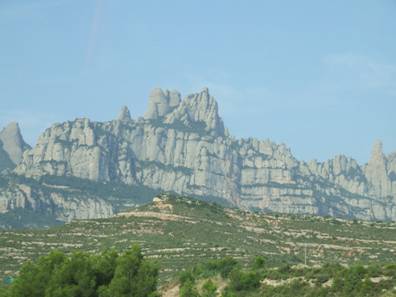
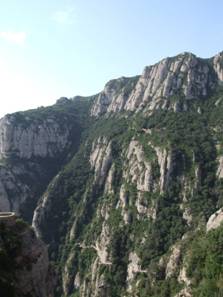
In translation from Catalan, Montserrat means the jagged, serrated mountain. The view is truly magnificent. The mountain peaks look as if polished by water and smoothed by the winds. The monastery, located approximately 50 km from Catalonia's capital Barcelona, is indeed embraced by jagged mountains. The approximately ten-kilometre long and five-kilometre wide, steep Montserrat mountain massif with its highest peak reaching 1,236 metres also forms Catalonia's geographical midpoint.
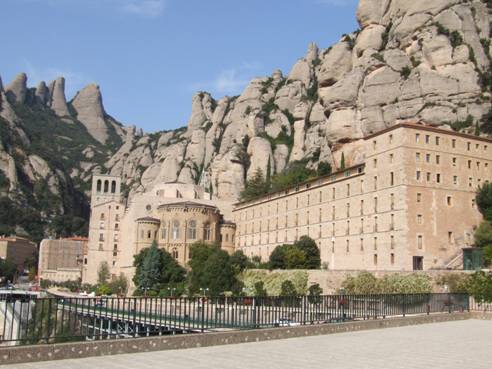
Even before Christianity, Montserrat is said to have had a Temple of Venus, which, according to legend, was destroyed by the Archangel Michael. Hermit monks then settled in the mountains, building a Romanesque chapel of the Holy Mary and later establishing a monastery. It is officially first mentioned in historical records in 888. At one time Montserrat was also one of the residences of Ignatius of Loyola, the founder of the Jesuit order. However, in 1811, when French troops invaded Catalonia, the monastery was destroyed and the monks were killed. The monastery was later restored, and during the Franco dictatorship Montserrat became an oasis of Catalan culture, where masses were held in the banned Catalan language. Today approximately 80 Benedictine monks live in the monastery.
According to legend (we did not see this ourselves) four trees grow in the small garden of the monastery courtyard - a palm, a cypress, an olive tree, and a laurel tree. The palm symbolises beauty, the cypress - peace and prayer, the olive tree - peace and fertility, while the laurel tree - honour.
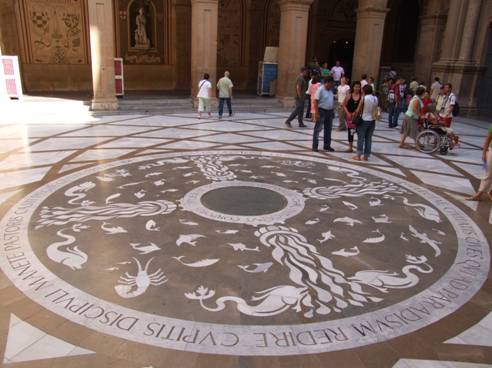
Another belief, which some travellers and tourists "take at face value," is standing in the centre of the monastery's inner courtyard, in a circle (visible in the image below), and absorbing the energy of the Universe.
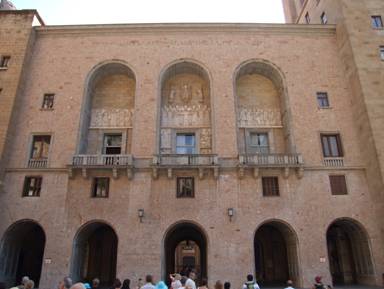
The monastery façade is made from polished Montserrat mountain rock. Above the three arched gateways leading to the basilica, sculptures have been created depicting Jesus Christ and the twelve apostles.
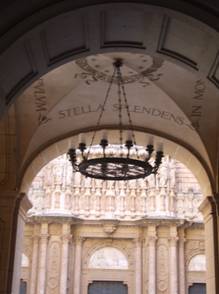
The sound of the bells, calling both monks and pilgrims and visitors to prayer, thoroughly shakes the air and impressively echoes off the rock faces. It turns out that one of the metal bells weighs seven and a half tonnes.
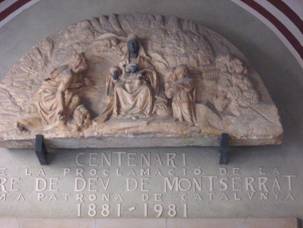
The main thing that draws up to 2.5 million visitors from around the world each year is the soul of Montserrat and patron of Catalonia - the Black Madonna. According to legend the dark, small wooden statue was created by Saint Luke, and Saint Peter brought it to Catalonia in the 50s AD. Carbon analysis indicates, however, that the Madonna statue, carved from olive wood, was created around the 12th century. Yet, however it may be, in 1881 the Black Madonna of Montserrat was proclaimed the patroness of Catalonia.
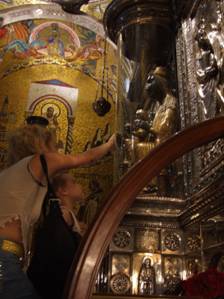
The Madonna seated on a throne with the infant Jesus holds a globe in her right hand, which visitors are permitted to touch. The visit to the Black Madonna is particularly important for women who are expecting a child or wish to pray for a little soul to enter the family.
In the votive room, wooden crosses, passport photographs, wedding dresses, plush bears, crutches, prostheses, and even football victory trophies are piled up crisscross. People have left symbolic expressions of gratitude for the Madonna's miracles and healings.
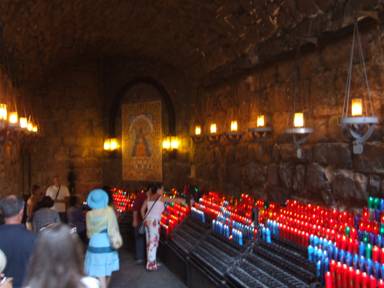
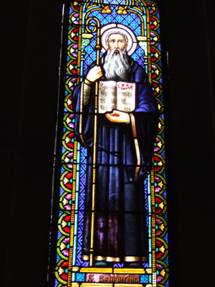
The idyllic mountain monastery also attracts many with its artworks in the basilica and museum. There one can view a collection of 19th and 20th century Catalan art, as well as works by many Italian artists.
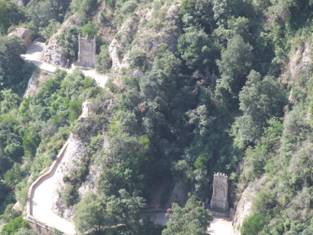
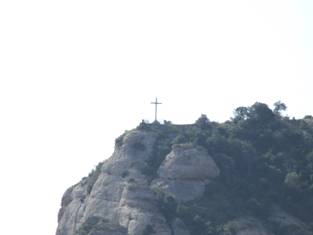
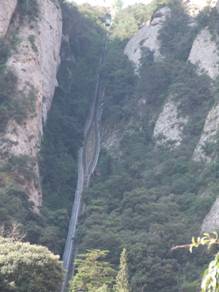
If one wishes to immerse oneself in solitude or walk the Way of the Cross, one can go on foot along winding paths to the mountaintop. The lazier can use the funicular, which runs every 20 minutes, taking you up the rack railway to an altitude of 910 m in under ten minutes.
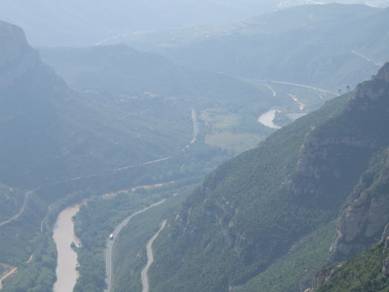
The foot of the mountains is enveloped in a bluish haze, which continually deepens one's awe before the mighty forces incomprehensible to human minds and creates a sacred atmosphere.
comments