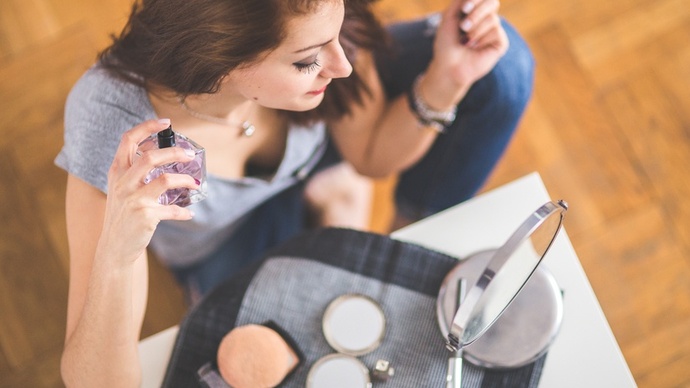
Fragrances
Already in the 19th century, plants containing essential oils began to be cultivated for industrial purposes. France became one of the leading perfume producers. In the 20th century aromatic substances began to be used in medicine, which meant that the properties of aromatic substances and their specific effect on the human psyche and body were rationally studied.
Every woman can unfailingly name her favourite fragrances. Reference points - sweet, bitter, fresh, old-fashioned, strong, weak, famous brand, fashion trend, mood... Very subjective, but precise, and this precision is based more not on description but on purely feminine intuition.
I am not a great connoisseur of fragrances, but for me fragrances associatively evoke a specific period of life, a specific age, some journey, place, person, relationship. In my life there have been "Eden", "Silk Touch", "Midnight", "Miranda", "212", "Light Blue" phases.
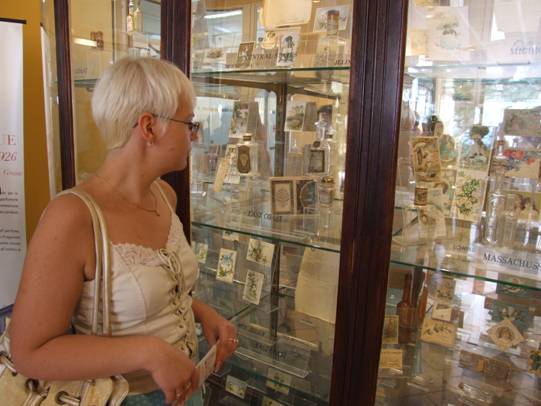
A little from the history of fragrances
(read more - http://en.wikipedia.org/wiki/Aromatherapy)
The very first to observe the specific effect of plant aromas on people were the ancient Phoenicians. From them, around the 4th or 5th millennium BC, this art was learned in ancient Egypt, where aromatic substances also began to be used. This is attested not only by archaeological finds but also by works of art and legends. The Egyptian ruler Nefertiti was a great admirer of fragrances. In her palaces there were rooms for beauty care. Here one could bathe in aromatic baths. Here also aromatic ointments, perfumes and powders were prepared and used. The use of fragrances and ointments occupied an important place in everyday Egyptian life. After washing or bathing, the body was rubbed with fragrant ointments and oils. The dry desert climate created a need to moisturise the skin. Oils were used to maintain its elasticity. The main suppliers of ointments were priests, as they knew how to prepare them. But it was Cleopatra who made the use of fragrances and cosmetics one of the highest arts. It is considered that she bathed daily in fragrant baths and it was precisely with the help of perfumery that she seduced Mark Antony at their very first meeting.
In Islamic lands great significance was attached to the scientist, physician and perfumery connoisseur Avicenna (980–1036). He discovered a way, by distilling olive oil and mixing it with the aroma of roses, to obtain the wonderful "rose water".
In medieval Europe too, during plague epidemics, the consumption of aromatic substances increased. Bonfires were lit in the streets, into which various medicinal herbs were thrown, so that their aromas might help to overcome the epidemic. Fragrant powders were sprinkled in the corners of living rooms, aromatic candles burned at the bedsides of the sick. Set in fine silver chains, women wore silver balls prepared by jewellers with small holes in which aromas were stored, so that their beneficial fragrance might always accompany them.
The renaissance of fragrances was in France during the reign of Catherine de' Medici (1519–1589). The perfumery she established in Grasse still operates today. At that time perfumery and glove manufacturing workshops merged. Scented gloves came into fashion. In France fragrance masters had been working since the 12th century. Before becoming such a master, one had to serve 7 years. When new fragrances or remedies were created, they were registered and a patent issued. The oldest such patents are dated to 1190.
Already in the 19th century, plants containing essential oils began to be cultivated for industrial purposes. France became one of the leading perfume producers. In the 20th century aromatic substances began to be used in medicine, which meant that the properties of aromatic substances and their specific effect on the human psyche and body were rationally studied.
In August 2007 we also visited one small French fragrance manufacturer - Fragonard - www.fragonard.com.
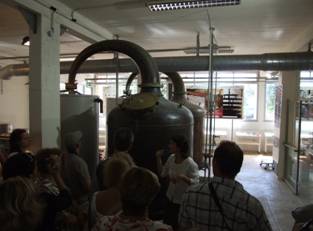
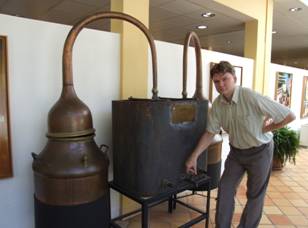
The vats in which flower petals are boiled to obtain essential oils were reminiscent of an 18th-century French scene from the film "Perfume" (2006) - large, sooty, with pipes and taps, but evidently effective.
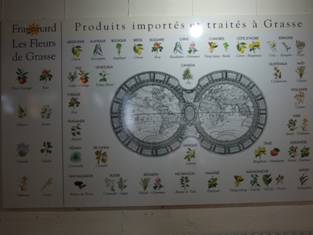
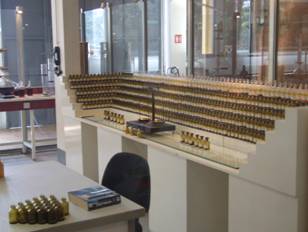
Herbs and flower petals are brought in from all corners of the world, while in the factory laboratory, creating new fragrance compositions, the best "noses" work - of which it turns out there are not so many in the world. Only a rare person is naturally gifted with the ability to sense the fine nuances of fragrances.
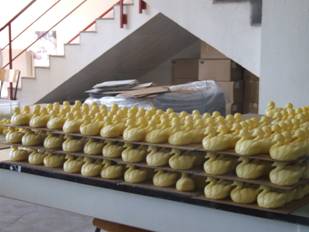
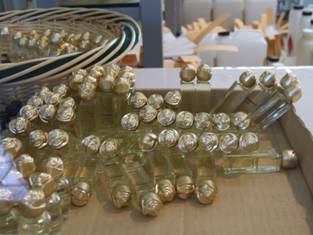
Here are manufactured both fragrances and soaps, as well as face and body creams. All of these can also be purchased in the small shop on the factory grounds. For tourists - a tour plus pleasant spending. Although one could debate the latter, for when the guide announced an excursion to a perfume factory, the masculine portion of the bus exhaled not from delight (I should add that the previous day we had visited a jewellery manufacturer) :). I thought - how lovely after all to be a woman with all her attendant "weaknesses". The result - I savoured the oriental fragrance "Miranda" - a bouquet of bergamot, coconut, jasmine, rose, amber and vanilla.
Fragrance Explanatory Dictionary
http://www.stockmann.lv/portal/3292/
About the labels on perfume bottles -
- Eau de Parfum (parfum de toilette / esprit de parfum)
The most widespread type of perfumery product today. This is explained by the optimal balance of price and quality - with a sufficiently high extract concentration (10–20% in 90% alcohol), and a more accessible price compared to perfume. For many companies, eau de parfum is the product type with the highest extract concentration, as not all manufacturers consider it necessary (or feasible) to release their fragrances in perfume form. Eau de parfum always comes in spray form, which is convenient to use and transport. If perfume is not available, eau de parfum is undoubtedly the best way to substitute it.
- Eau de Toilette
Contains 4–10% extract in 80–90% alcohol. Many fragrances exist only in this concentration. If one compares the perfume and eau de toilette of the same line, the latter has some drawbacks: more needs to be used as its fragrance staying power is not as great (on average an eau de toilette fragrance lasts no more than 2–3 hours, whereas perfume lasts more than 5–10 hours) and the scent of eau de toilette is less interesting. However, there are also advantages - accessible price, variety of formats (30, 50, 75, 100 ml), ease of use (more often in spray form), and many appreciate that the fragrance is not too strong. Eau de toilette is perfectly sufficient for everyday use, but for formal occasions a more concentrated fragrance would be preferable.
- Eau de Cologne
In the traditional sense of this term, the least concentrated perfumery product (3–5% extract in 70% alcohol). If a fragrance is manufactured in the USA, then the label "cologne" means an aromatic substance concentration of 12% to 25%, which corresponds to eau de parfum in Europe. But in recent times the term "eau de cologne" is more frequently used to designate eau de toilette for men.
- Perfume (Parfum / Extrait)
Contains the highest percentage of aromatic substance composition (from 15% to 30% and more), which is dissolved in very pure alcohol (96%). It is released in small perfume flacons, most often only in 7 or 15 ml (in America this corresponds to 1/4 oz. or 1/2 oz.). Perfume is particularly long-lasting compared to other types, which is ensured by the high extract content. But perfume is also the most expensive perfumery product, as it contains a high concentration of perfumery oils, whose price on the world market is very high. However, the pleasure from using it is undoubtedly greater: the fragrance is more multifaceted and deep, the presentation and flacon more beautiful, and perfumes last longer - just a couple of drops suffice for the fragrance to last for long hours. Moreover, perfumes rarely have a spray and accordingly are used up more slowly. As drawbacks of perfume one can name only the price and the inconvenience of transporting (if the flacon is not a spray), but overall they are, of course, the most refined type of perfumery product.
comments