Moscow Never Sleeps
What do we know and what stereotypes never stop following us when we utter the word - Moscow? I, as a proper post-Soviet person, saw Moscow in childhood almost every evening on television screens, I can still infallibly recognise the sound of the Kremlin chimes, I know it is large - and back then it seemed distant and unreachable.
This year I had occasion twice to visit Moscow and look up close at the little pictures seen on screen. Before the trip, I must say, there was no great enthusiasm - more uncertainty and arming oneself with suspicion toward everything one might see there and everything that might happen. When telling older people, I sensed a certain pride - what an event, my daughter, my daughter-in-law, my neighbour, my acquaintance is going to Moscow itself! Younger people - it's a long flight, how are things money-wise, bring back a matryoshka (15), be careful, they have terrible chaos and human rights violations on every corner. My feelings were mixed.
Here are some well-recognisable pictures and some subjective observations.
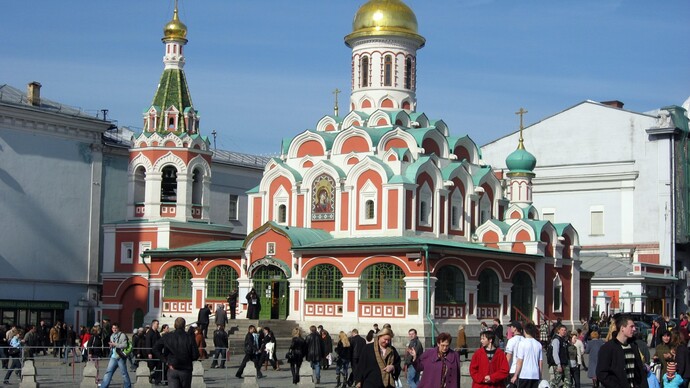
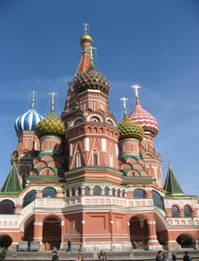
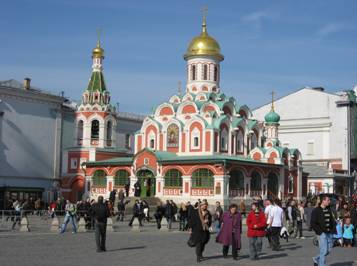
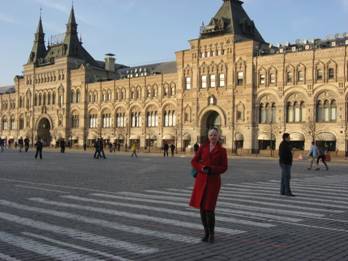
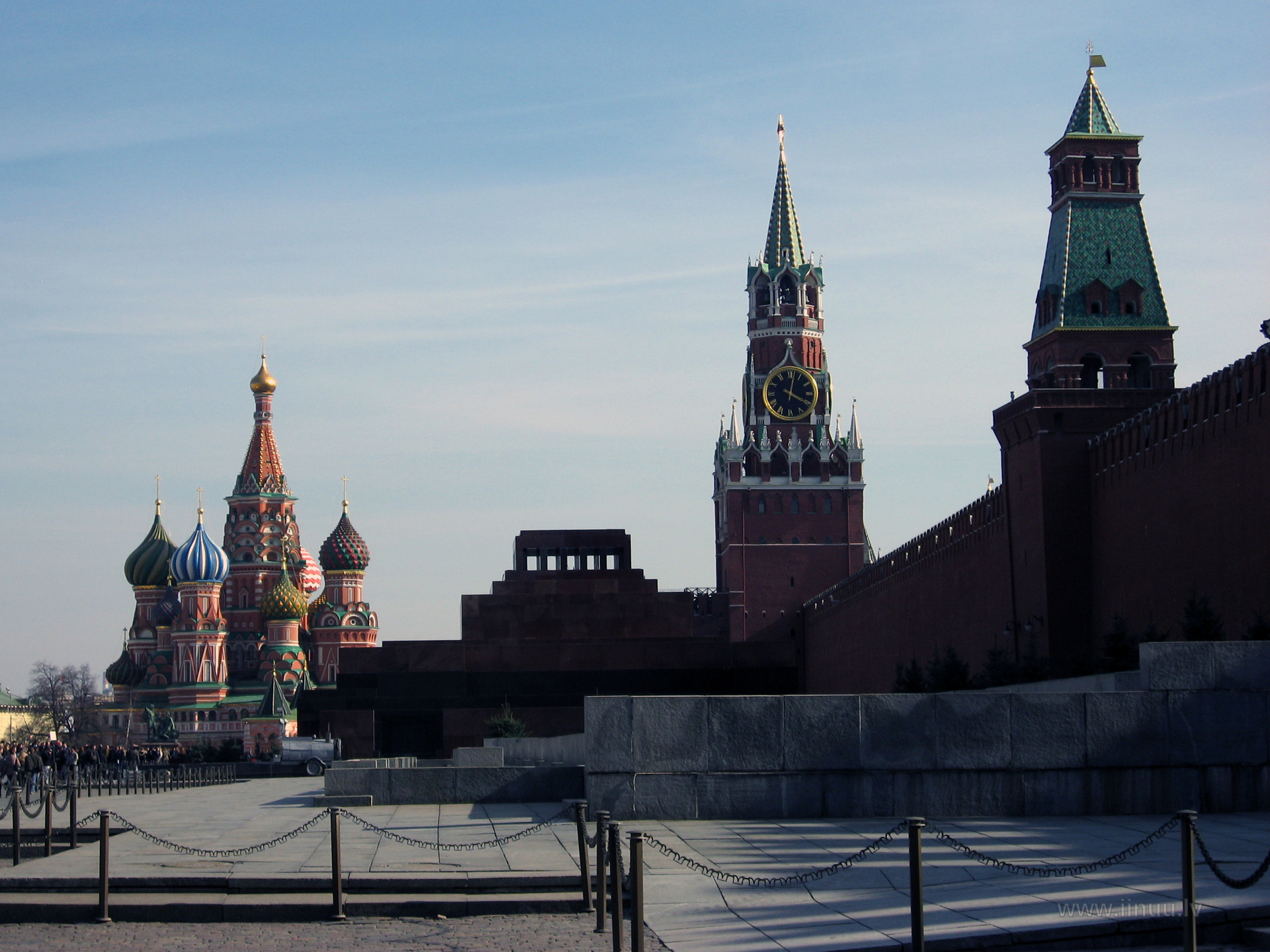
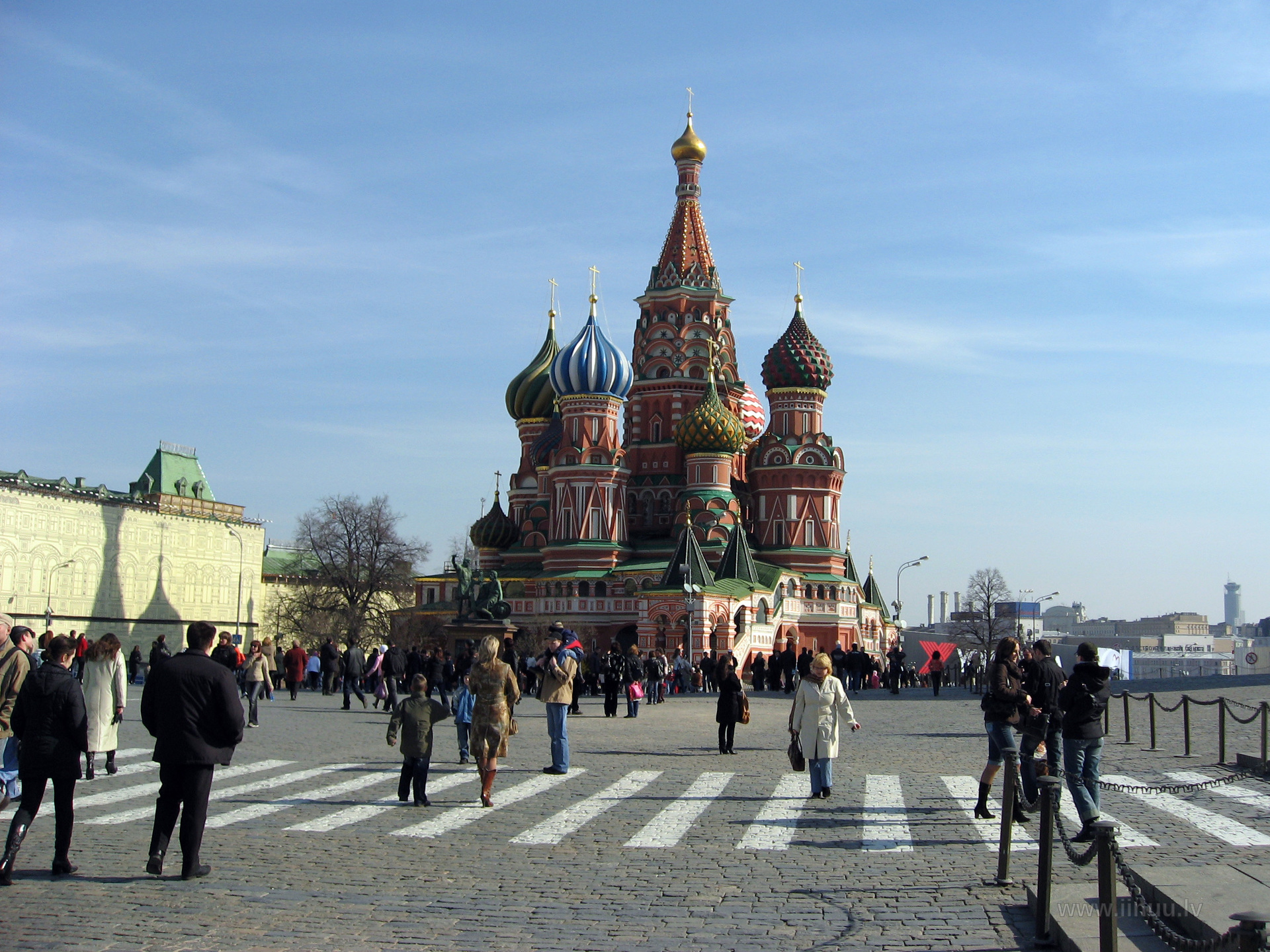
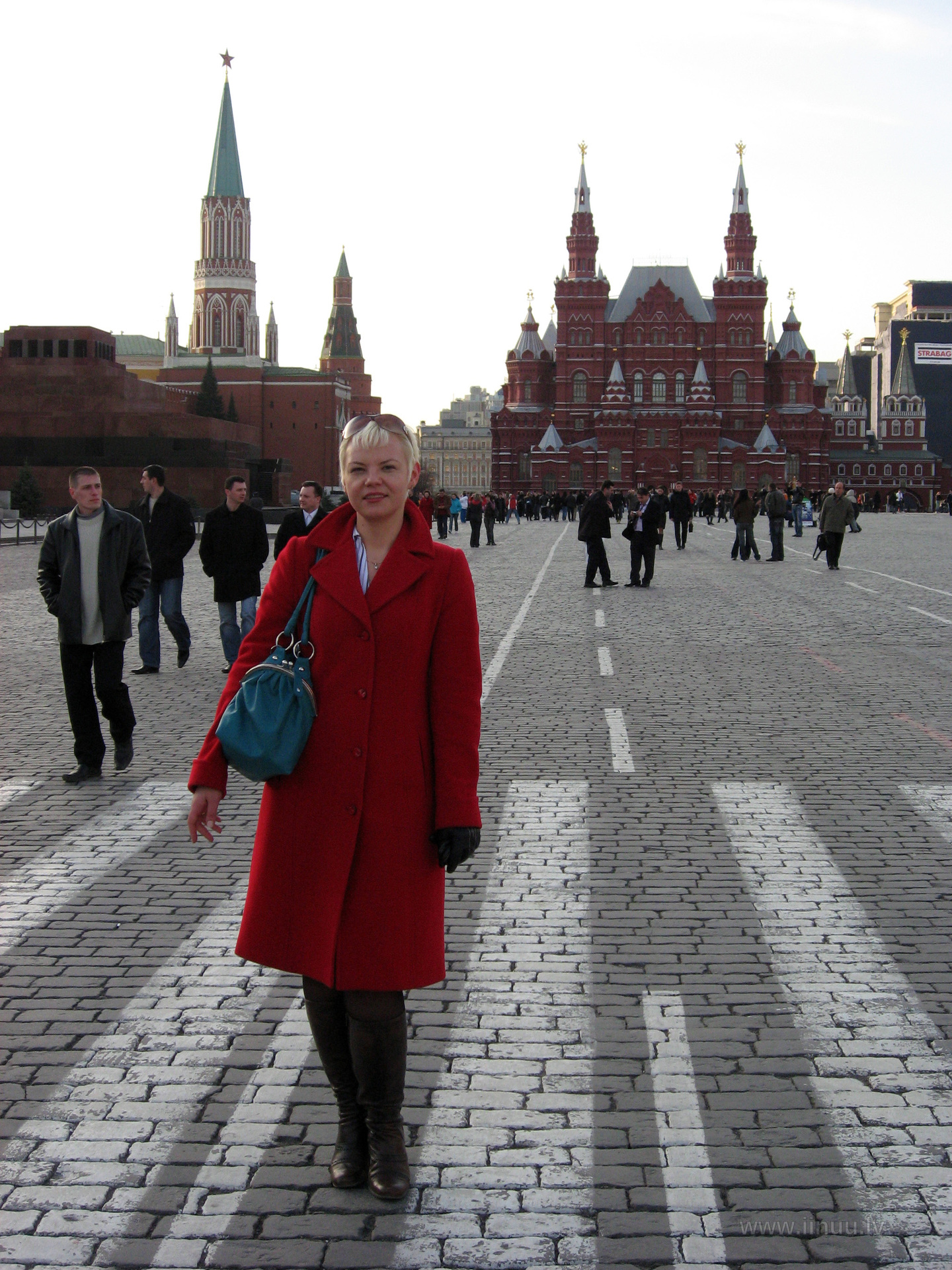
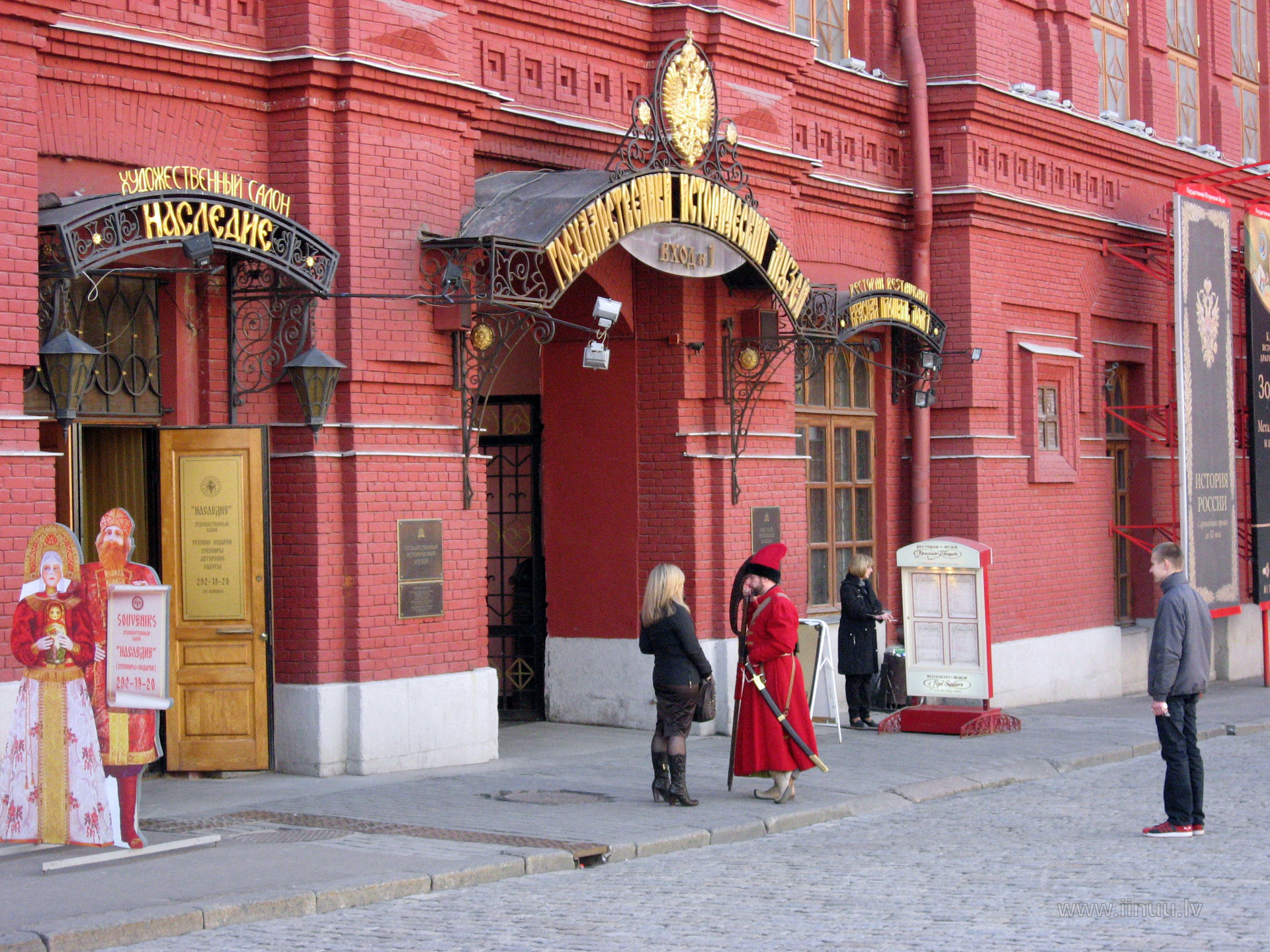
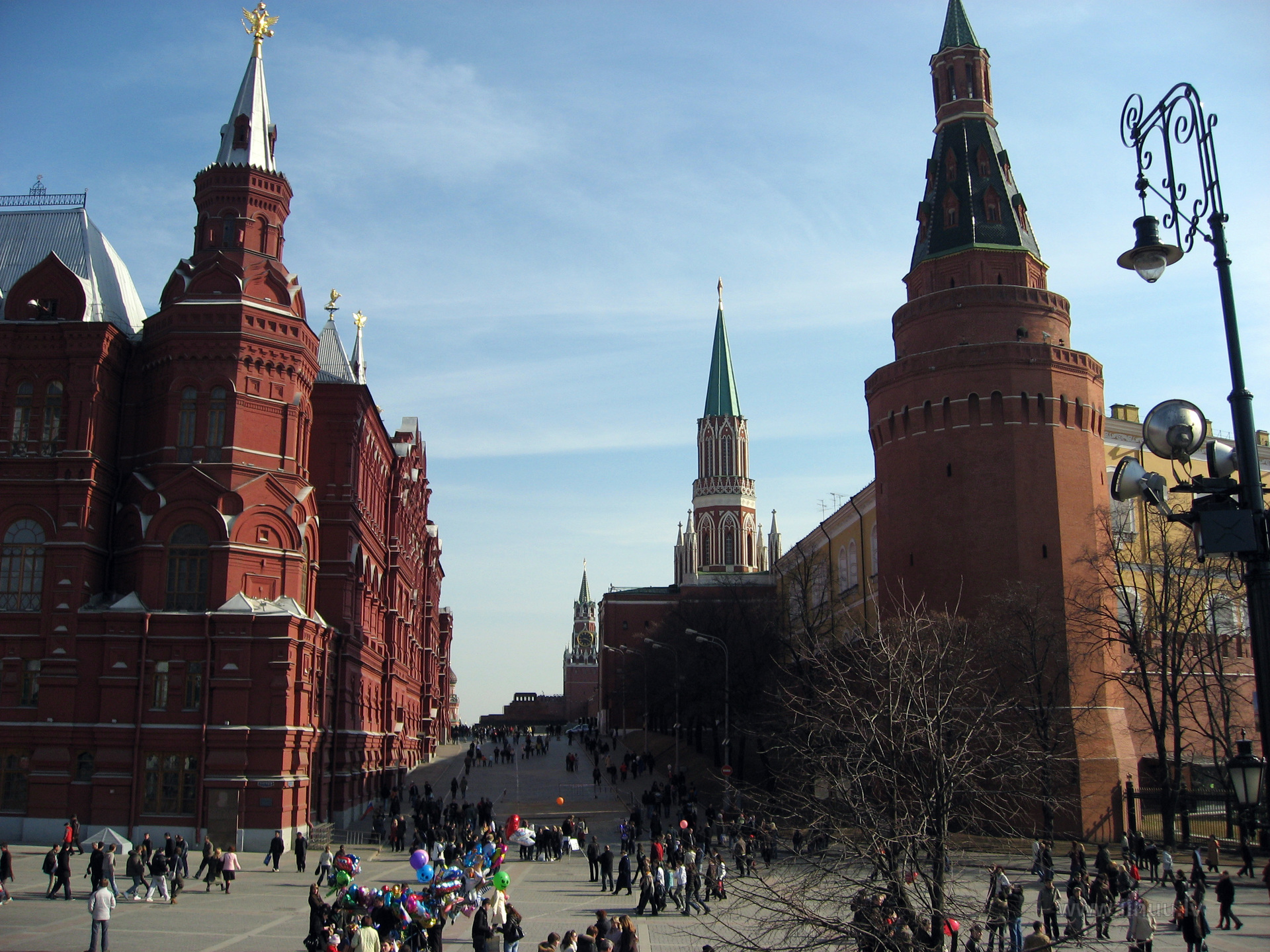
Let us start with the fact that Red Square - Красная площадь (4) is not at all red and not at all as large as the broadcasts of the famous victory parades would suggest. It is paved with grey cobblestones and is elongated. It is surrounded on all sides by historic structures - Покровский собор (1), Средние торговые ряды, ГУМ (3) building, Собор Казанской иконы Божьей Матери (2), Воскресенские ворота (5), Исторический музей (6).
(1) (2)
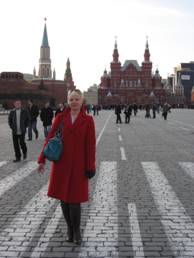
(3) (4)
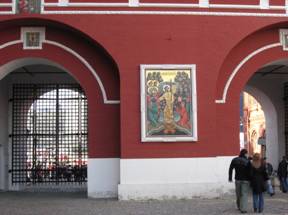
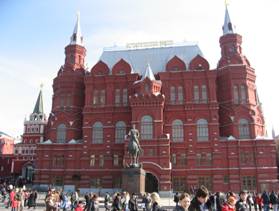
(5) (6)
Of course, the famous Kremlin wall of red brick, preserved from the 17th century, with its most recognisable tower - Спасская башня (7) - in which the clock is visible. The whole vast Soviet Union, holding its breath, followed the hands of that clock to welcome in each New Year.
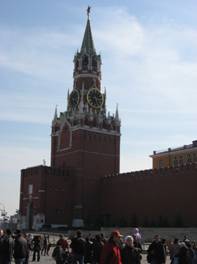
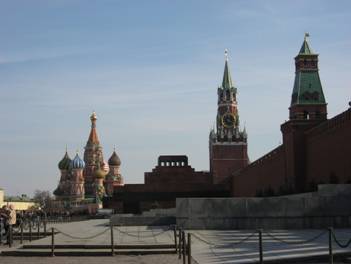
(7) (8)
At Lenin's Mausoleum (8) there are no longer any queues to view the great leader's mummification. But otherwise the square is full of multinational tourists. The square speaks in many languages both familiar and unfamiliar to the ear. People take photographs, commerce flourishes - selling various souvenirs (outside the square), loudspeakers inviting visits to the history museum and the cathedral, offering the chance to be photographed alongside an almost authentic Stalin, Lenin, or Putin. The latter are very convincingly portrayed by costumed, made-up actors who have carefully worked on the leaders' gestures, gait, and manner of speech.
Most interestingly, the district from which, from metro station Gagarina (10), I set out to see Red Square, is called Kitay-gorod (9). Why it bears that name I have not yet had occasion to find out. Incidentally, the metro is the most convenient way to move around the city quickly and economically. Moscow's metro has been running since 1935 and provides large-scale movement of people beneath the city. Metro tokens can be purchased at every metro station, for one or multiple trips. For example, a return ticket costs 38 RUB. One journey counts as travel by metro from one station to another, including with transfers, but without going above ground. Navigation by map and metro stations is truly clear and easy to grasp. The only difficulty is that when you emerge above ground you can't quite see any sign telling you exactly where you are.
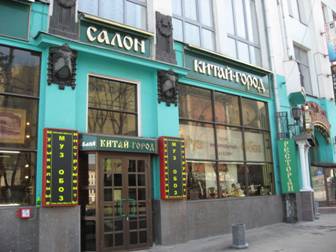
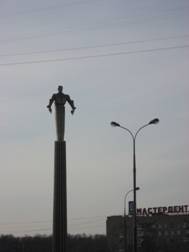
(9) (10)
Next to Red Square, passing through the gates one can reach Манежная площадь. Here too is a distinctive, spacious, multi-storey underground shopping centre. The images show the square from various vantage points - a fountain (11) for visitors to Alexander Garden, and from below a dome (12) for visitors to the shopping centre.
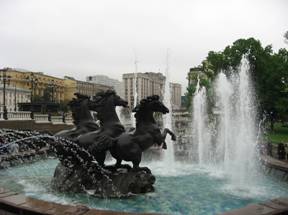
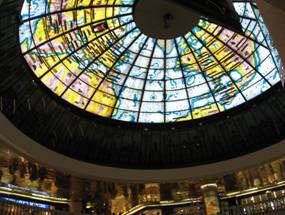
(11) (12)
Order in the city is maintained by a strikingly large number of militia representatives, whose eyes do not miss a single suspicious type or even a confused tourist. There is also much traffic militia on Moscow's streets, but this does not deter most drivers from breaking rules (if any exist), switching between the many lanes without signalling the manoeuvre to others, squeezing between two moving vehicles, etc. My question to a taxi driver about speed limits in the city provoked only laughter (the speedometer was reading around 110 km/h at the time).
Ah yes, the streets are wide and not so easy to cross. When vehicles race along a 6-lane street in one direction 24 hours a day, that leaves no option for crossing the street without using underpasses. The latter are located a couple of blocks from one another. As someone who favours high-heeled shoes, my feet were thoroughly tired by the end of the day.
The second place associated with one's image of Moscow - Старый Арбат (13). A street I have always associated with street artists and musicians. Walking along I discovered many souvenir stalls (15), fast food eateries, the Pushkin house and monument (16), and advertisements for various entertainment and cultural events.
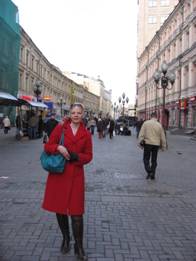
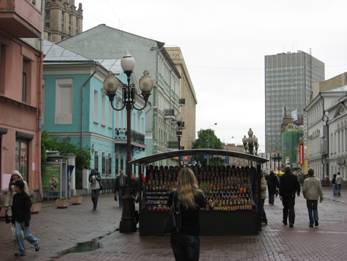
(13) (14)
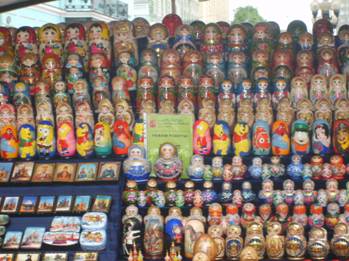
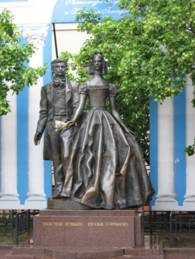
(15) (16)
Usually the splendid city centres rich in historical heritage represent only a small percentage of the overall impression that can form of a specific place.
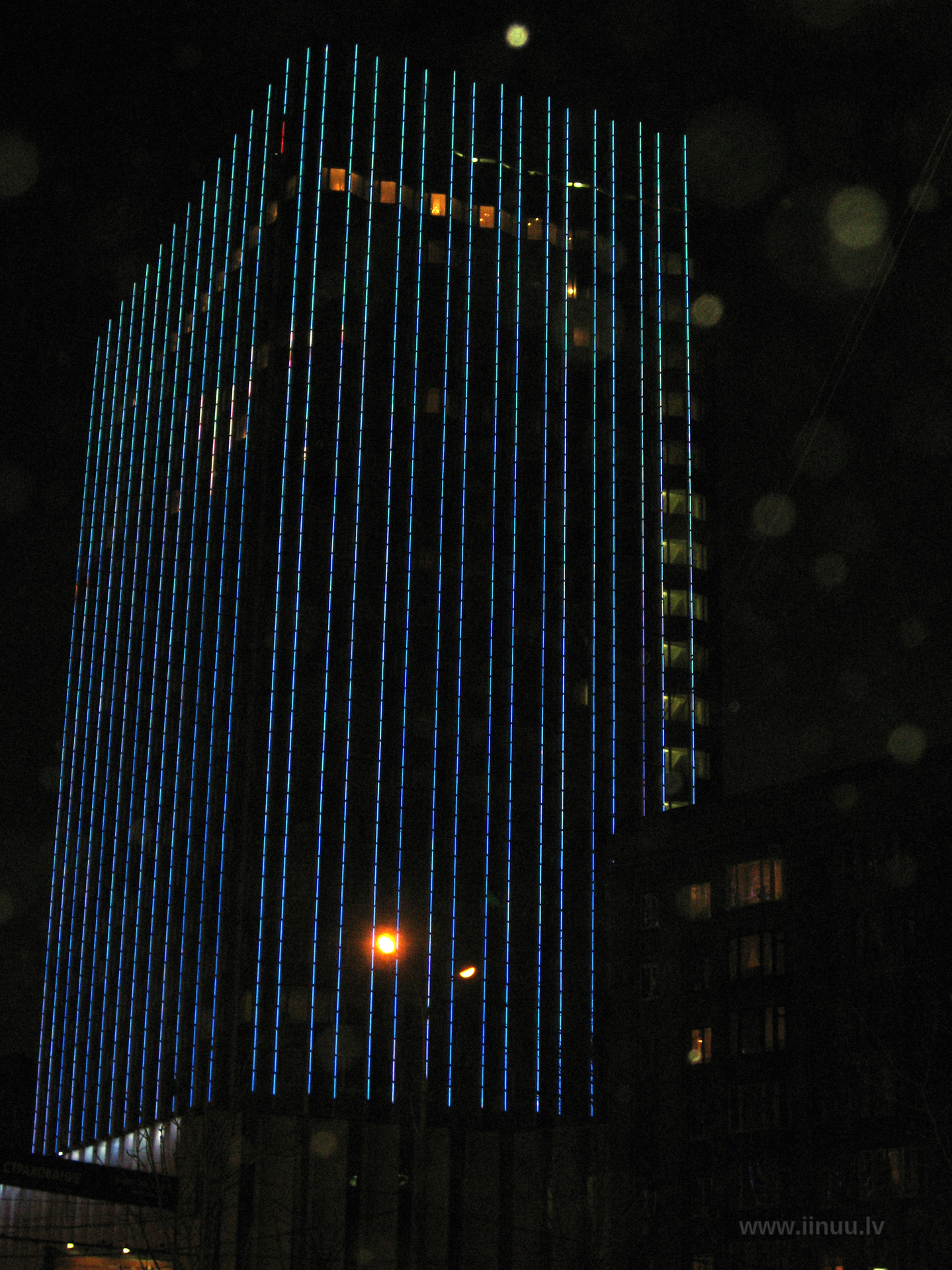
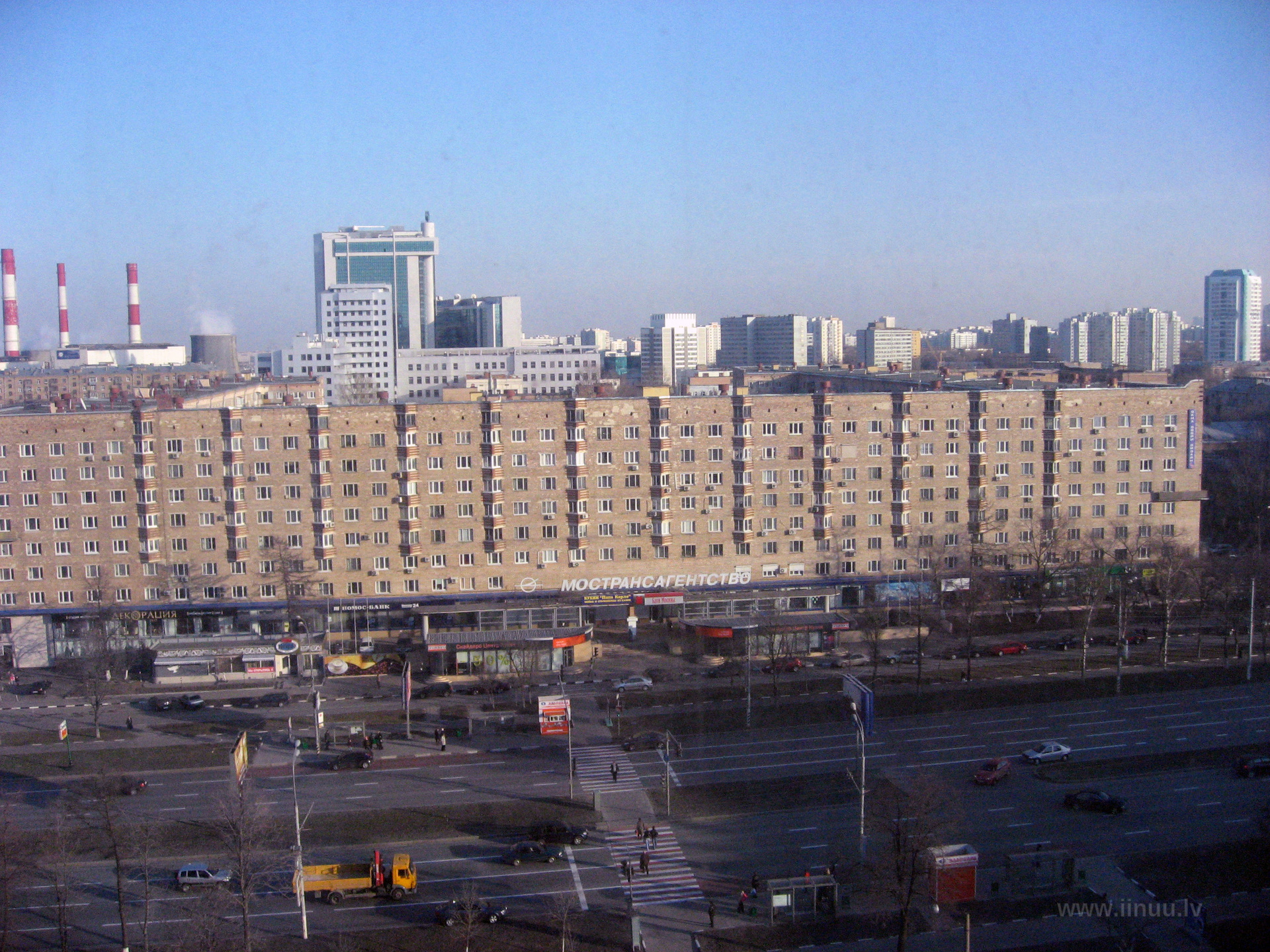
Unfortunately there was no time or opportunity to get to know Moscow more closely. A few frames from the city outside the centre - the Moscow State University building (17), a residential complex in the Gagarina district (18).
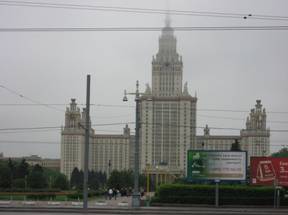
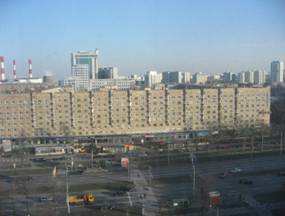
(17) (18)
Values that have remained unchanged - red carnations at the eternal flame, also white kneesocks, large bows, red ribbons with gold lettering for school graduates.
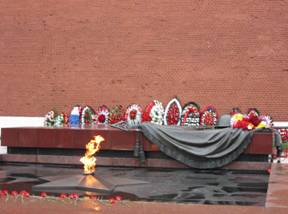
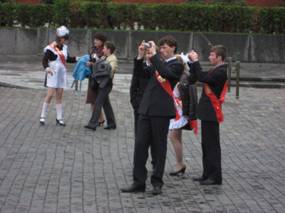
(19) (20)
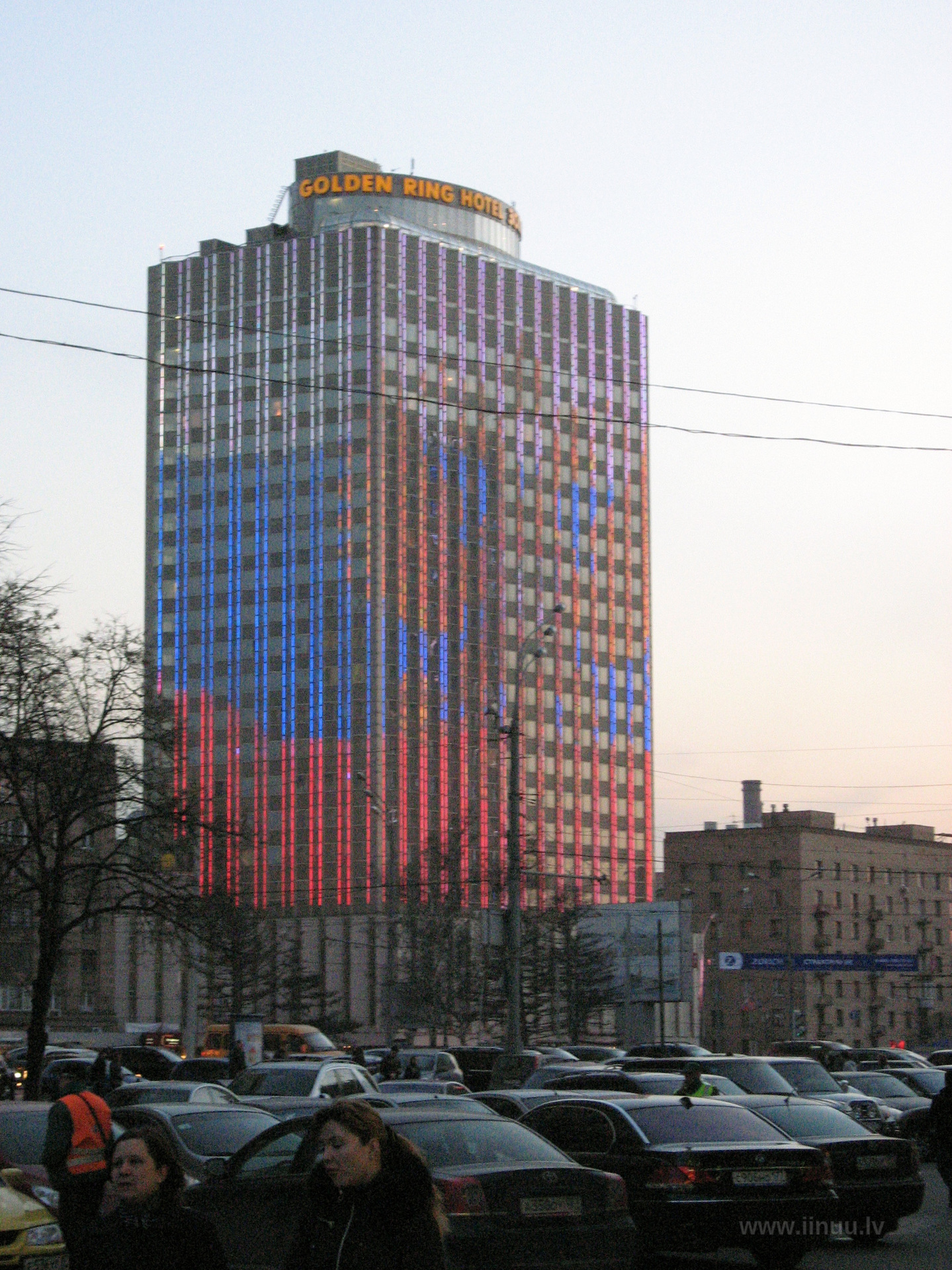
Alongside Soviet symbolism, the new Russian symbolism coexists very organically - the flag and coat of arms as a large illuminated advertisement on a building.
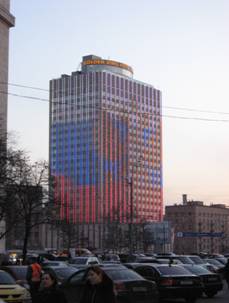
(21)
The city is enormous - around 13.5 million inhabitants. Roughly speaking, that works out to half again as many as all three Baltic states combined. Life moves day and night. The melody I heard in a taxi and which accompanied me on my return from Moscow to Riga - DJ Smash - Moscow never sleeps - in my view very aptly captures the city's rhythm.
 It is worth visiting Moscow if only to sense its scale, its ungraspable immensity, its wealth of historical heritage, and to test a few entrenched preconceptions. I also perceived Moscow as a major concentration point for information - a place for obtaining interesting theories, discoveries, and facts, as well as a major place of business.
 People on the streets do not smile. Service staff are gloomy and not particularly talkative with visitors. Prices are high (though not surprising for a Rigan), many luxury shops in the centre where tourists are not especially welcome. SUVs and other fine cars see no need to brake for pedestrians crossing at intersections. Suspicion from the militia toward anyone dressed or speaking differently. At times there is a physical lack of air (probably pollution), or else an unpleasant draught underground.
comments