The History of House Slippers
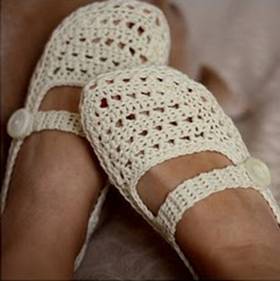
Cosy, soft, comfortable, luxurious and refined, warming or cooling to the feet, worn-out or carefully stored only for special guests - everyone has their own beloved house slippers. At home I currently wear a pair crocheted by my mother. Yet I have always been fascinated by Victorian ladies' slippers on an elegant little heel with a vintage rose pattern. In different eras they have served both as practical footwear and as a symbol and part of rituals. So what is the history of house slippers?
Cosy, soft, comfortable, luxurious and refined, warming or cooling to the feet, worn-out or carefully stored only for special guests - everyone has their own beloved house slippers. At home I currently wear a pair crocheted by my mother. Yet I have always been fascinated by Victorian ladies' slippers on an elegant little heel with a vintage rose pattern. In different eras they have served both as practical footwear and as a symbol and part of rituals. So what is the history of house slippers?
It turns out they came from the East - more precisely, they originated in one of the harems of the local sultans. At that time slippers were a symbol of captivity, for even an extremely freedom-loving and independent concubine would not dare flee the harem along stony paths in thin slippers that easily slid off the feet. Moreover, slippers were extremely comfortable and soft when one had to sit on low seats in a cross-legged position. They could be quickly slipped off when stepping onto precious Persian carpets.
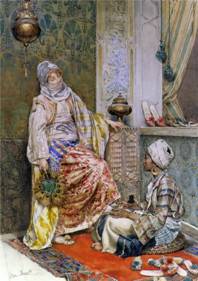
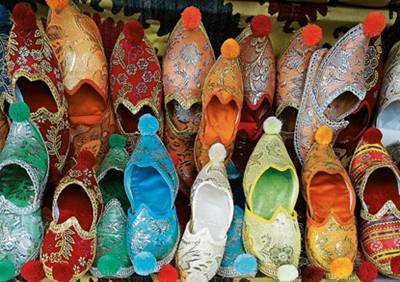
They were very comfortable footwear that allowed the mind to roam freely in philosophical thought after a long walk or distant journey, causing no discomfort to the feet and allowing them to rest. It was precisely this functionality that was the main reason the tradition of wearing slippers was quickly adopted in medieval Europe. But in the 16th century, slippers here acquired a new symbolic significance - as a symbol of a spouse's fidelity.
Slippers experienced their most splendid flourishing in 18th-century France. Naturally, all of this took place in the royal court and its vicinity, steeped in magnificence and opulence. Indispensable in ladies' boudoirs were slippers as small and delicate in size as possible, filled with down from swans' feathers, gilded with large pompoms and with a slightly upturned toe.
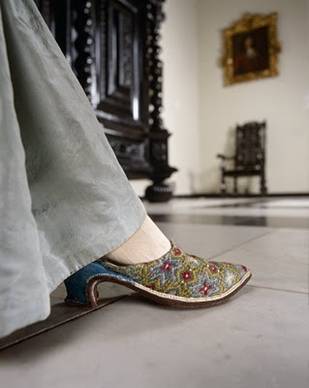
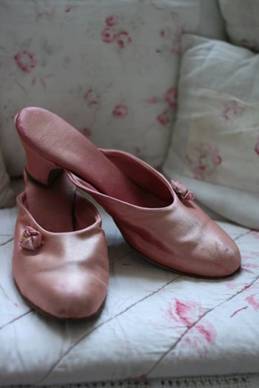
The 19th century transformed slippers into an extremely practical and indispensable household item for every home. With each passing year, greater emphasis was placed on comfort, the diversity of natural and artificial materials, and a design that would replicate the shape of the owner's foot as closely as possible, rather than on visual splendour.

comments